a field guide to needlework
  • Tapestry
    • 1994 - 1999
    • 2000 - 2003
    • 2004 - 2007
    • 2008 - 2009
    • 2009 - 2012
    • 2013 - 2015
    • 2016 part one
    • 2016 - 2017
    • 2018
    • 2019
    • 2020
    • 2021
    • 2022
    • 2023
    • 2024
  • Newsletter
  • Store
  • Blog 2014-2021
  • About
  • Comics
    • Fatal Distraction
    • Manuscript Revised
    • Stripes
    • Enid and Crow >
      • Enid and Crow: Days In The Life
      • Enid and Crow: The Peregrinations
      • Enid and Crow: Color Choices
      • Enid and Crow: Carried Away
      • Enid and Crow: Somewhere!

gathering fiber-- a week

9/22/2020

 
Picture
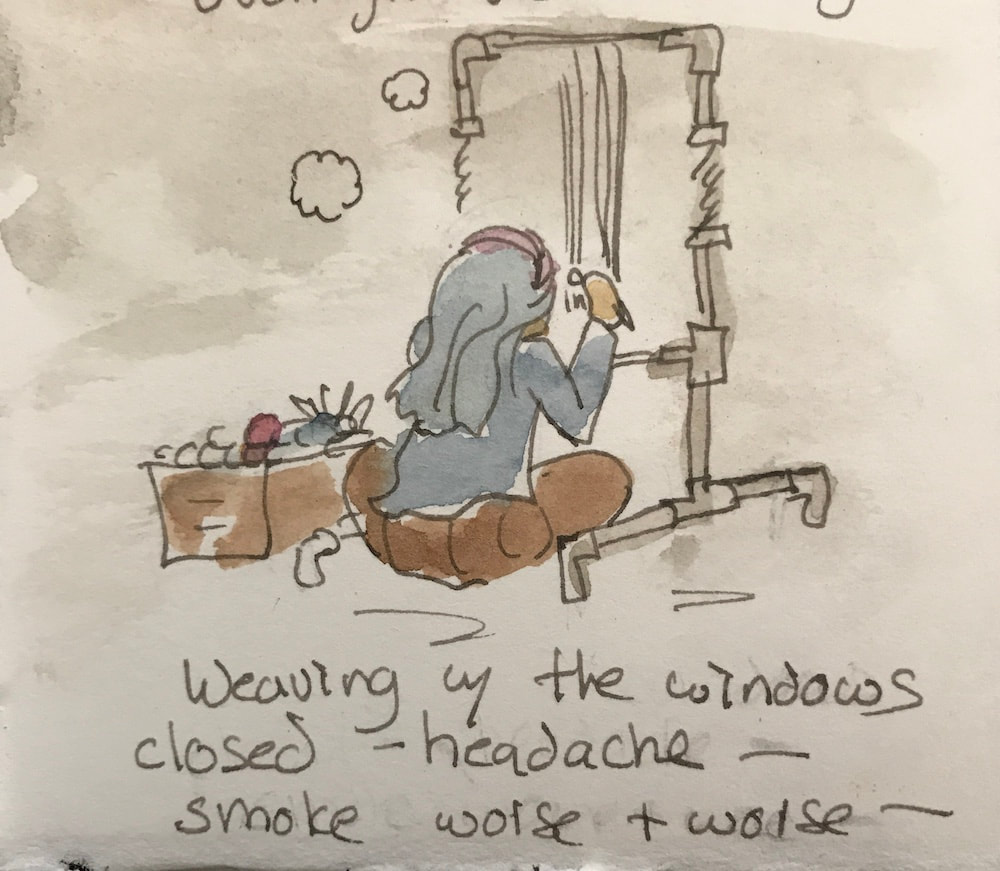
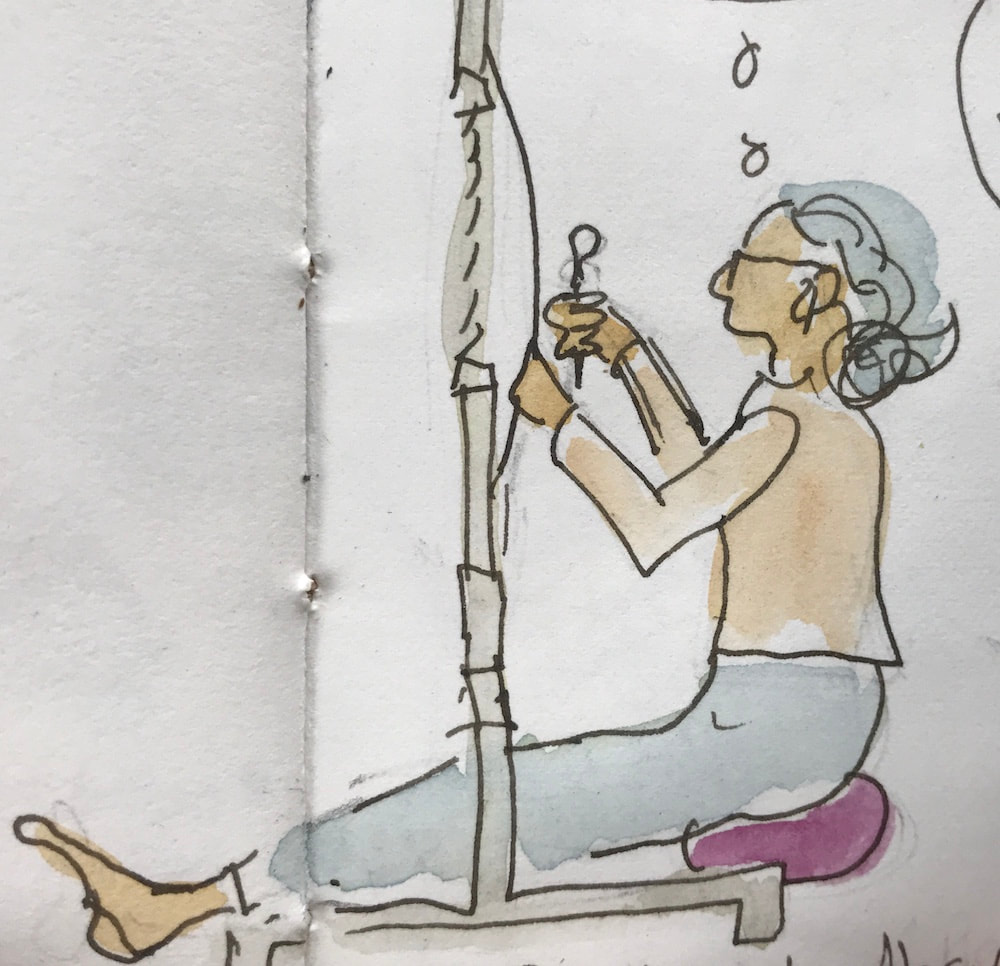
Ok, so there I was,
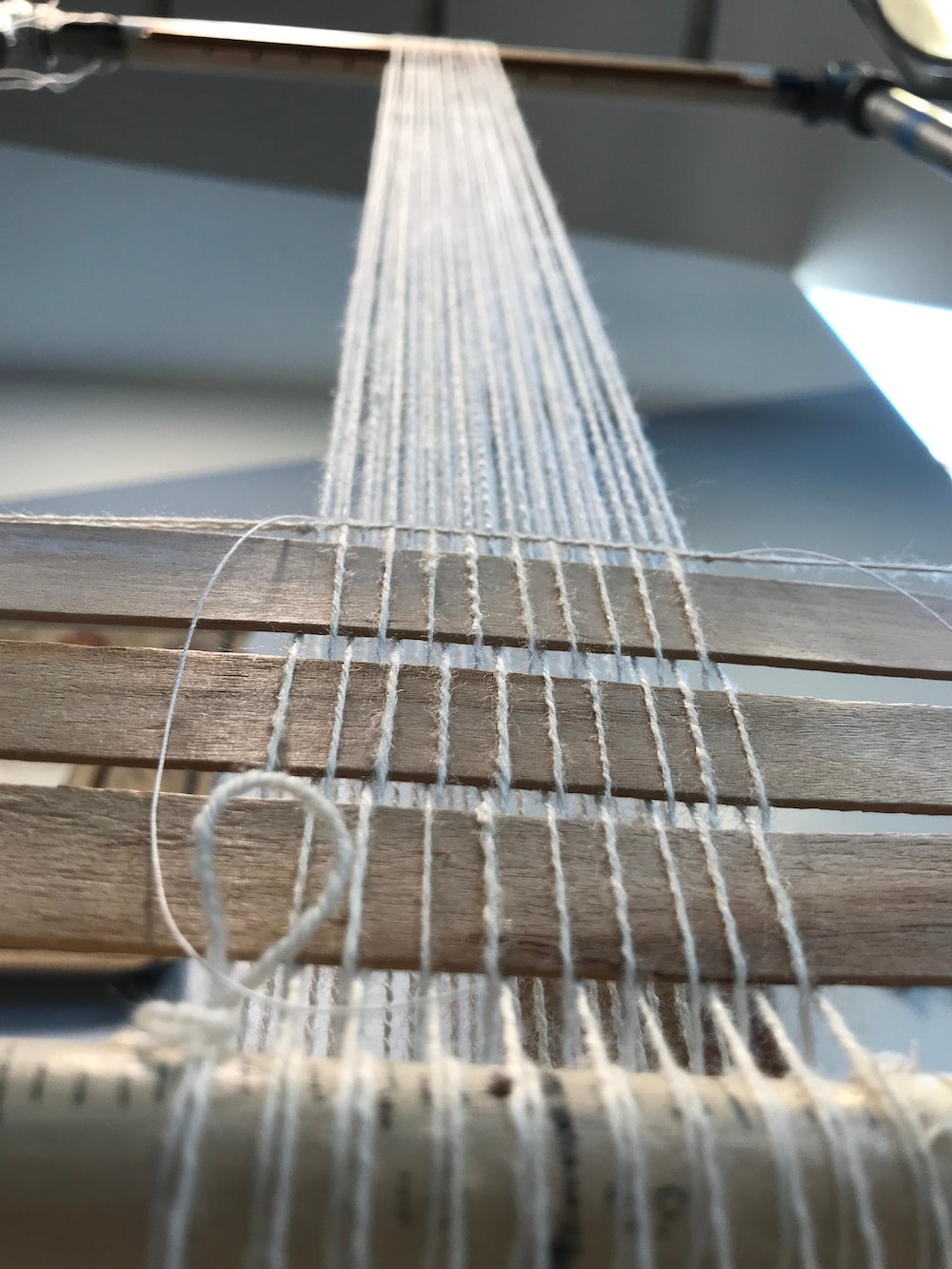
contentedly packing weft
into a long, narrow
tapestry warp--
doing all I could to
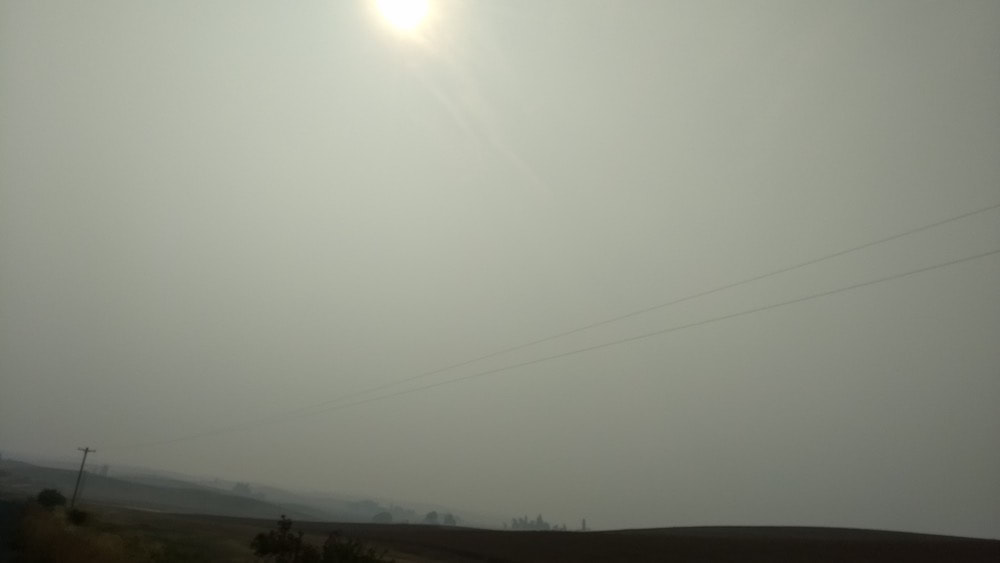
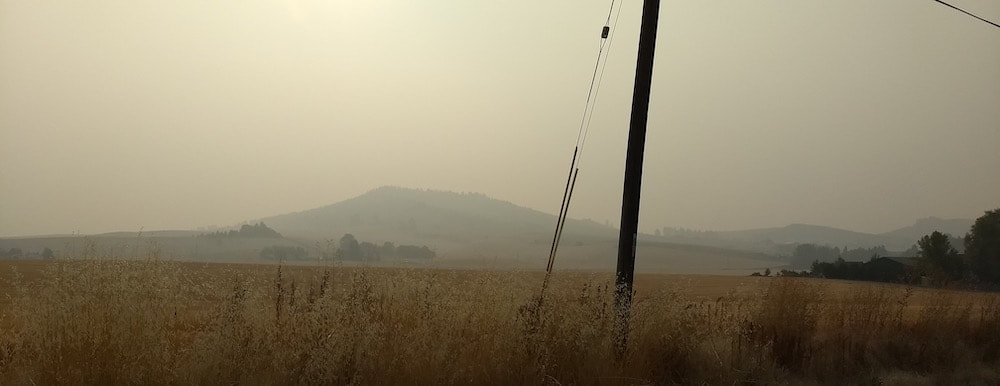
'em-blue-en' the smoky skies
with my yarn
--
Picture
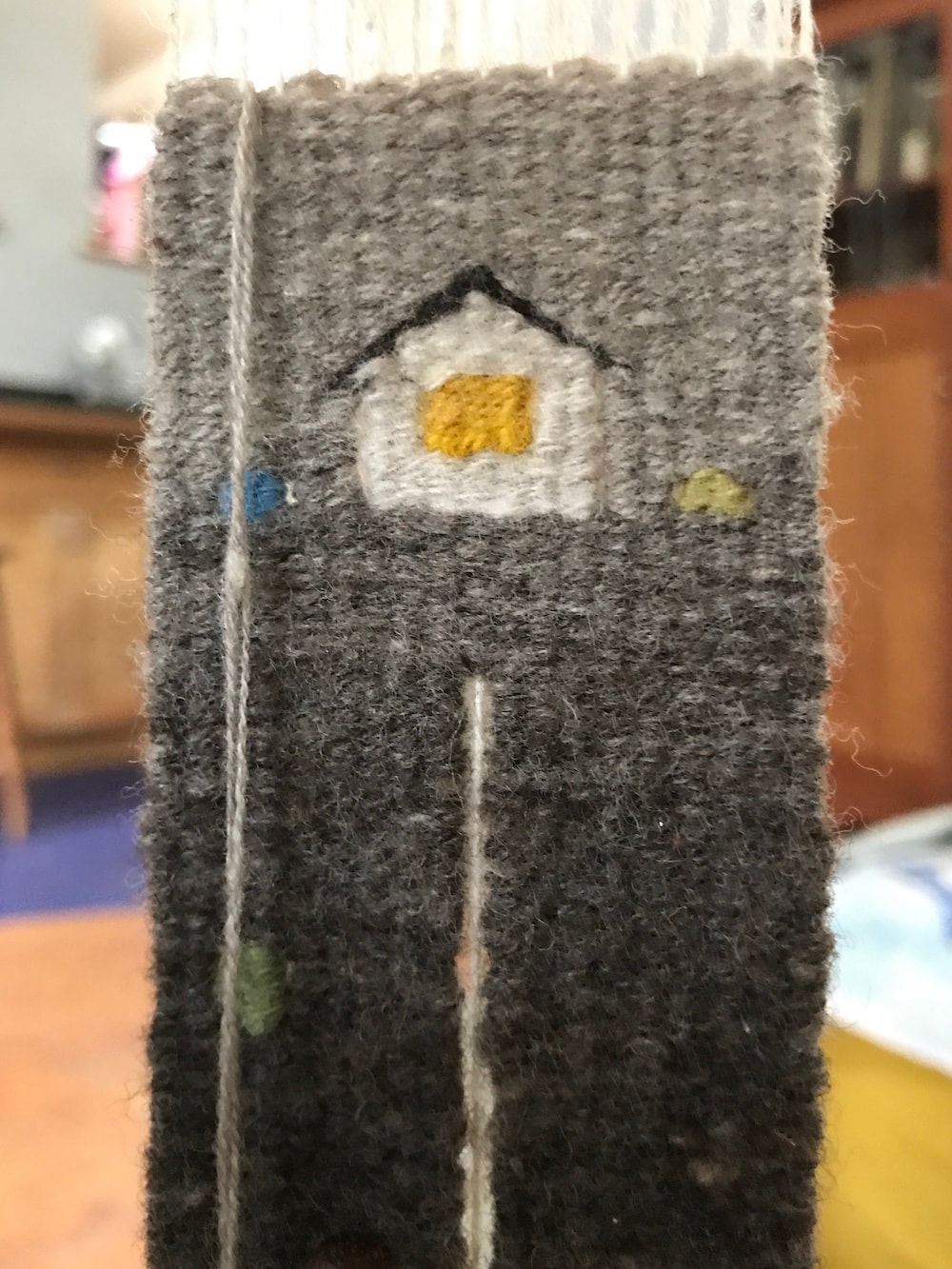
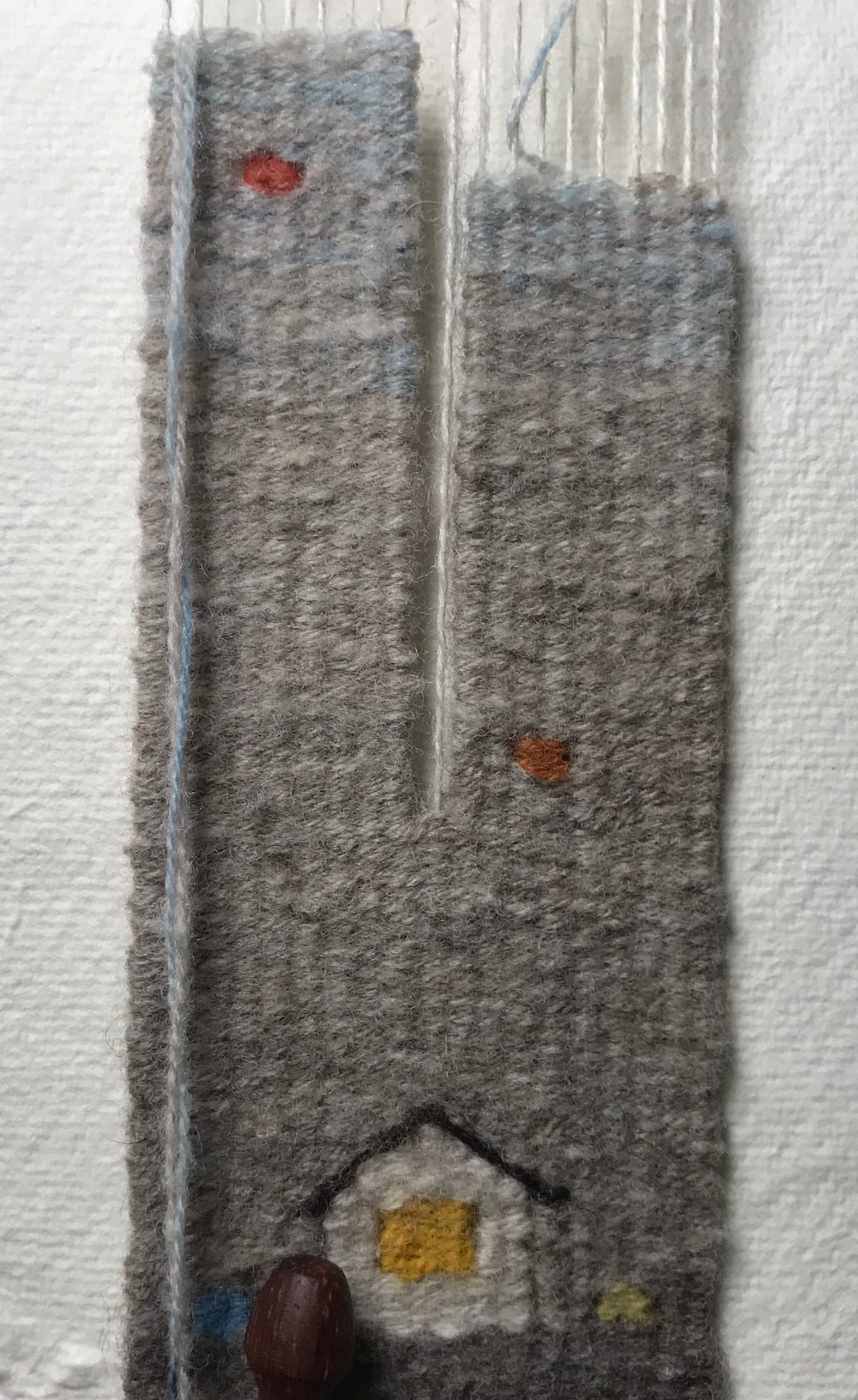
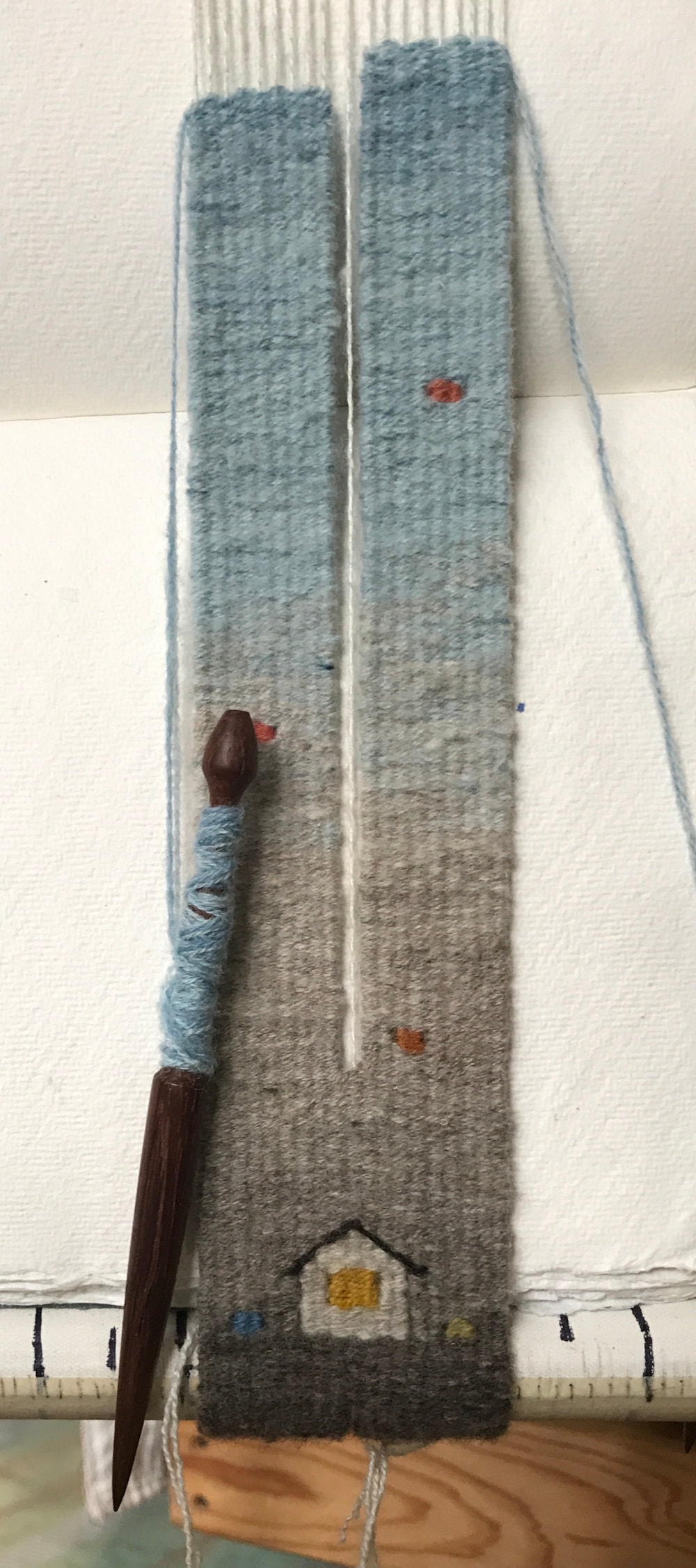
(convinced that  by today
I'd be able to show you
a completed
long narrow tapestry object
​but obviously, not yet)--
Picture
--when what should appear on my phone
but a text to let me know
that the Milkweed seed harvest had begun
at Thorn Creek Native Seed Farm
 and if I wanted some stalks,
it would be a fine time to get them.
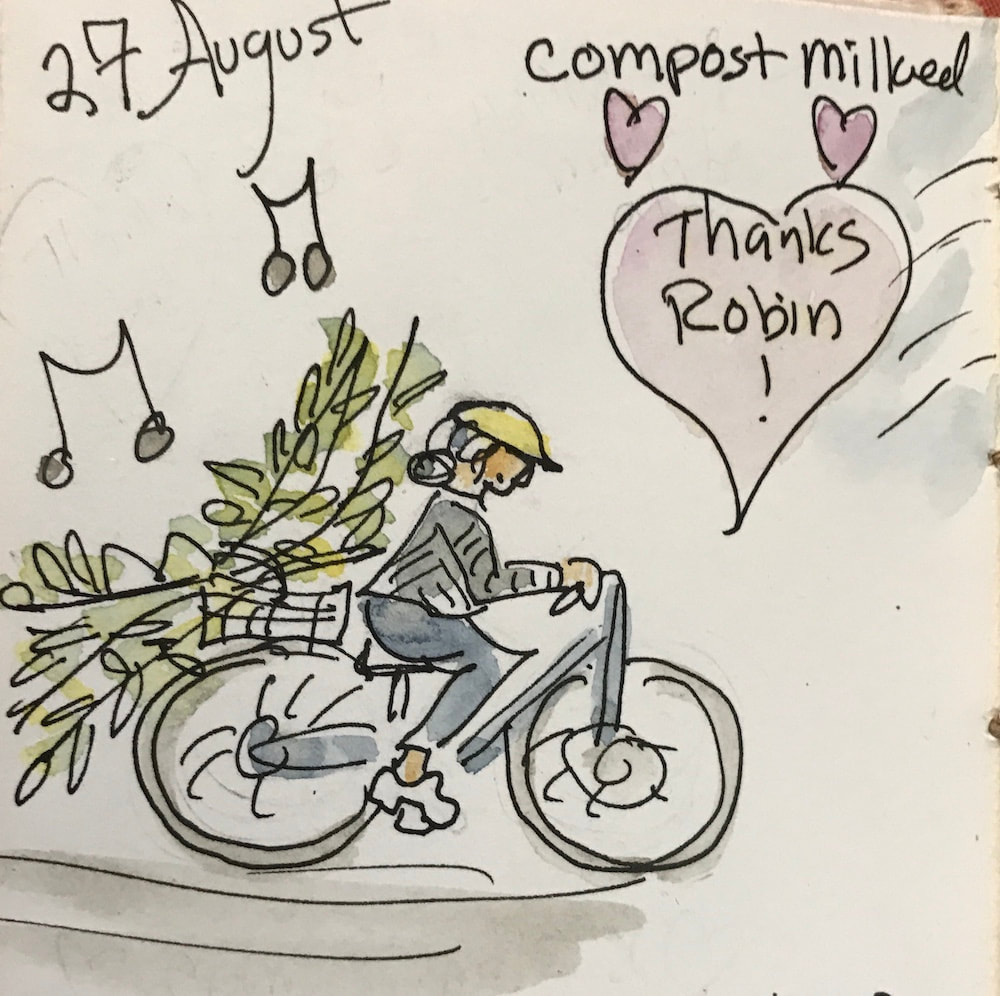
Well, you know me
​and other people's compost.
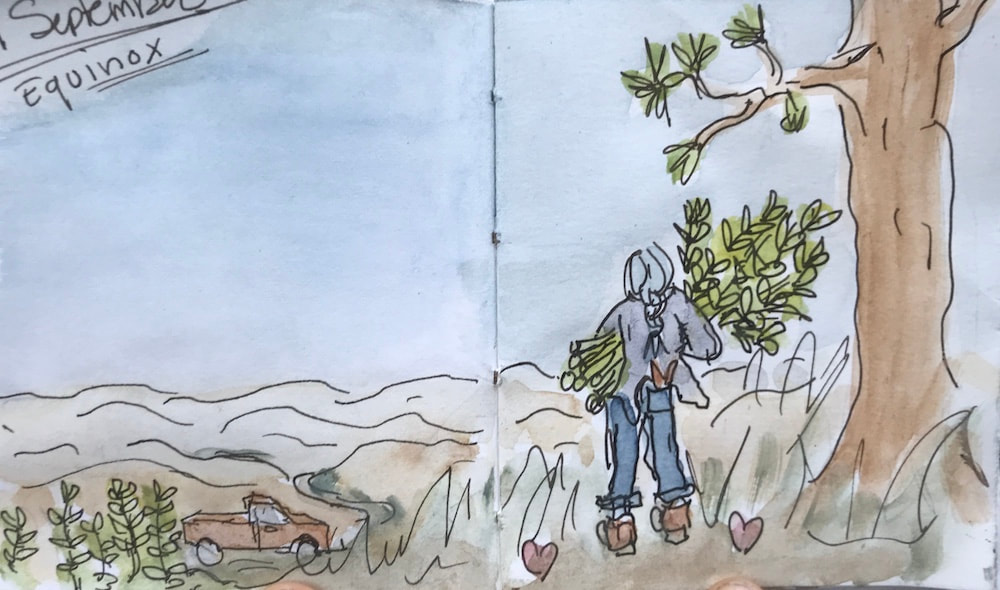
 I grabbed some
​secateurs and a mask 
(even though people said
my hand made covid mask
wouldn't help my lungs against this smoke,
it --the mask-- did help my psyche),
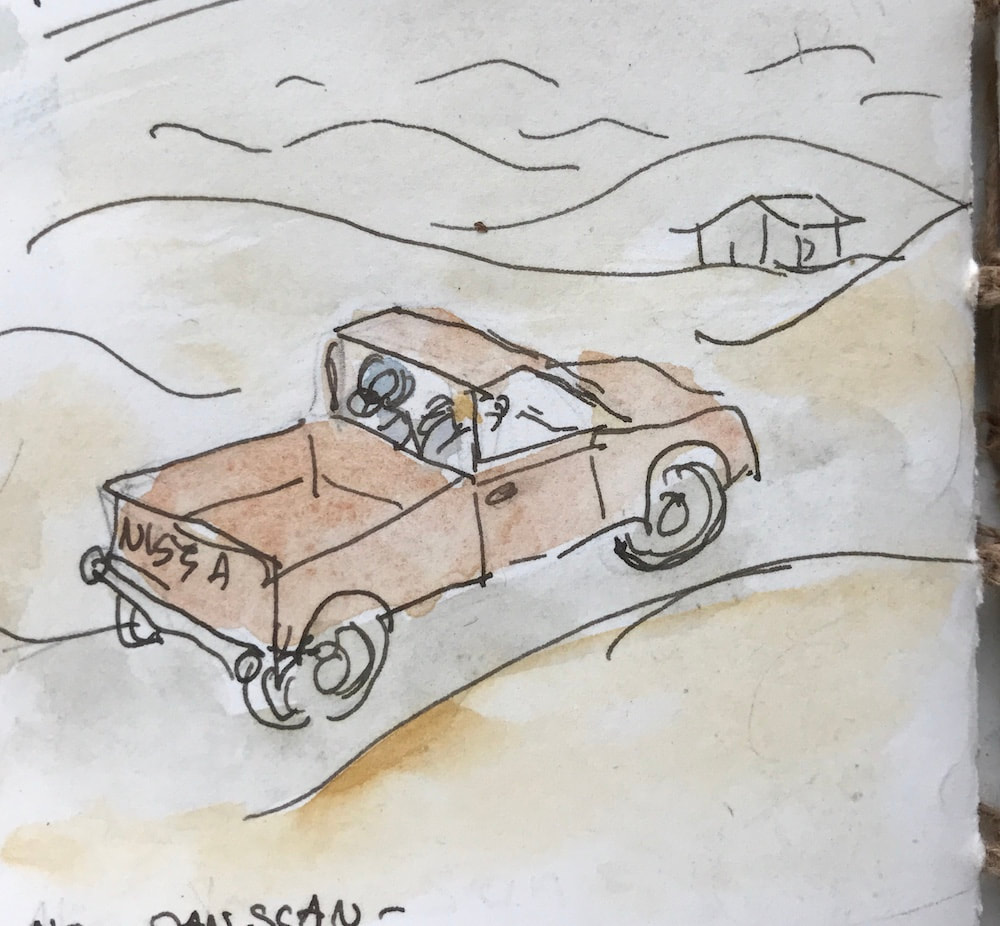
and hopped in the truck.
Picture
Driving is a thing I avoid
at the best of times,
so it took a moment or two
for my legs to remember
their clutch/gas pedal coordination
(my neighbors laughed
as I stuttered out of the driveway
in the wee, mossy pick-up),
but it doesn't take long
to recall even long-ignored skills.
Nor, indeed,
does it take more than a few blocks
to get out into the
weirdly beautiful Palouse hills.
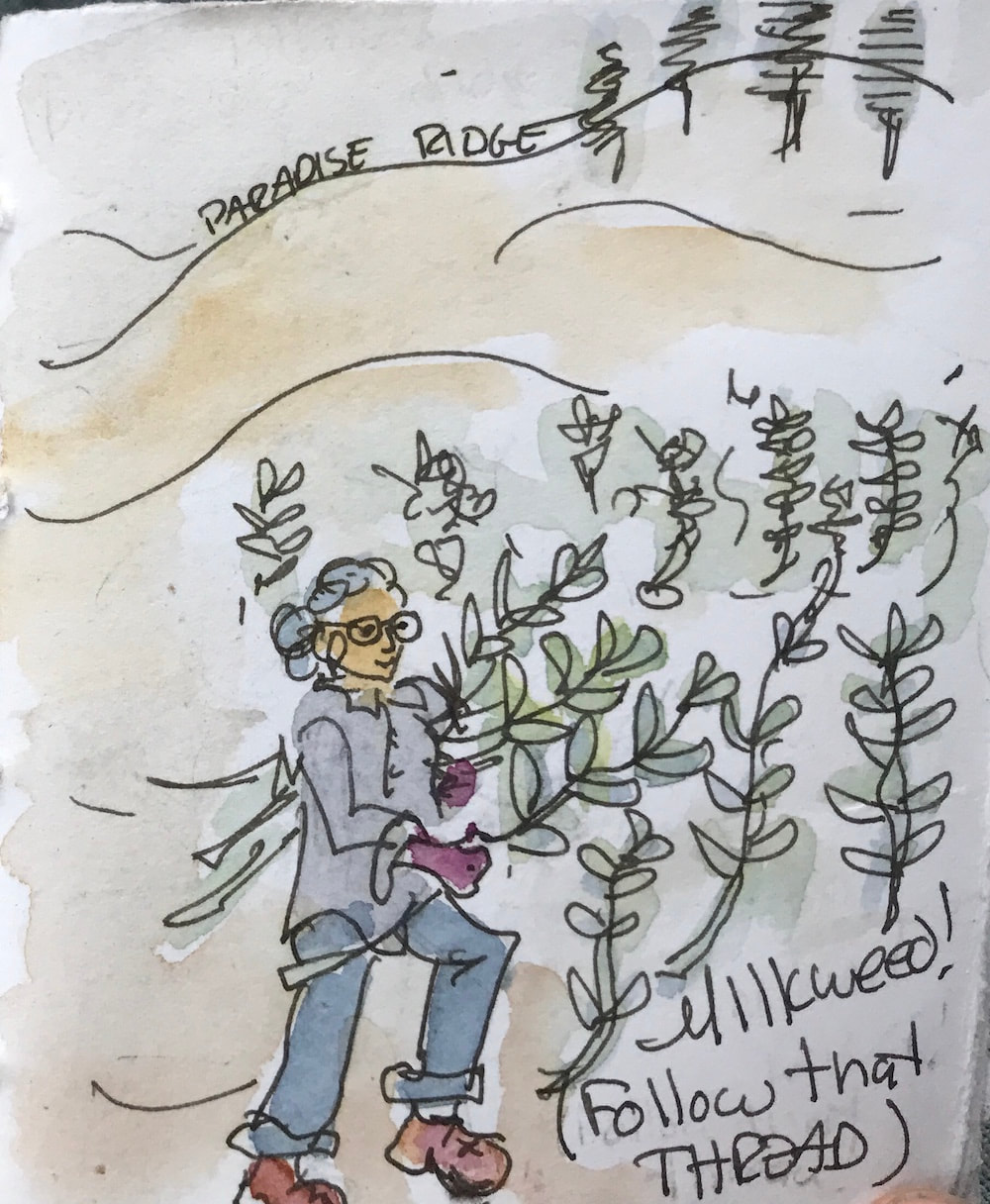
Picture
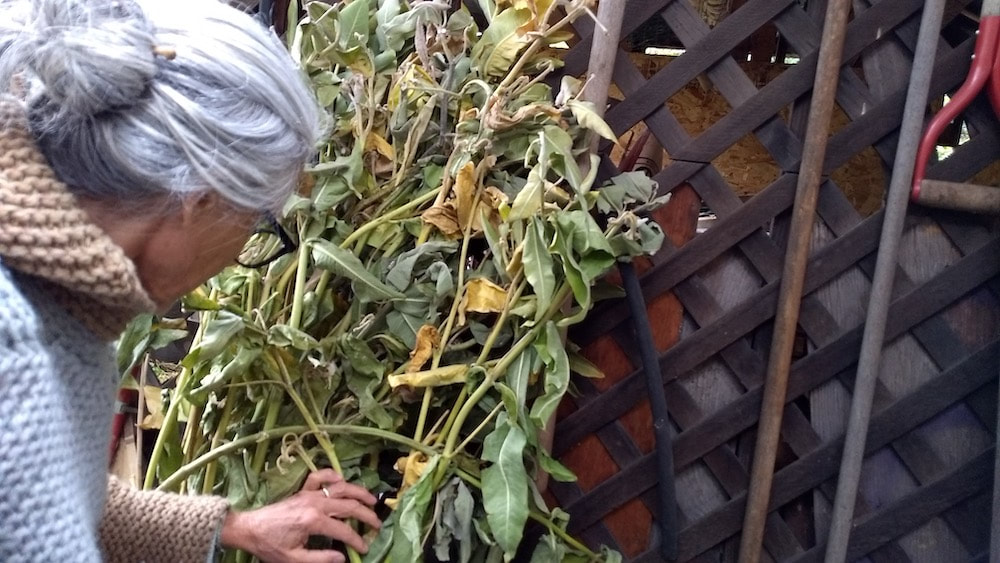
--and in just an hour or two
I had gathered enough 
​to keep me engrossed
and enchanted

all week.
Picture
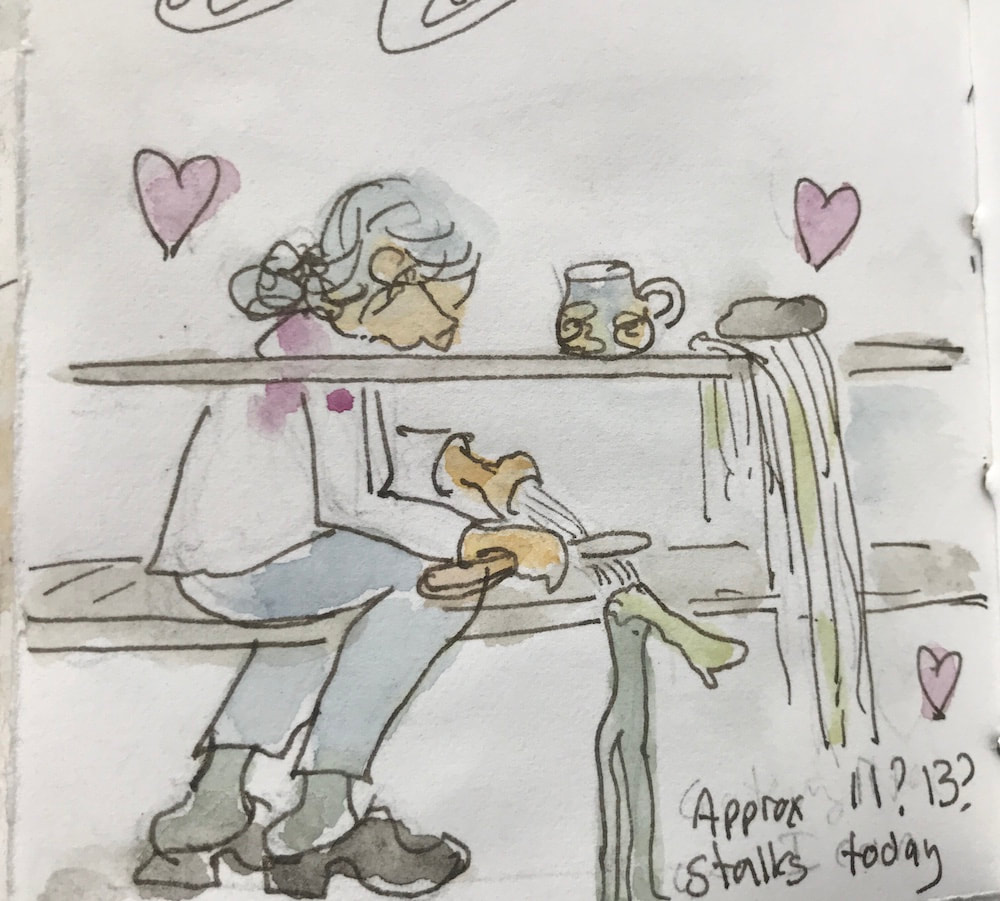
Because the technique I've been using
works best when the stalks are quite fresh
 I've been at it for the better part of every day--
Picture
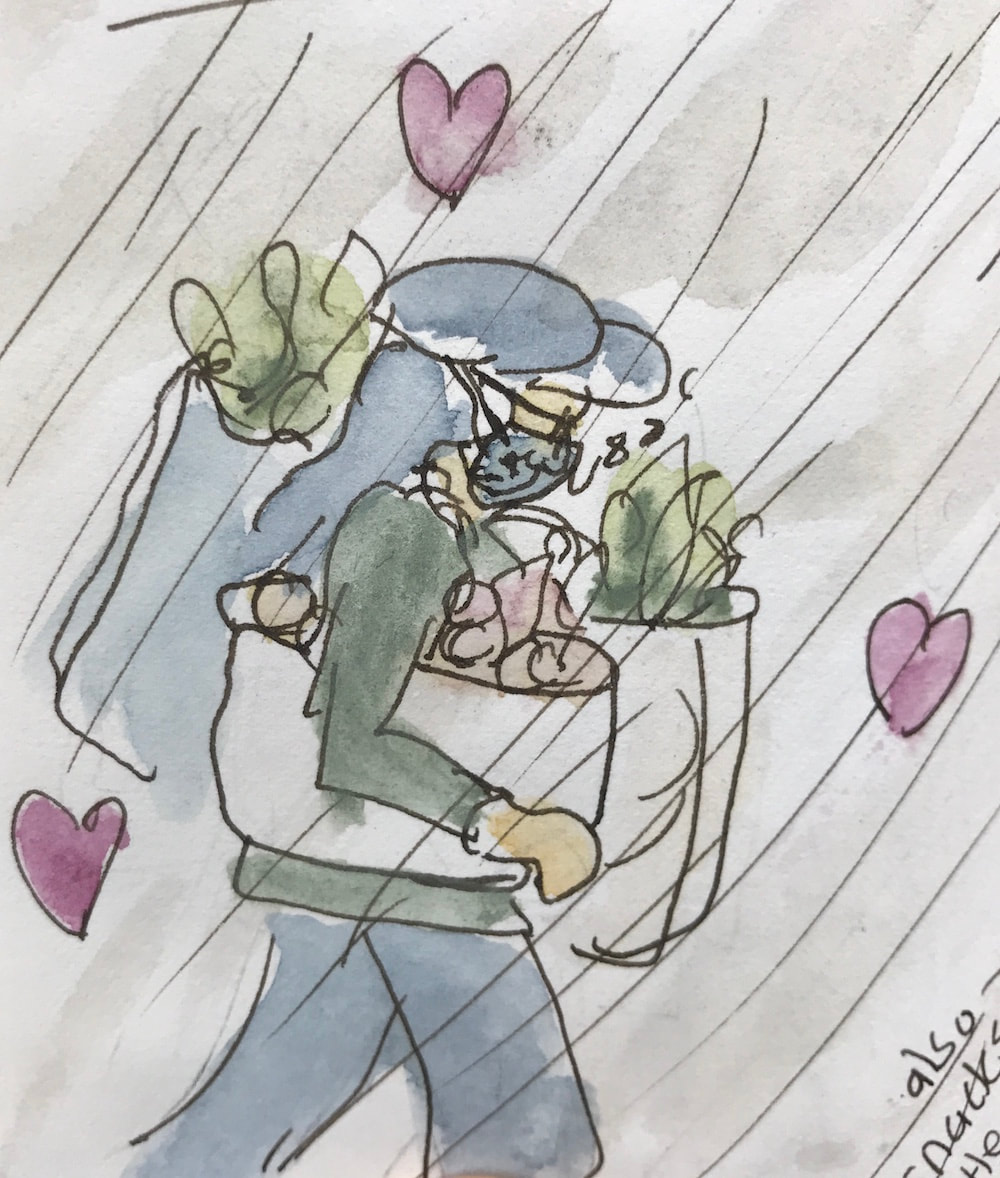
--and on Saturday
when, blissfully,
finally, gloriously,
it rained
(that's me walking home
from the Farmer's Market
soaked and content)--
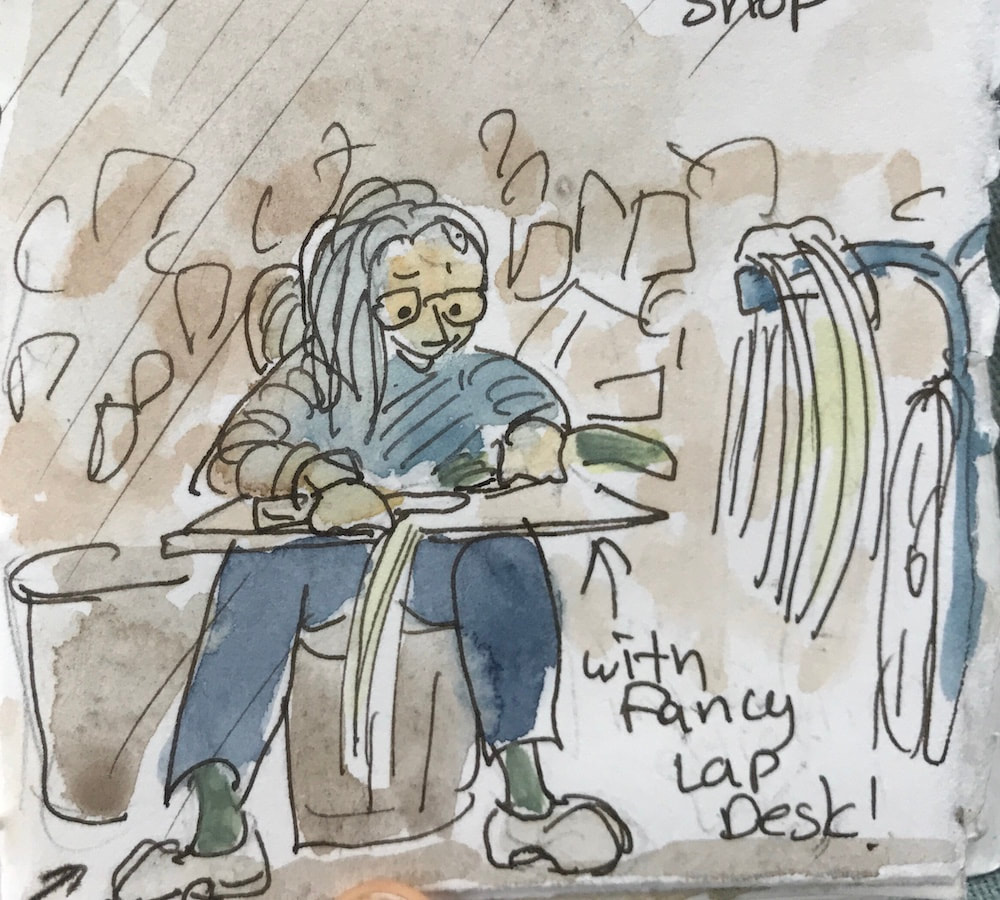
Picture
--I pulled on two sweaters
(Magic Medium as base layer
and Somewhat Slanted Hoodie on top)
and set up shop out in the woodshed.
Picture
It was perfect --
cool, damp, autumnal,
slow, abundant,
and very comfortable.
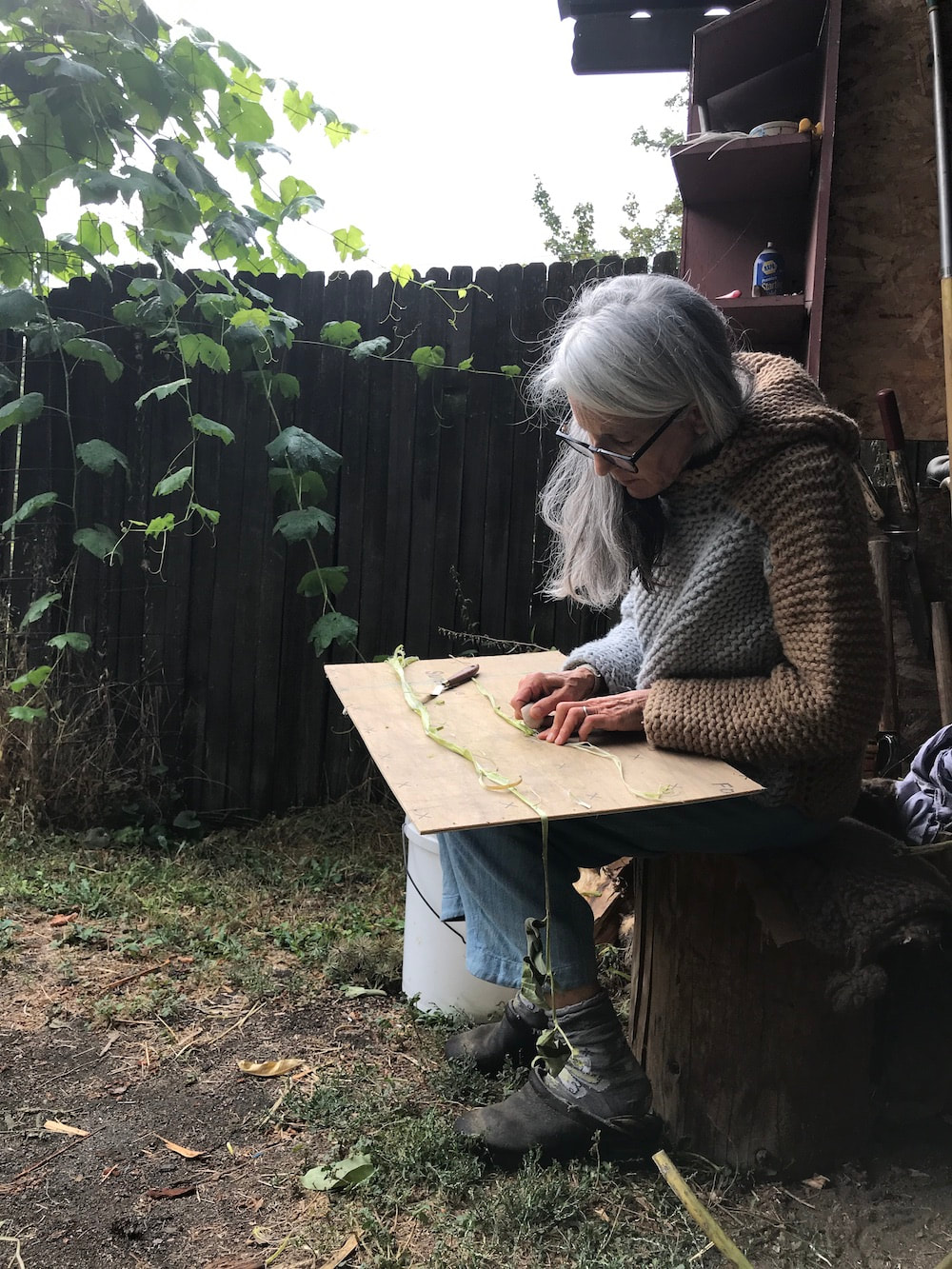
Picture
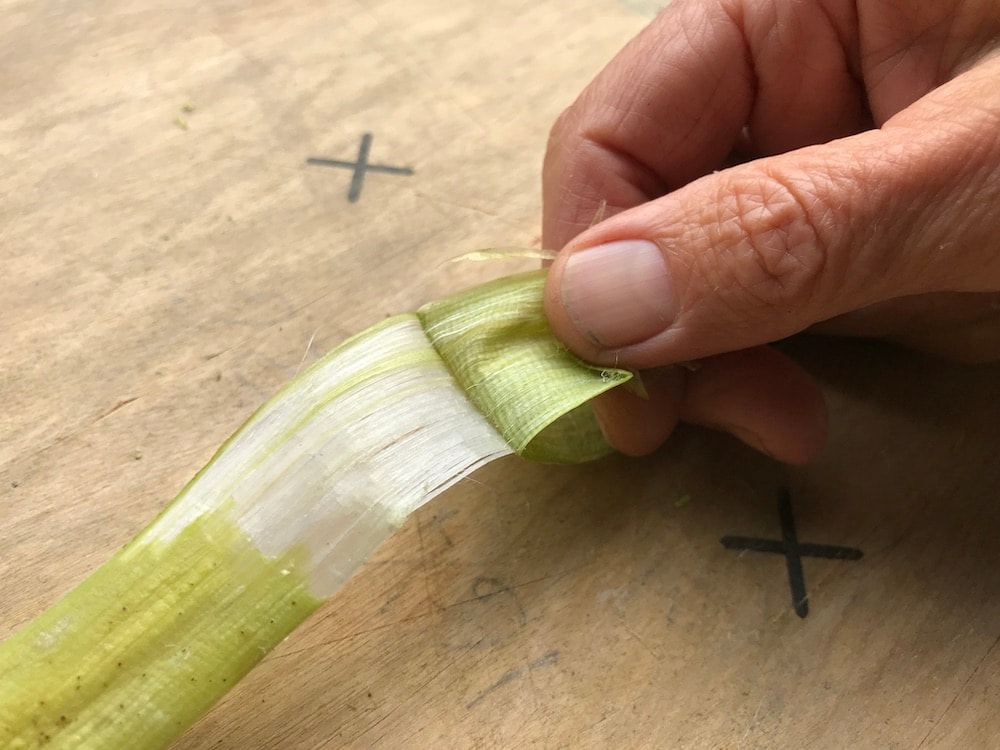
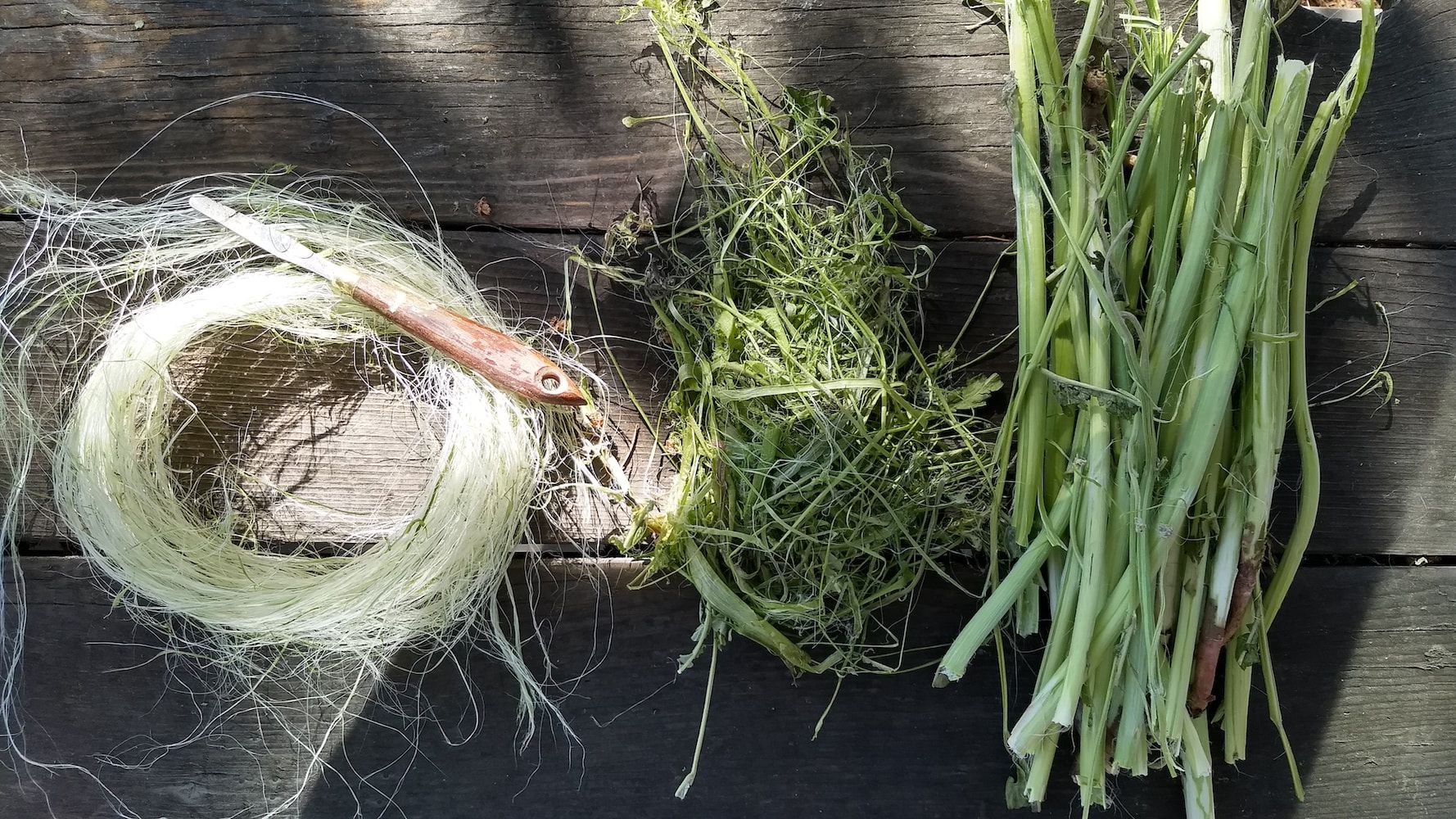
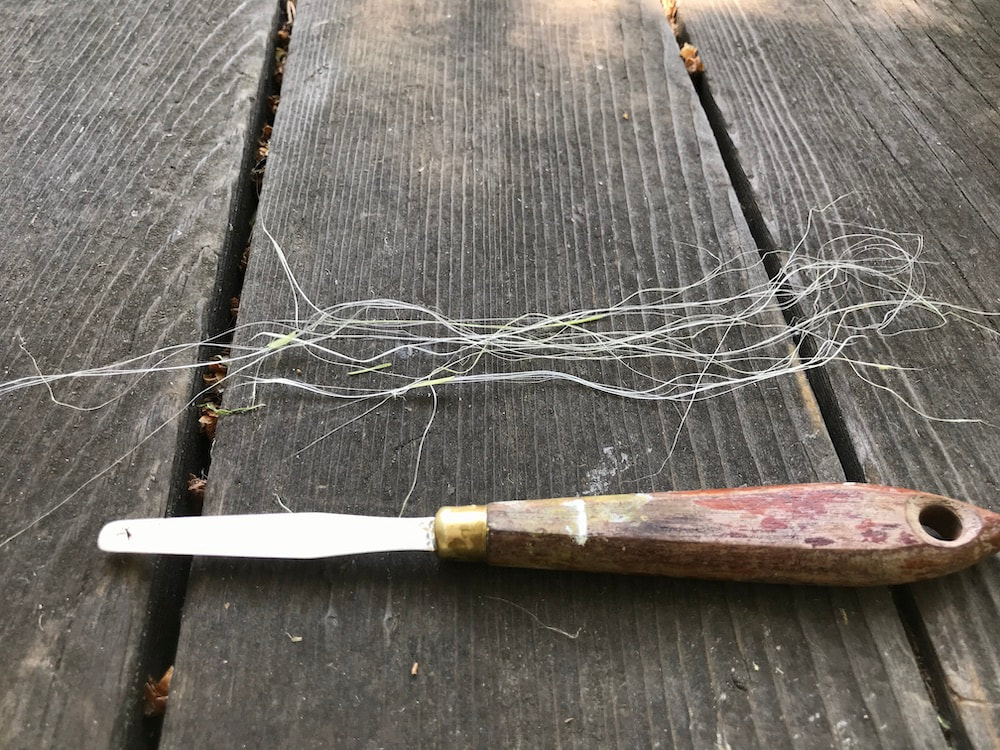
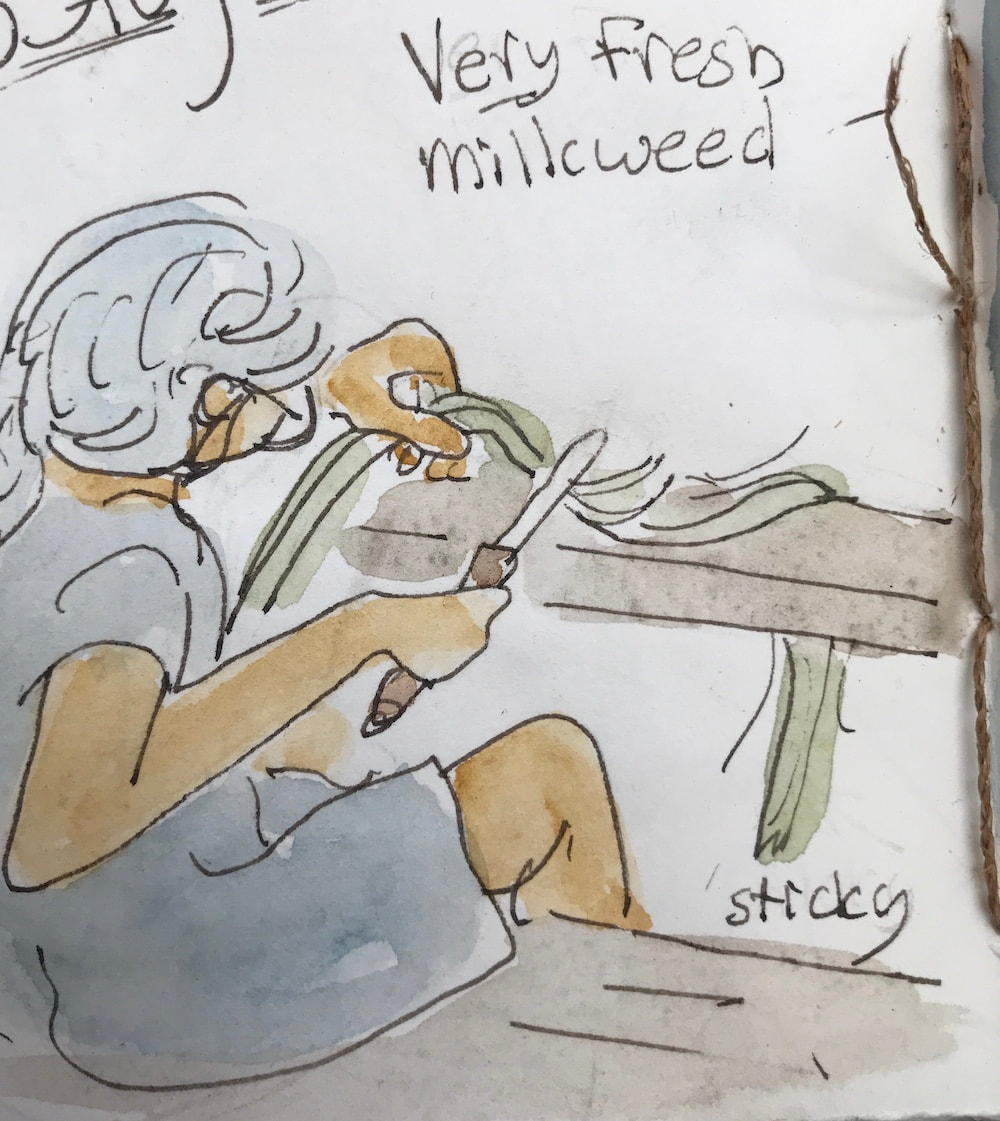
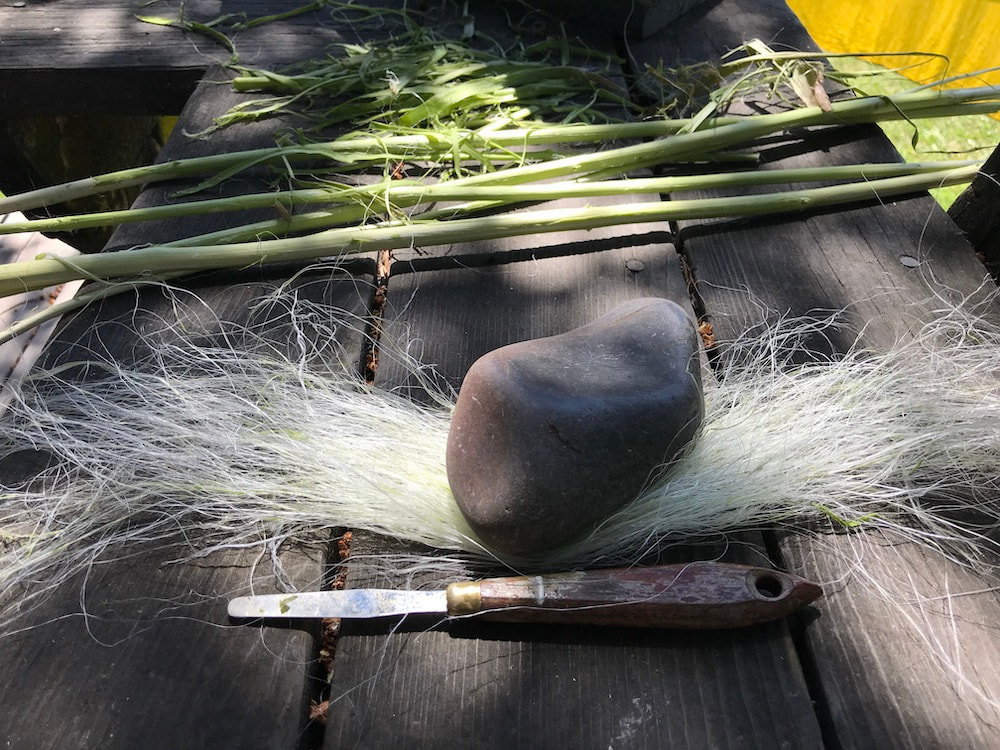
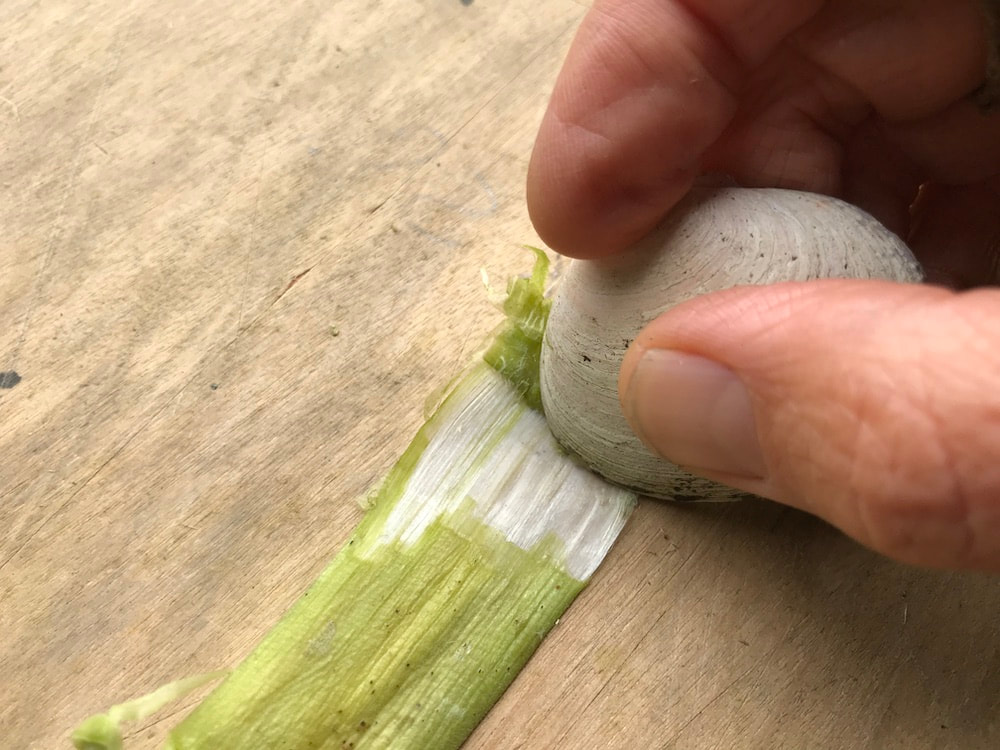
Here is what I'm doing:
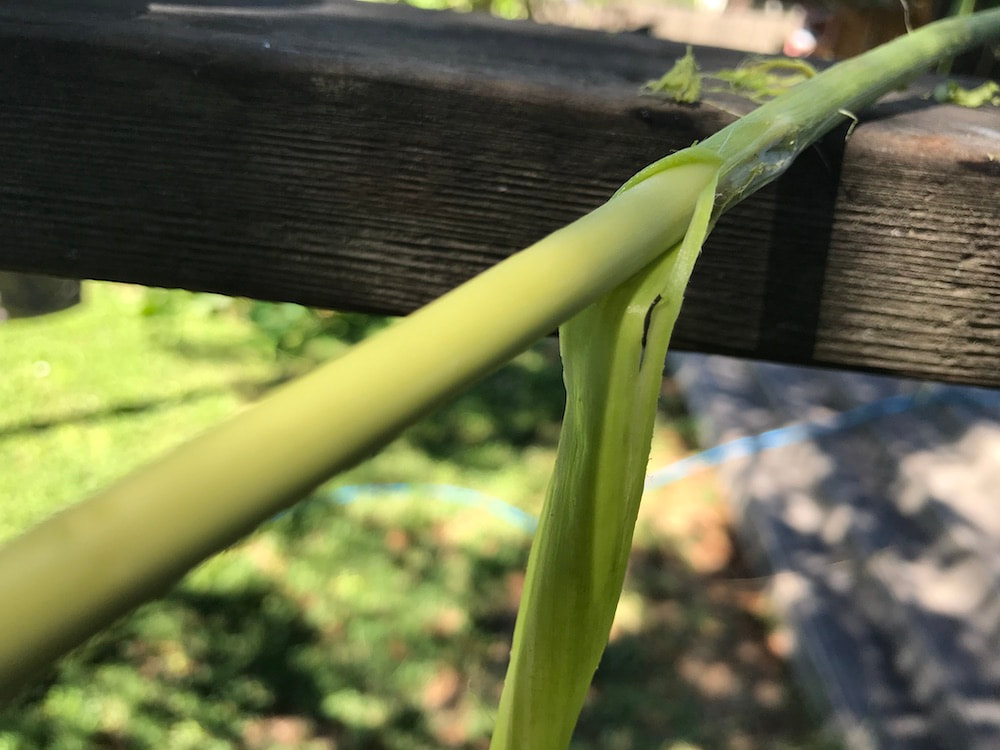
After peeling the outer/inner bark
 (starting at the bottom
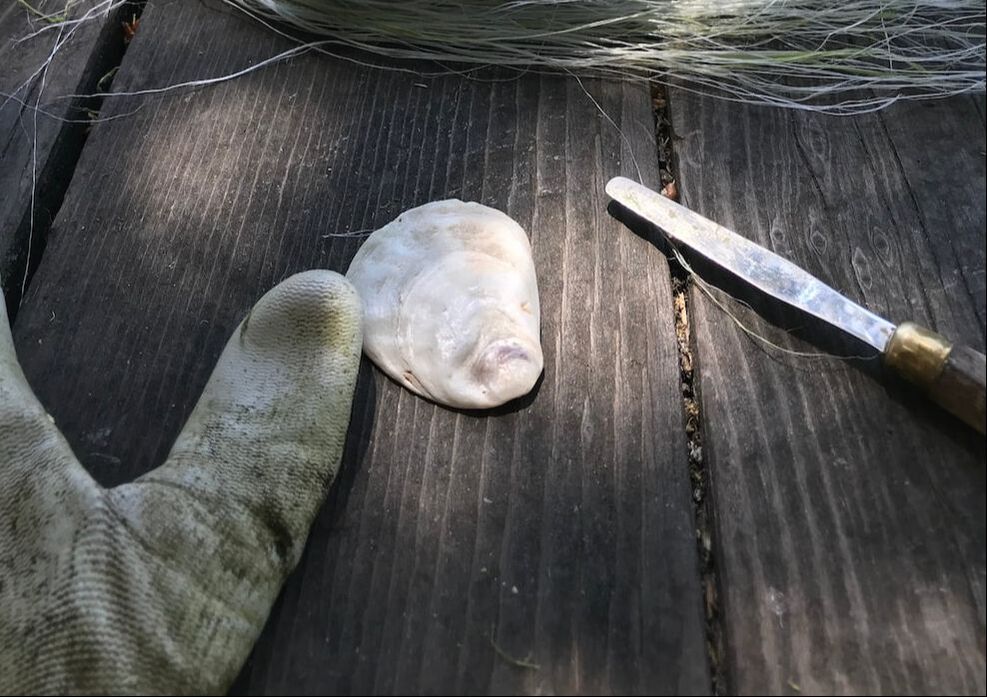
and using my palette knife to
​get things going),
I lay each out strip and,
starting somewhere in the middle,
gently scrape away the outer bark
​to reveal the white fibers beneath.
A shell works perfectly for this,
as does a palette knife.
Picture
Picture
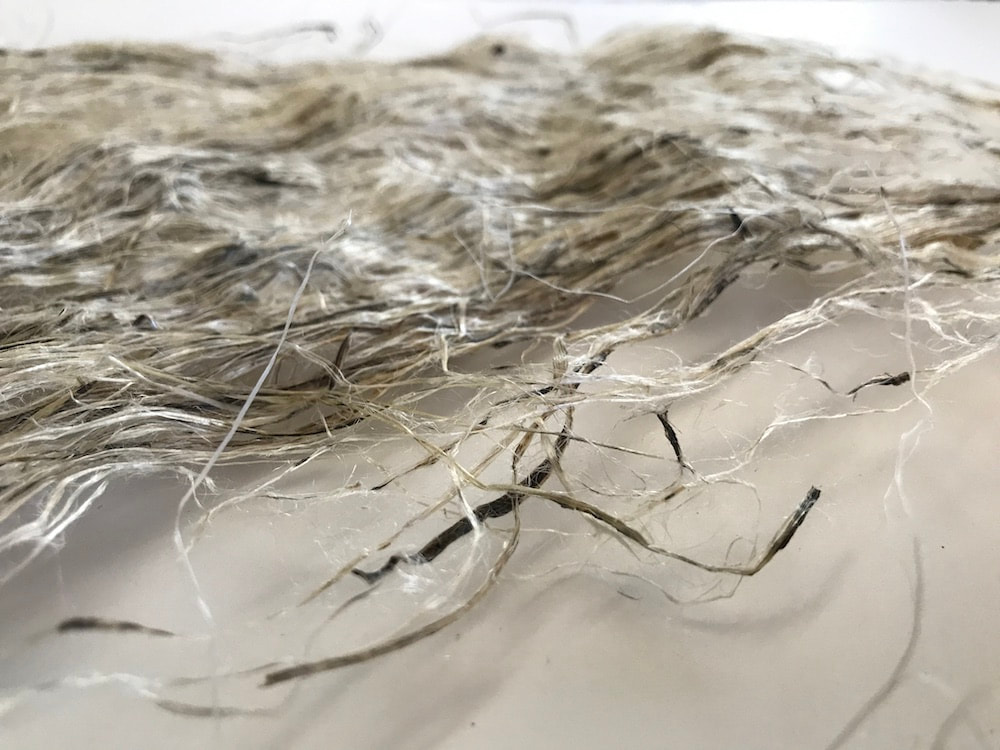
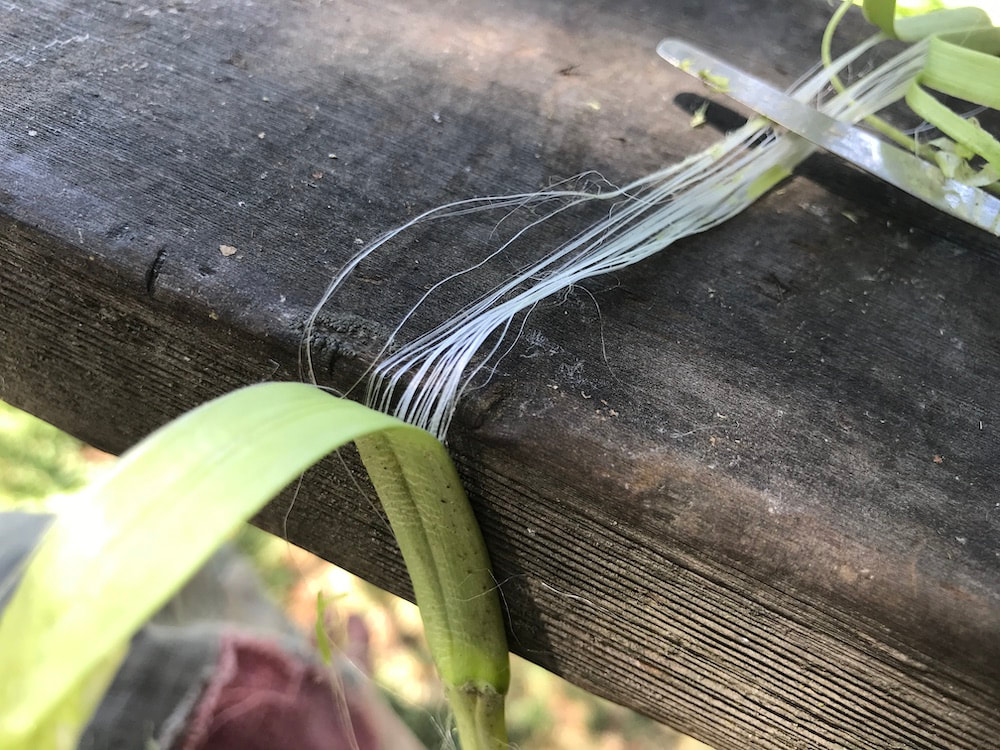
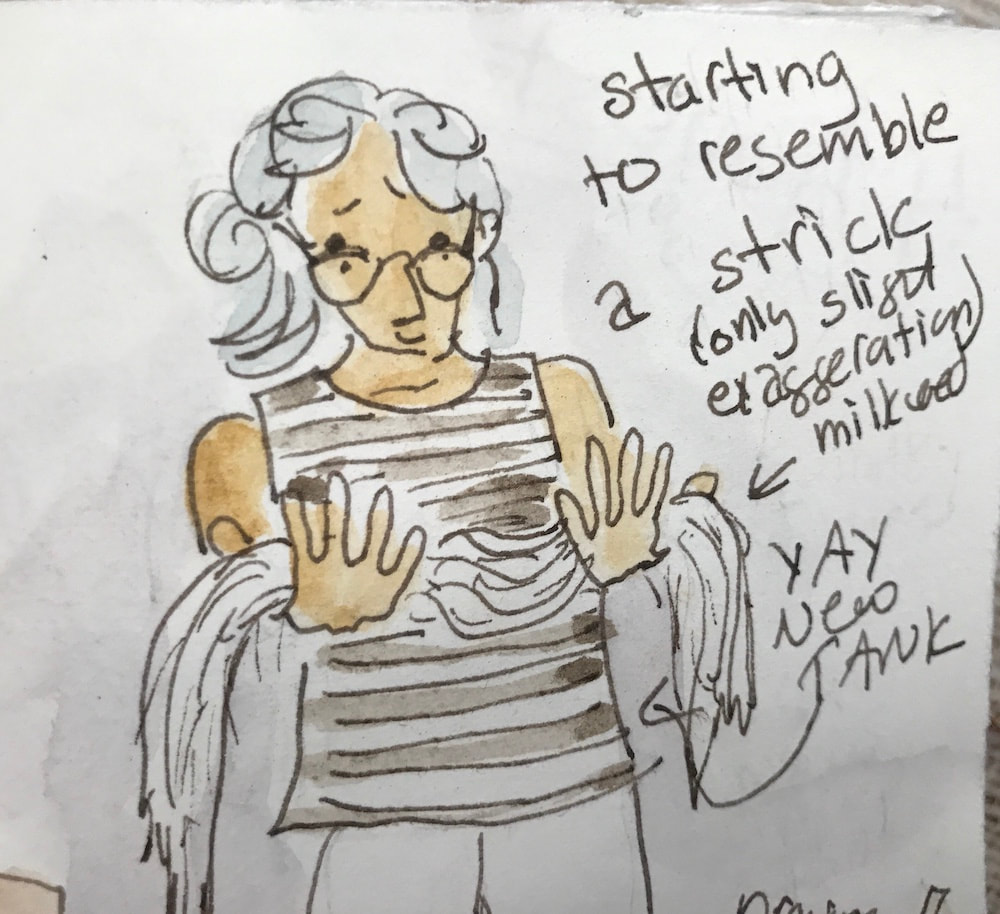
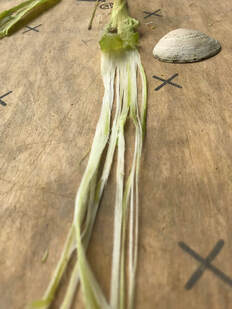
Grabbing the green stuff ,
I slowly pull it away,
then repeat
in the other direction.

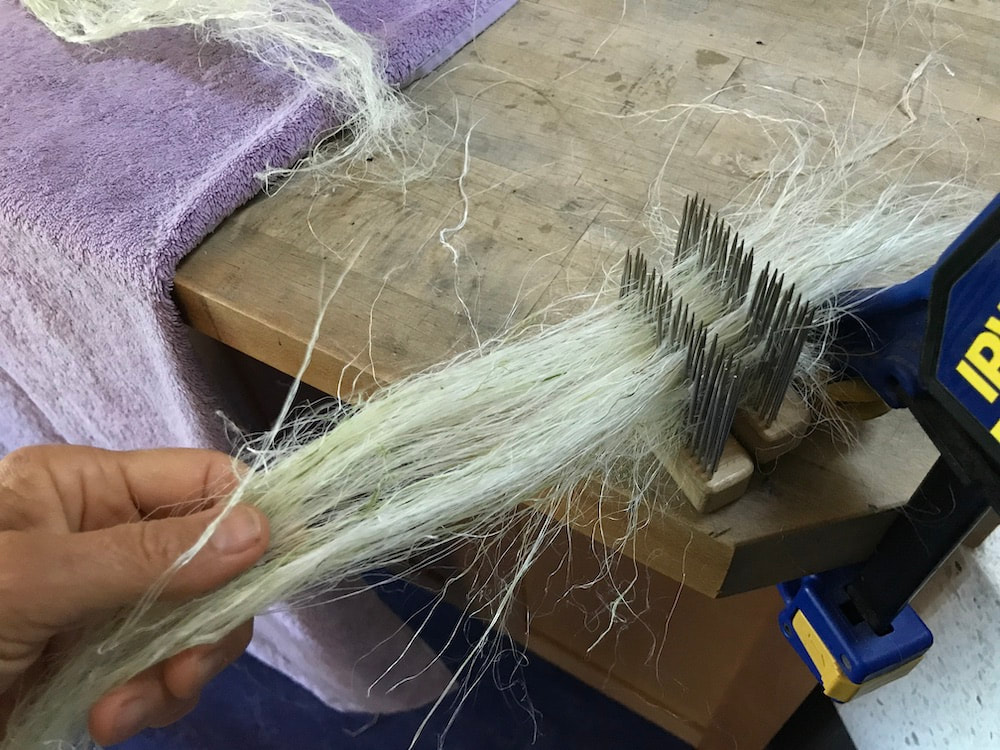
The outer bark generally has
shorter lengths of fiber
that didn't come with that first pull
so I do the same thing
with the ever shorter bits
until each strip is spent.
Picture
Picture
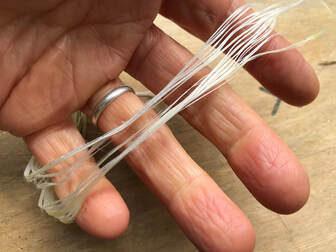
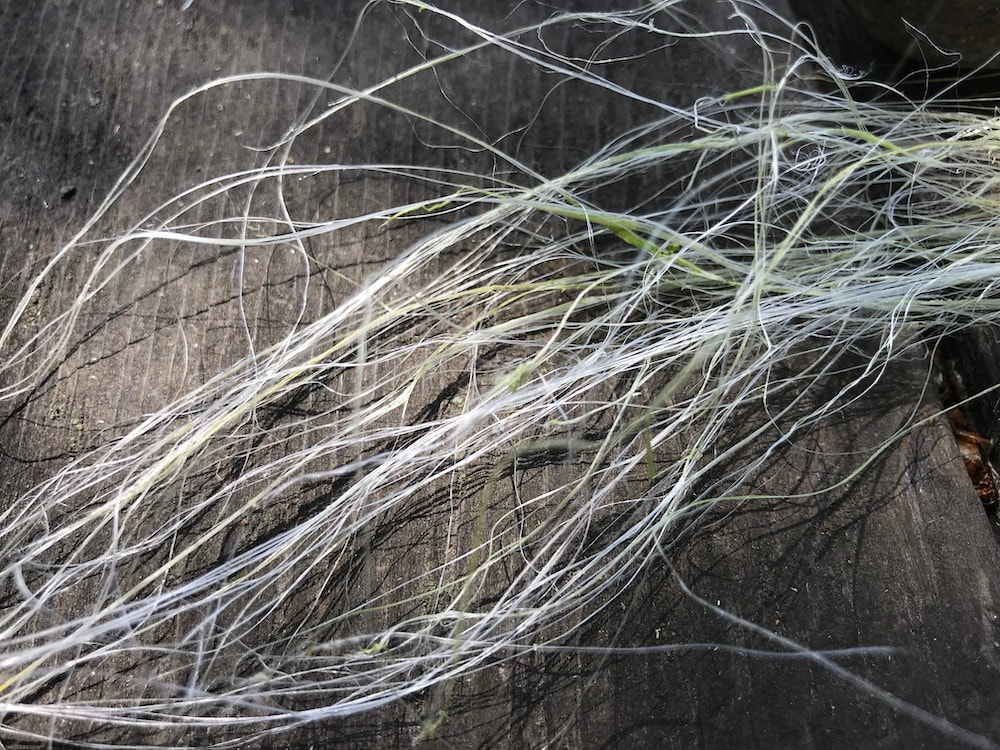
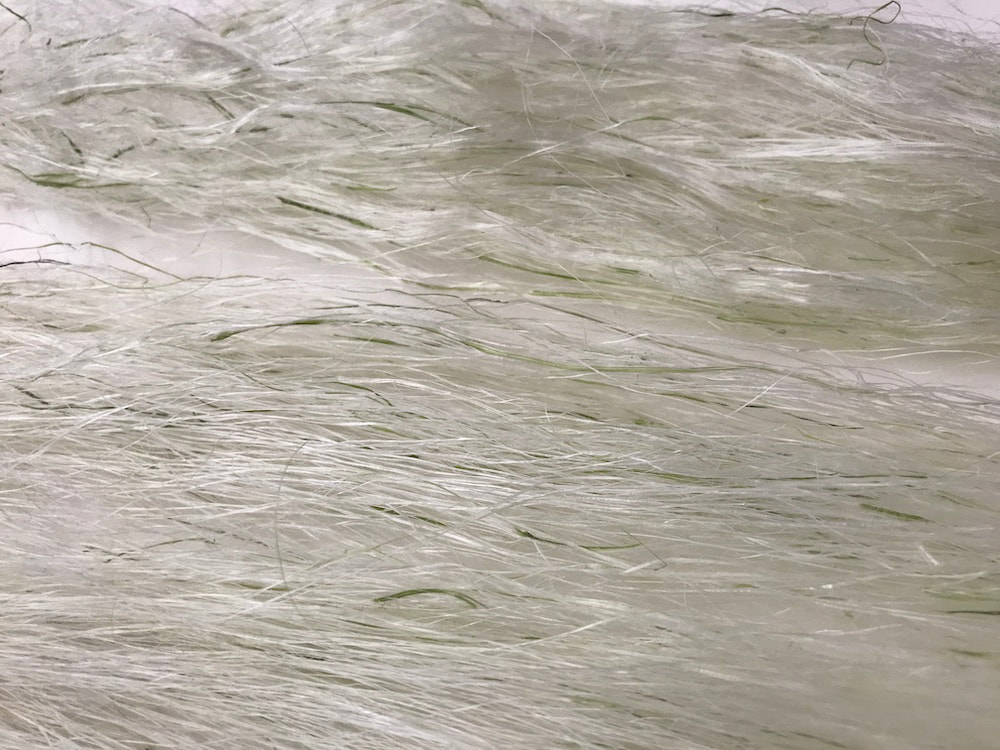
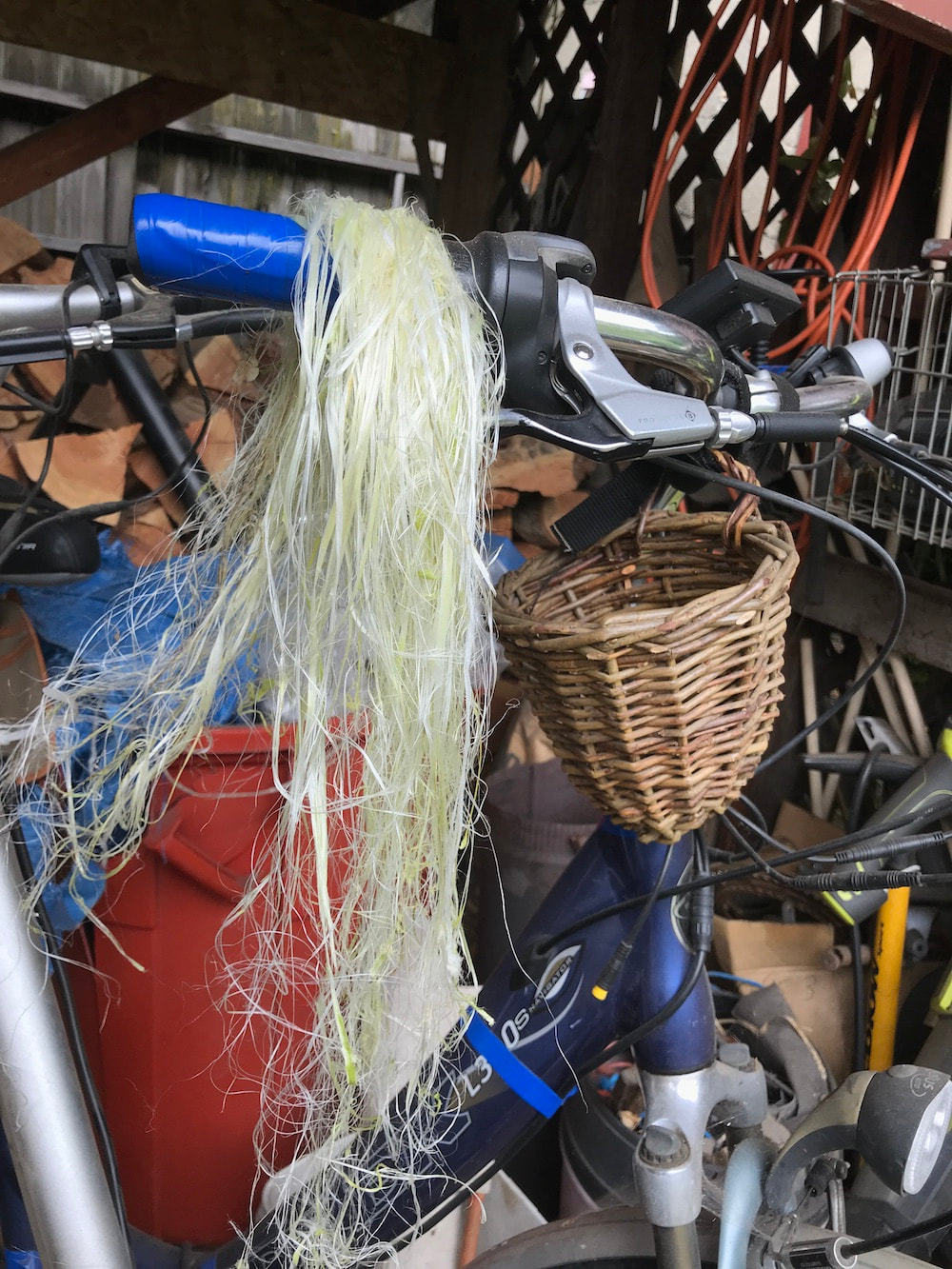
3 or 4 hours
and 10 or 15 stalks later,
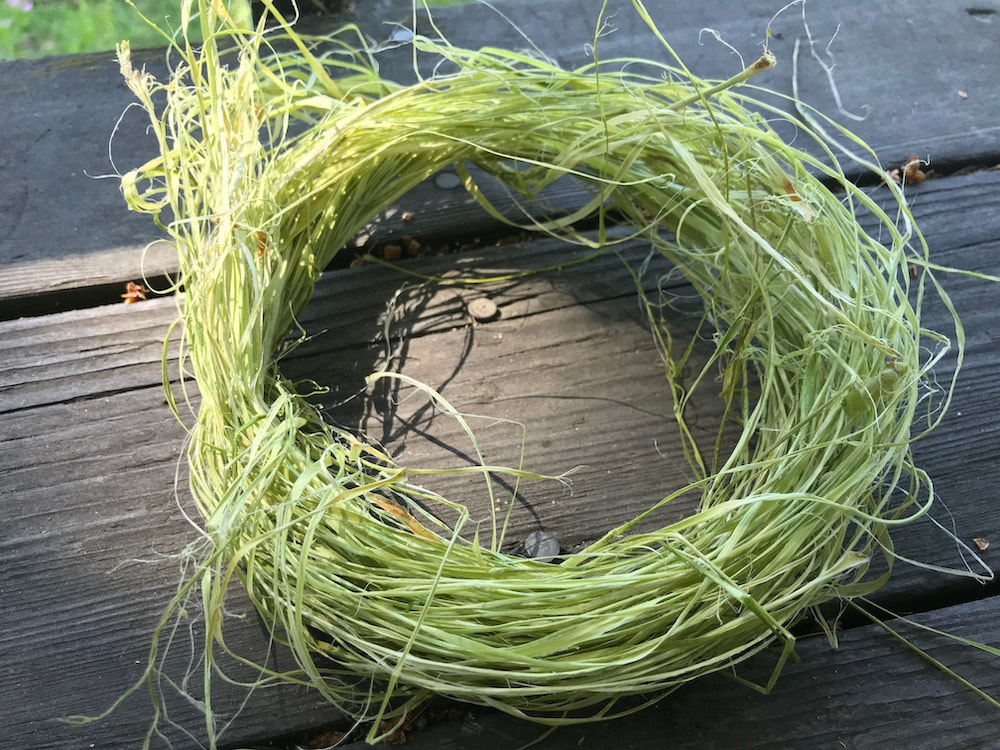
I might have
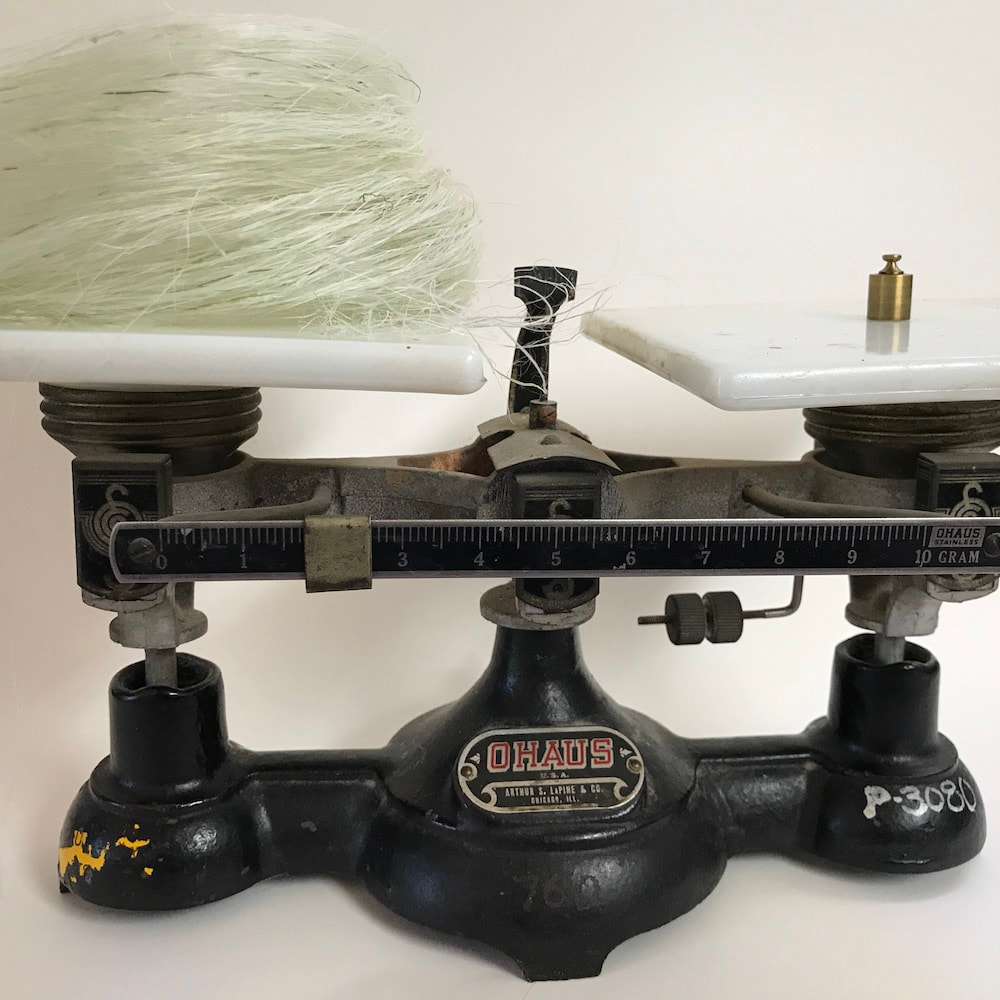
15-ish  grams of fiber.

​Note: these photos show a particularly abundant stalk.
Each is different.
Picture
There is probably
another week's worth of stalks
in the  pile.
​And I'm glad.
Picture
For at this moment,
when individually and collectively
we are all trying to cope beyond coping,
and everything feels balanced on a knife point,
it feels more important than I can say
to take my entire life down a notch,
and practice ​the revolutionary life skill
of choosing to allow myself
(with no plan, intended use or purpose),
to be delighted, fulfilled, and soothed
by the act of gathering fiber,
a strand at at time.
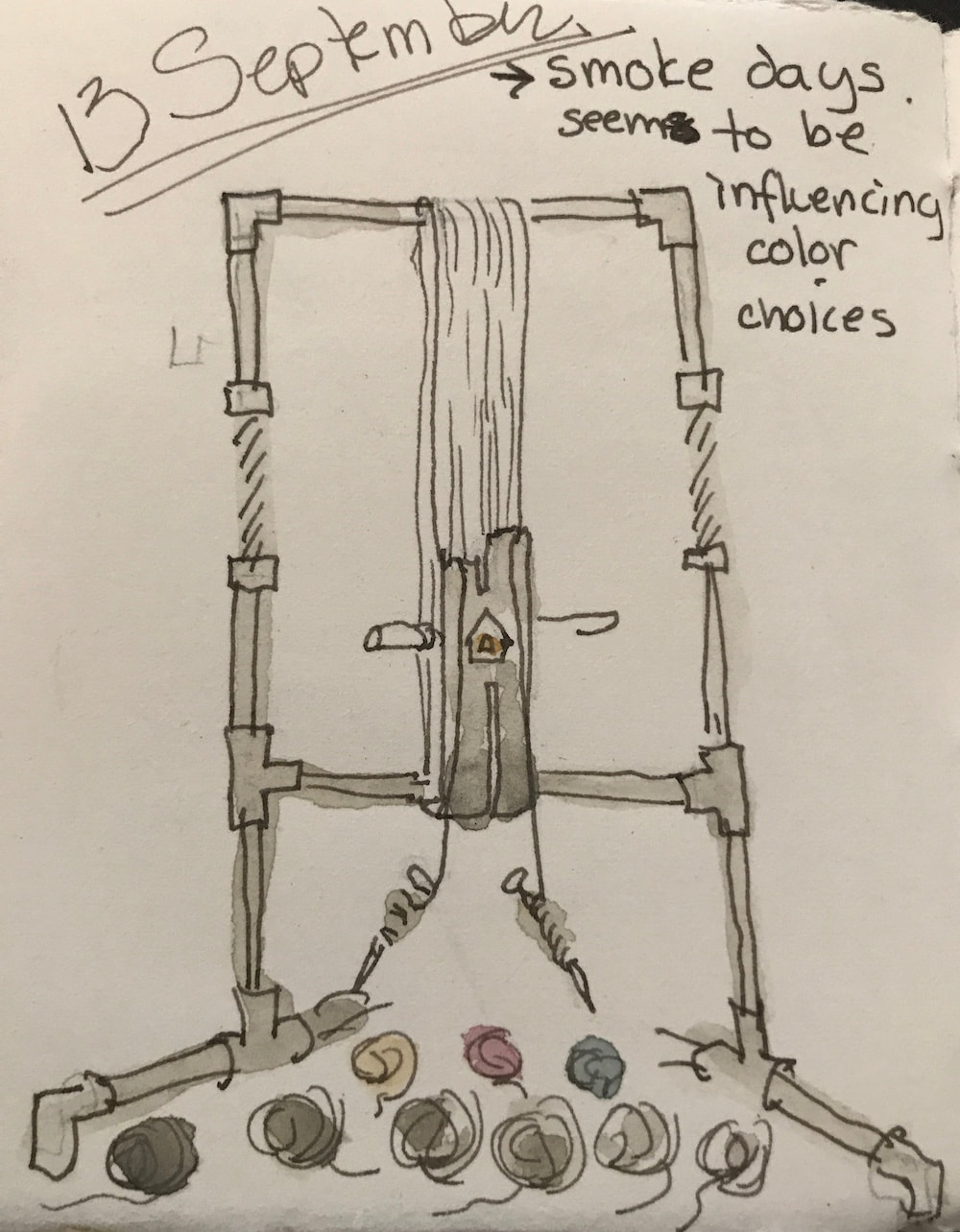
surprised by a tapestry

9/15/2020

 
Picture
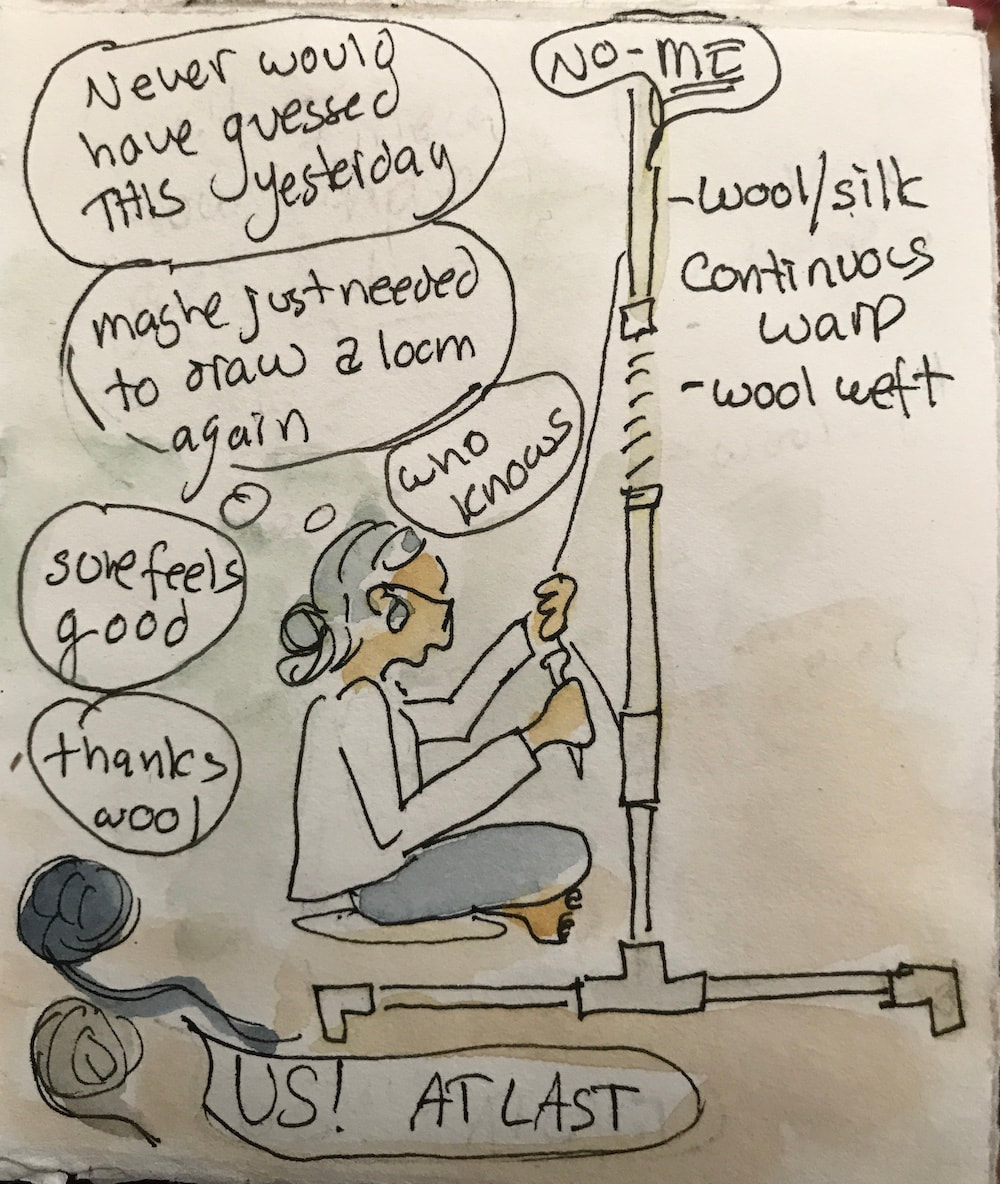
I didn't mean to start this tapestry--
and when I did begin,
I wasn't thinking
​about the air.
Picture

Back then
(all of four days ago),
the wind was blowing 
in a different direction,
and I was merely amazed
to be working with wool at all --
​much less weaving
it into a long narrow tapestry
with absurdly elongated slits.
(My ubiquitous wool sweater
steadily takes shape
on spindle and knitting needles,
but that is for evenings and lunch breaks;
regular studio time
has not been 
wool-centric
​for a while).
Picture

​So the whole thing
came at me sideways.
I mean -- 
this is a cordage moment--
​right--
and even if I was to
weave a tapestry,
milkweed
(or maybe willow)
would be
the obvious choice.

These fibers, however,
have other fish to fry
(or wrists to encircle)
and are not interested
in adapting themselves
​to a weft faced form
at this time.
Picture
​"Well," thought I,
having already
(somewhat precipitously),
built a pipe loom
and wound
a continuous warp.
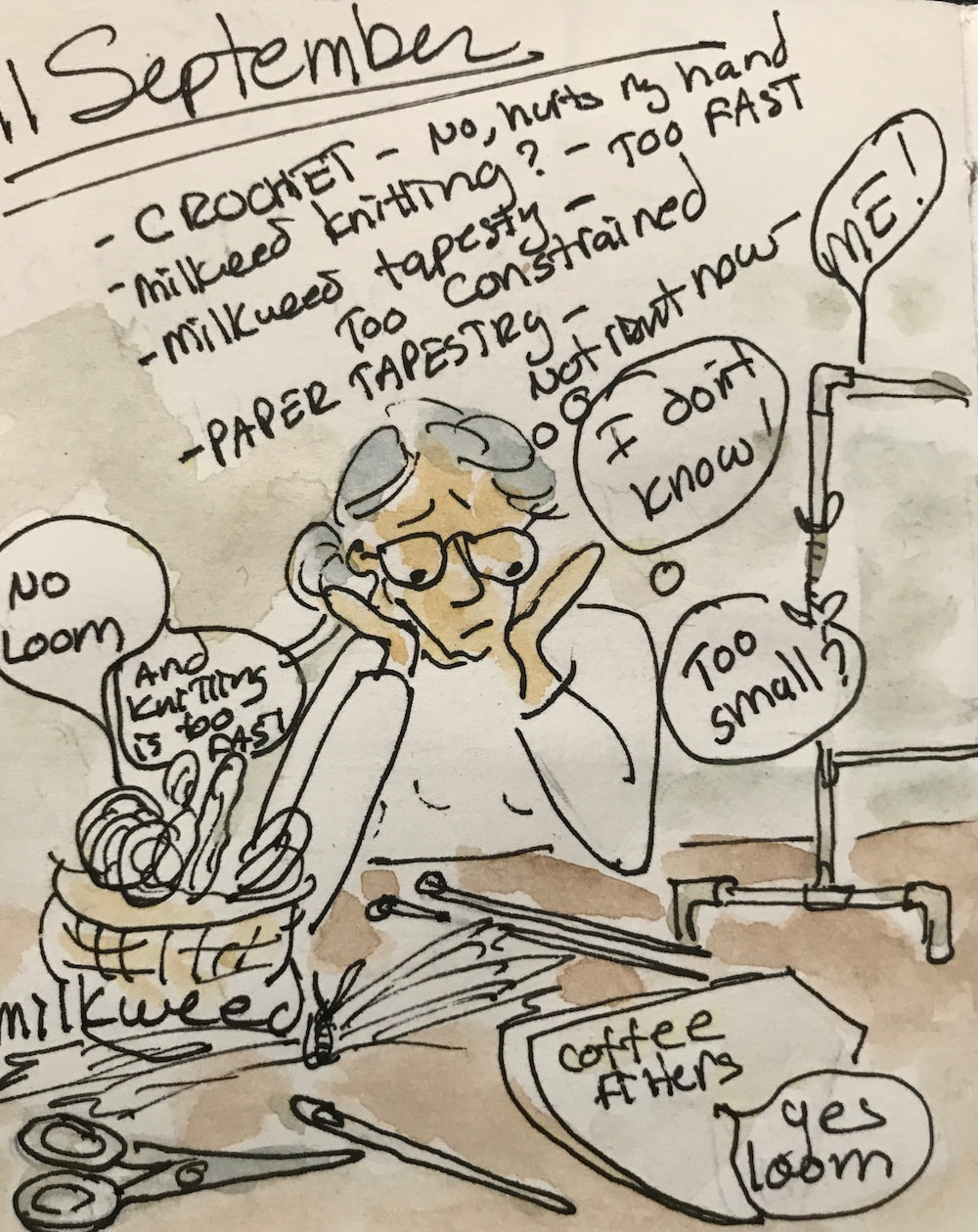
"what about
coffee filter yarn?"
Picture
Alas, no.
The coffee filters
did not care for
the freshly wound
wool/silk warp
(nor, methinks,
for playing second fiddle
to milkweed--
though that is 
mere speculation
for  while
they feel free to tell me
what to do,
these fibers tend to be
somewhat sketchy
when it comes to
​ explaining why).


(note--for more on continuous warps and how to wind them,
this blog post: Long Warp/Short Loom,  has info)
Picture
At any rate,
in the midst 
of my connundrum
(should I unwind that warp?)
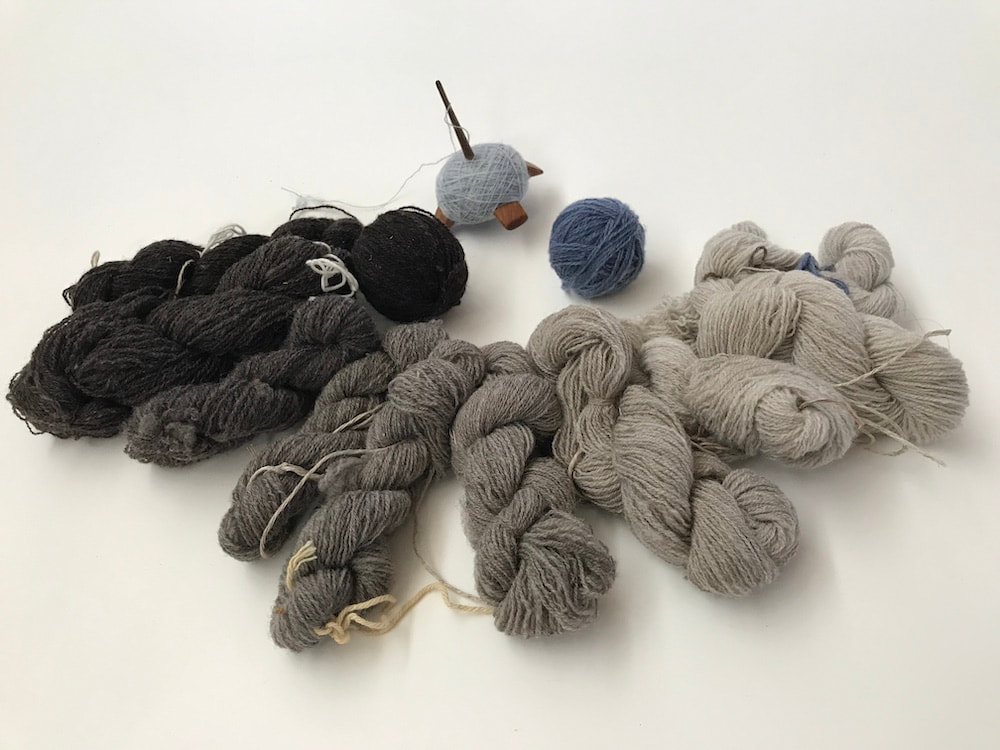
some lovely, fine wool skeins
cleared  their collective throat
from their comfy place on a shelf.
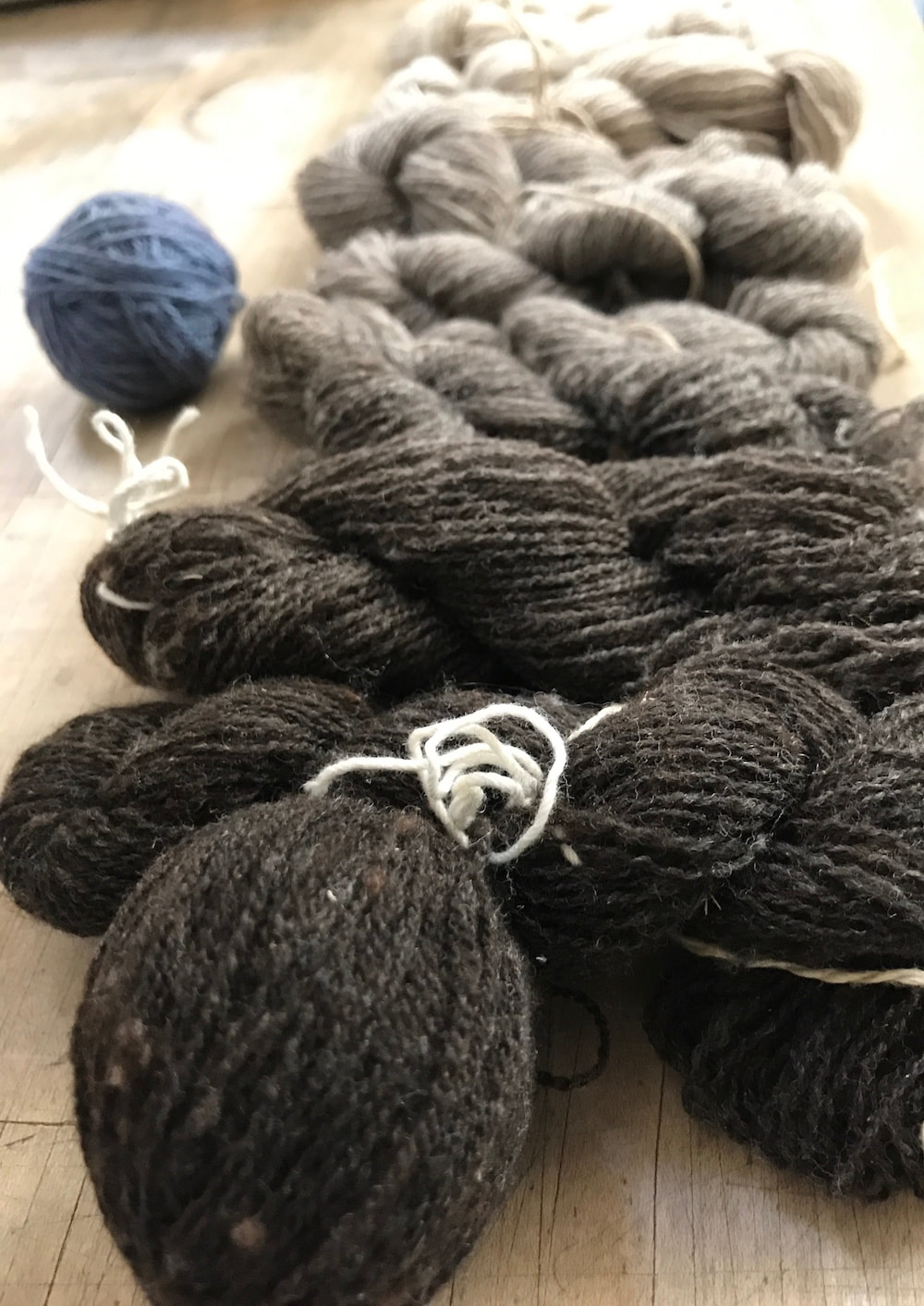
This gathering of skeins --
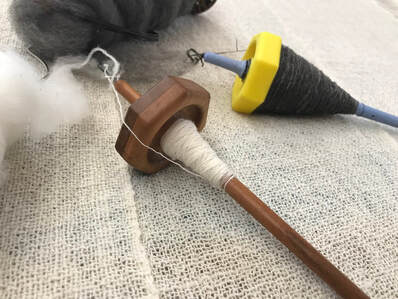
my "purse spindle project"--
​is a graded color progression
of Merino, Cormo, Polworth fleeces
I carded a couple of years ago--
and ever since
have spun and plied on the go
 with my Jenkins Kuchulu
(the aforementioned purse spindle),
whenever my dear  friend Rochelle and I
have met for tea--
historically at a local coffee shop
and these days
(carefully distanced),
shouting enthusiastically
across her back yard.
Picture
The plied yarn
is approximately 5500 yards/pound
so each little skein
represents many chat hours--
Picture
--enough that the
collective twist energy 

had apparently reached
 a critical level

and the skeins
were unwilling--
or unable--
to wait patiently
on the shelf
for another moment

(ever had that feeling?)
Picture
And of course once I began,
it was clear that the fiber
usually does know best.
 I'd forgotten
how familiar
and forgiving 
wool can be--
pure pleasure--
which is a fine thing
​on a series
of icky days.
Picture
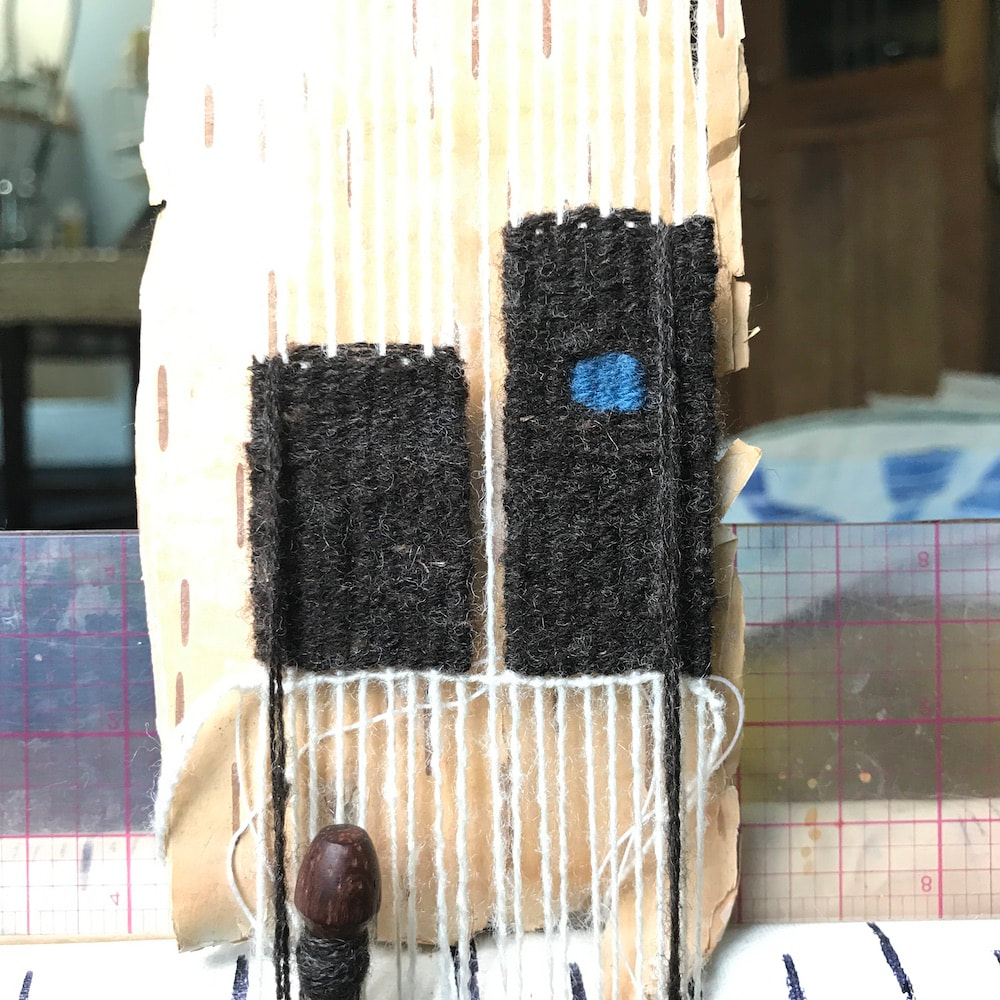
Soon enough
(no surprise
to you who know me
​though I had not planned it),
a little way up
​the color progression,
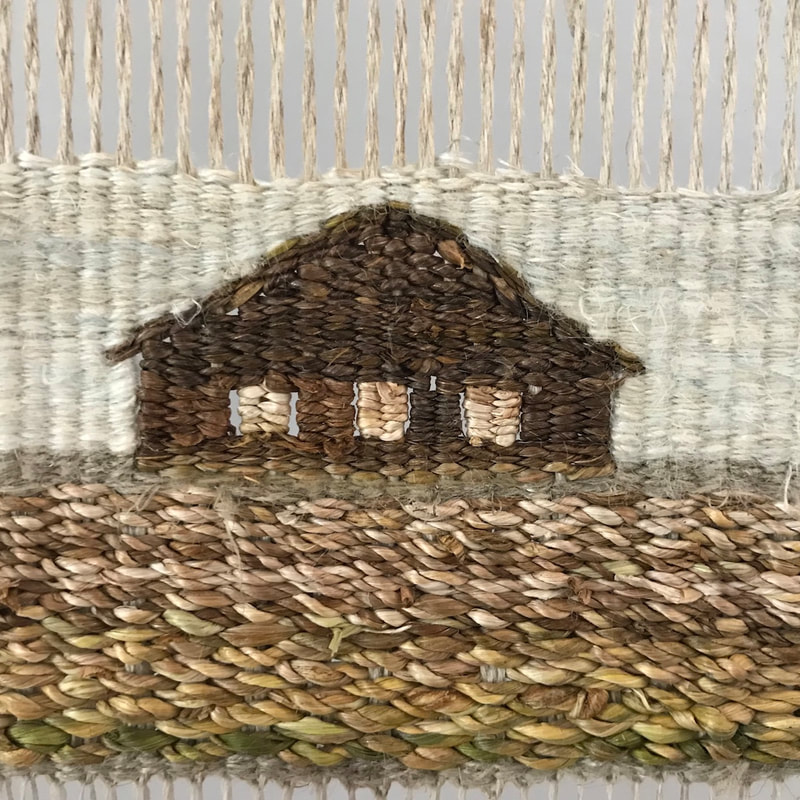
there appeared a tiny house:
encased in smoke
and with lights on during the day
as is the case right here--
​and in much of the rest
of the western half
​of the USA just now.
Picture
It's  horrible --
the fires I mean,
not the house.
​Even those of us
not in immediate danger 
of losing our homes to the flames,
know every dry leaf
​to be potential danger.
We long for rain
to clear enough air,
and ease the worry
about friends, family
and perfect strangers 
​in Oregon and California--
and wish we could
 open windows--
or go outside 
for an autumnal breath,
or even a walk.
On top of 
"everything" else,
it sometimes feels
like just too much.
Picture
Except, luckily,
though being 
somewhat crazy 
is absolutely "a thing"  these days,
working with magical
and opinionated materials
can help to turn
potential madness
into more of a
focused frenzy.
And when one can
share that frenzy,
and the utter
over-the-top-ness
​of bloody everything
with dear friends,
it is easier to remember
that up above 
the grey sock we're living in,
acres of blue sky
await.
Picture
So on we go,
up the warp
into the blue--
in all the ways,
soon.
​
Right?
(don't forget, my USA friends,
to order your absentee ballots soon!!!!)
Picture
And as we work our way along,
it's a fine thing
​ to have support--
from our compatriots
and from lovely books
like this  one
by Linda Ligon--
filled with stories
ideas, connection
and inspiration --
 a place where
tiny house tapestries
(blue skies and all),
might even
run into
​themselves. 
Picture

a few things a person can do with cordage

9/8/2020

 
Picture
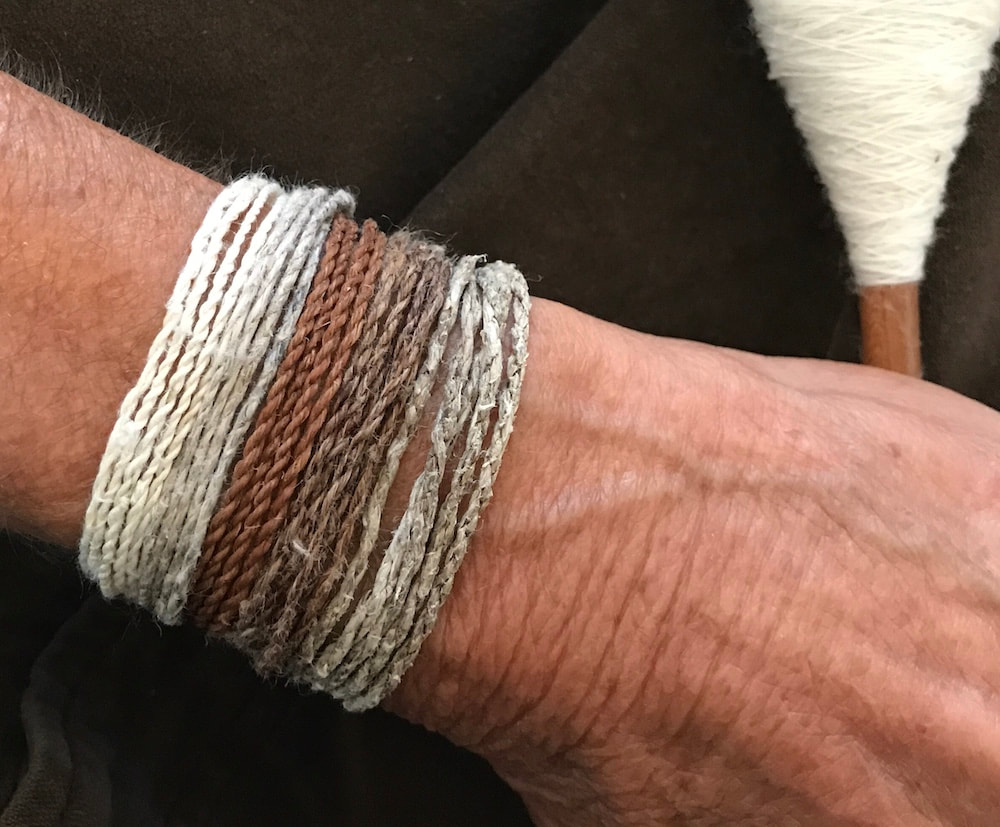
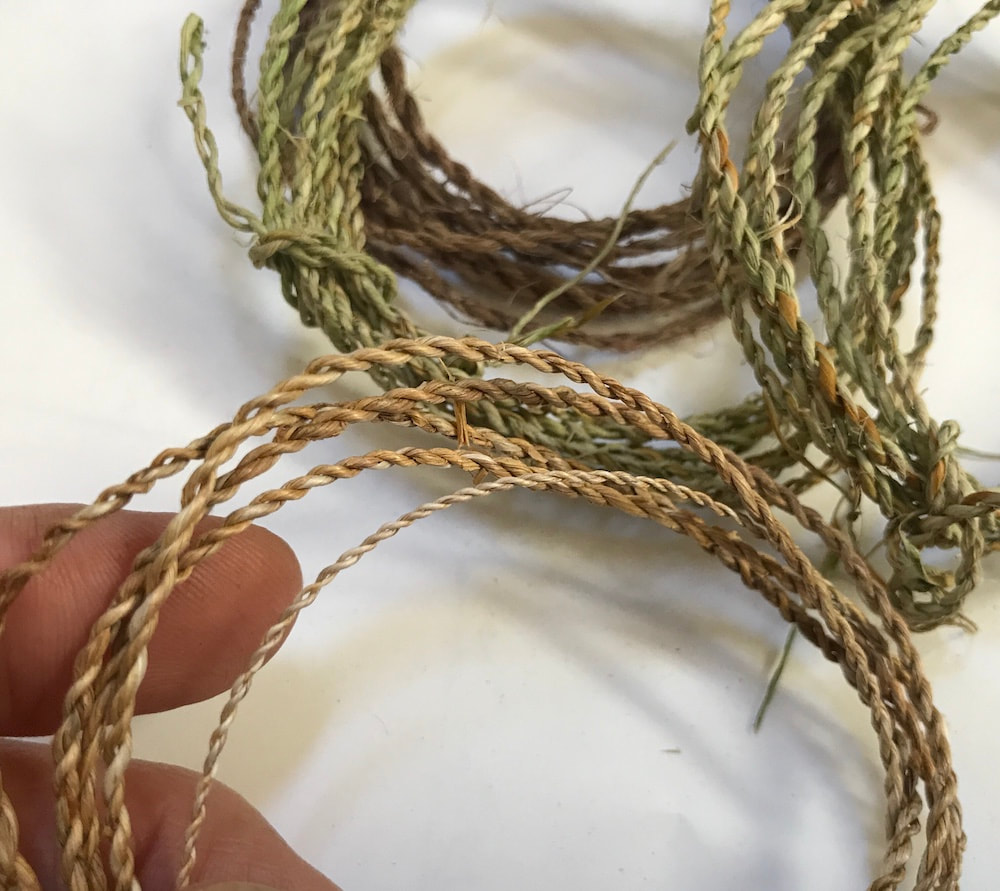
Milkweed Cordage: winter retted and fresh;
Wrap it
​
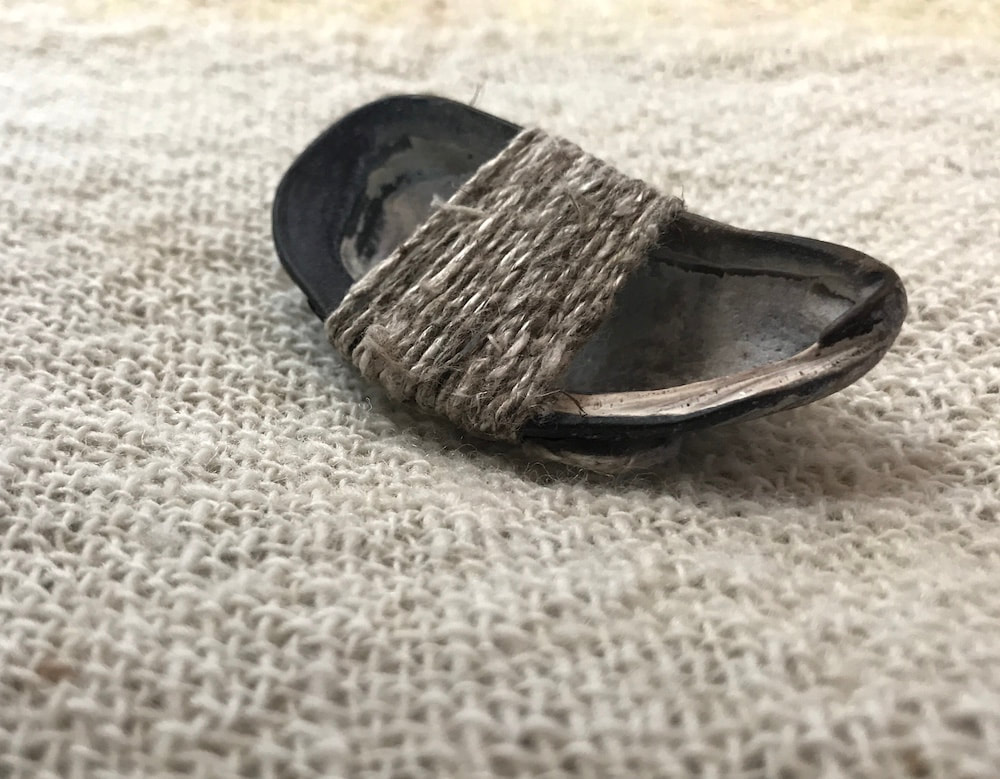
around a stick,

or a  rock,
Picture
Iris leaf cordage; rock from the shores of Lake Pend Oreille; shelf of oddments
or a shell.
Picture
field retted Milkweed cordage gathered and twisted in Vermont in June; Mussel Shell from the coast of Oregon; hand spun blanket
Experiment with  knotless netting--
Picture
Willow Bark cordage; Dog bed
--handily worked with a needle--
Picture
Nettle cordage; typewriter case
--so cordage and object
evolve together.
Picture
Willow Bark light catcher; hand; wall
Toss in a basket or box.
Picture
Milkweed, Flax and Dogbane in various states of twist; Iris leaf and Willow basket; Cardboard box
Bind a book--
Picture
Dogbane cordage; Coptic binding; assorted basement paper; wedge weave tapestry (coffee filter yarn; indigo)
--and keep it snug.
Picture
comic diary; same materials as above; hand spun blanket (suffolk fleece; backstrap woven strips)
Arrange by value.
Picture
Iris and Daylily cordage; workbench
Weave a tapestry.
Picture
The Promise Of Rain (in progress); hand woven tapestry; Iris and Daylily leaves; Flax; Indigo
Study  history.
Picture
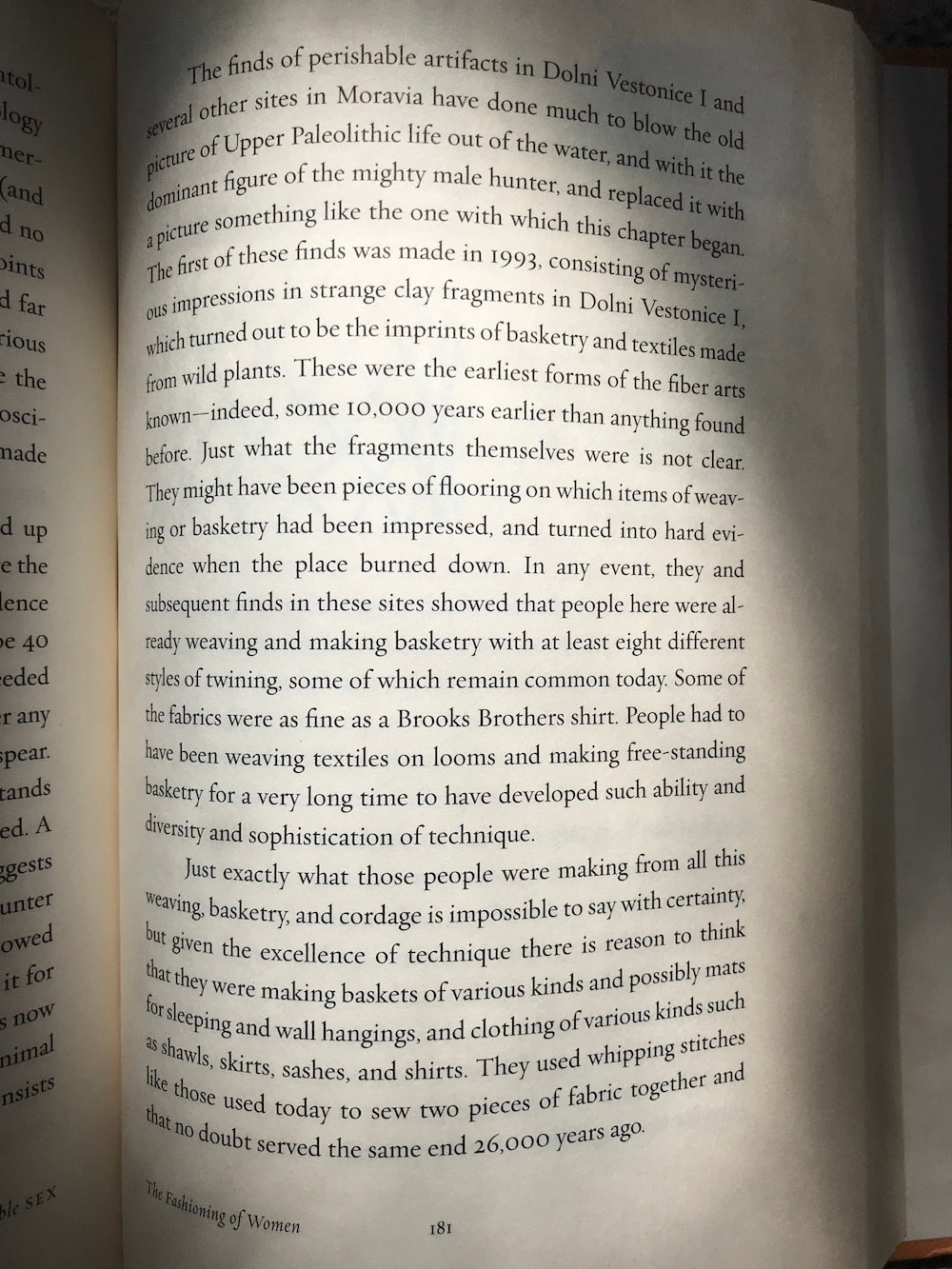
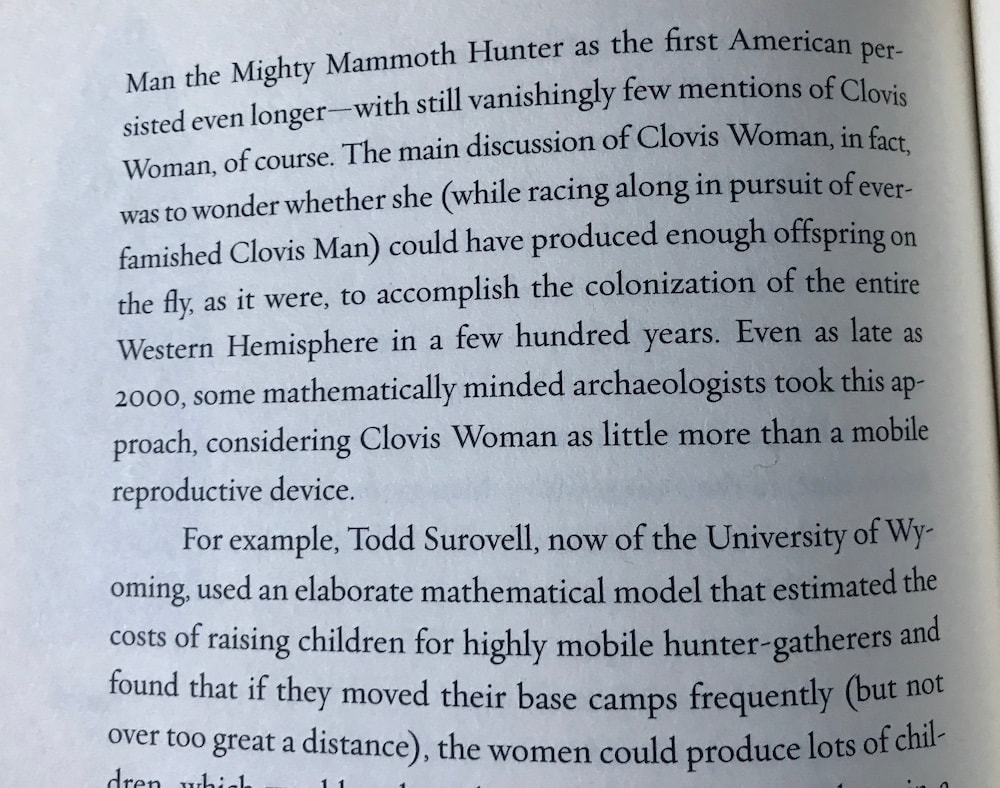
"The Invisible Sex" by J.M. Adovasio, Olga Soffer & Jake Page p. 181
Call it warp--
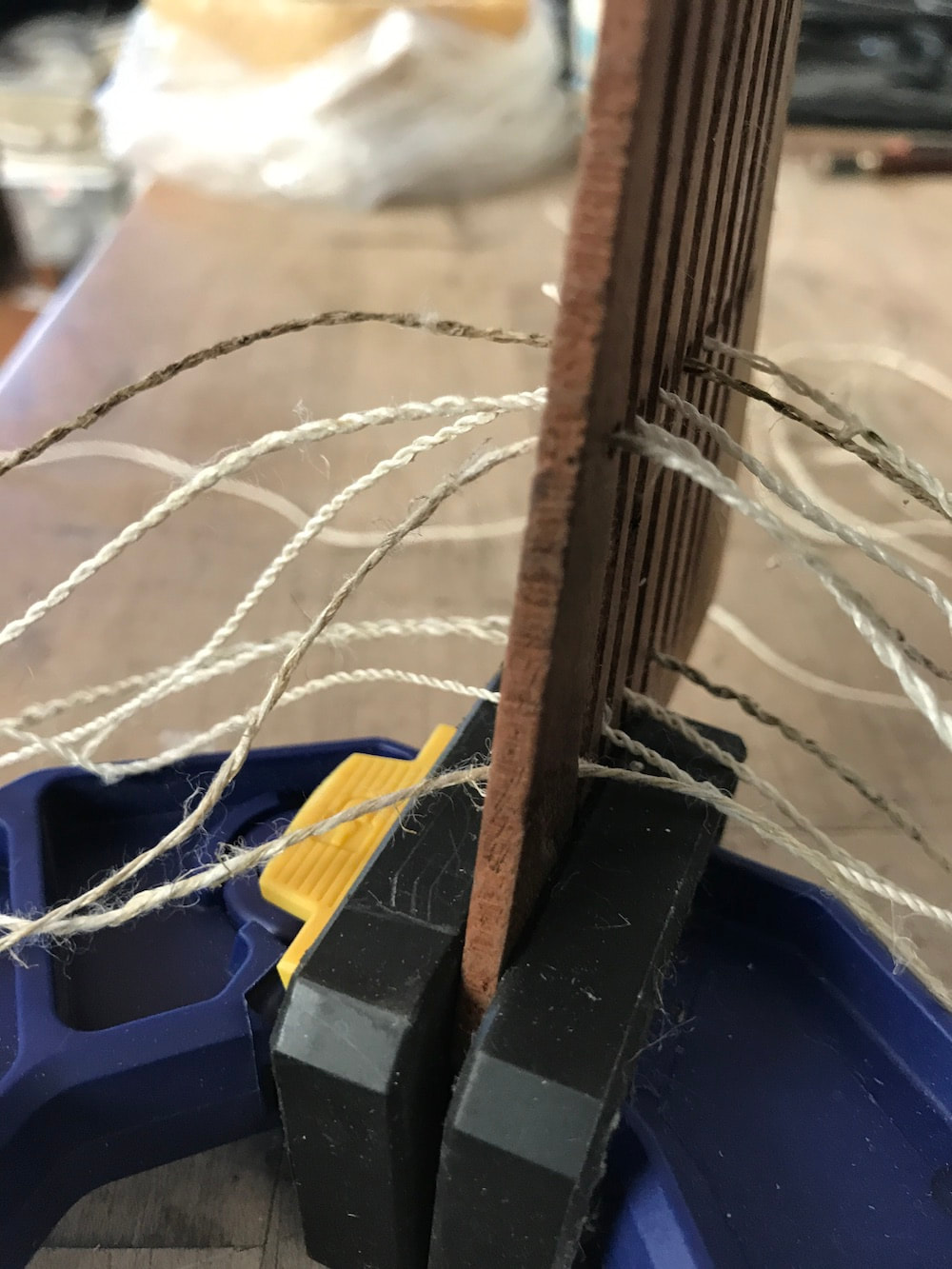
Picture
Flax, Milkweed, Nettle; hand carved heddle (unknown wood from basement); clamp; workbench
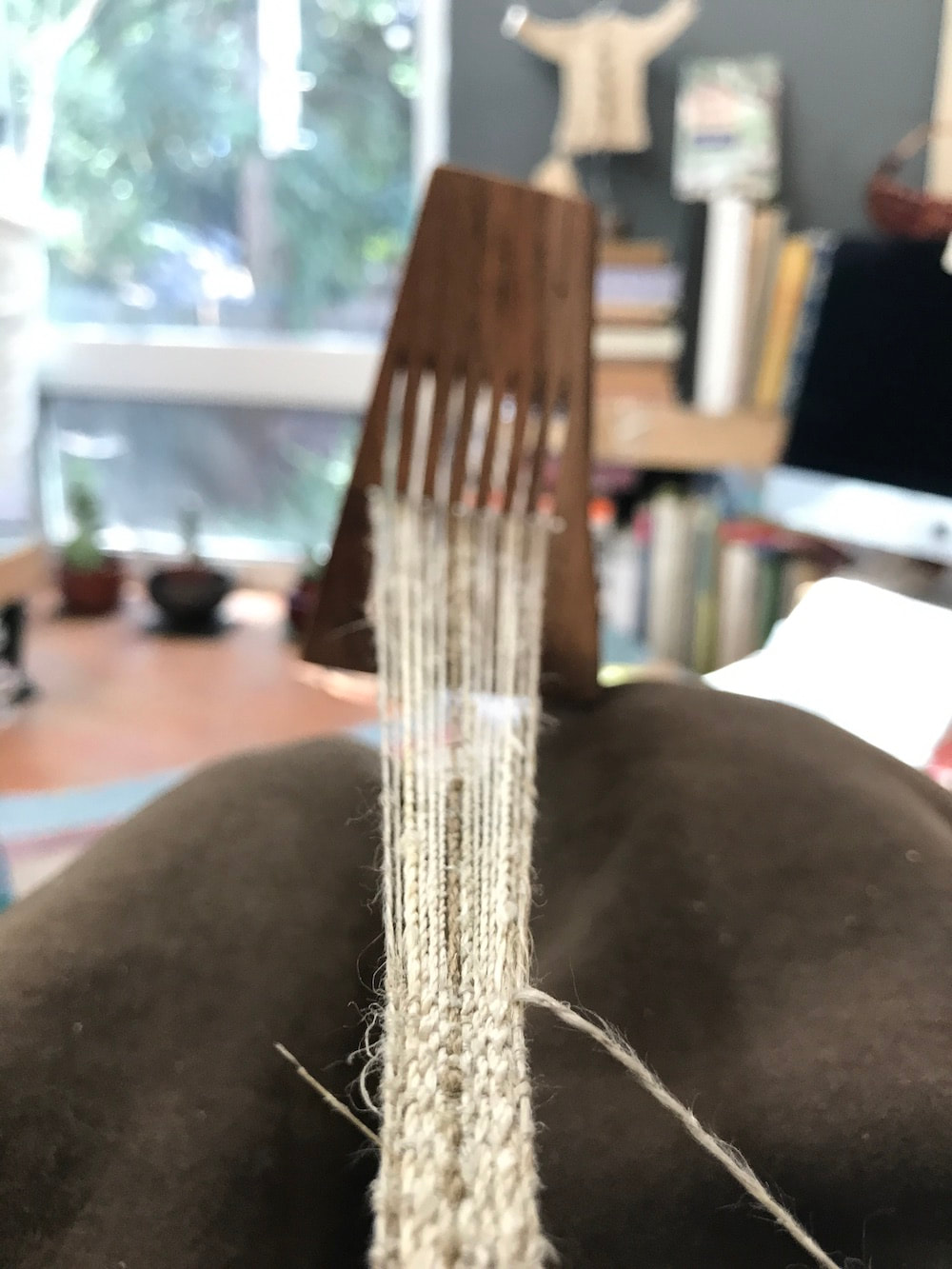
and experiment with band-weaving.
Picture
warp faced band in progress; heddle; cotton skirt; assorted background plants, books, bills, quilts, computer etc
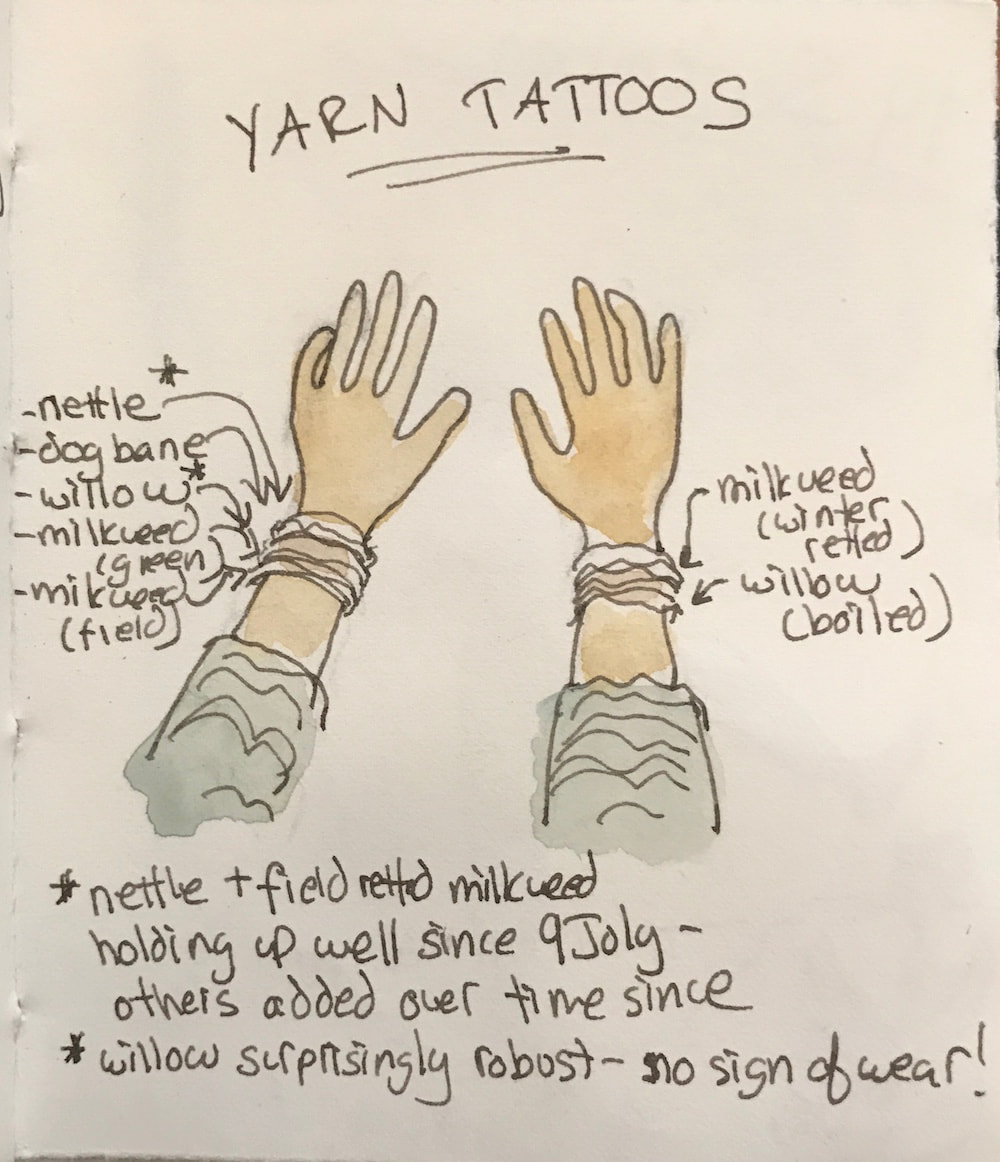
Conduct longevity tests--
Picture
left to right: fresh Milkweed; winter retted Milkweed; Willow Bark; Dogbane; Nettle (double-twisted); left wrist; Hepty spindle; Targhee/Debouillet fleece
--and admire 
the miracle
for months
(and counting).
​

Milkweed --what can I say?

9/1/2020

 
Picture
As you probably can tell--
we're continuing to have
​ a great time.
Picture
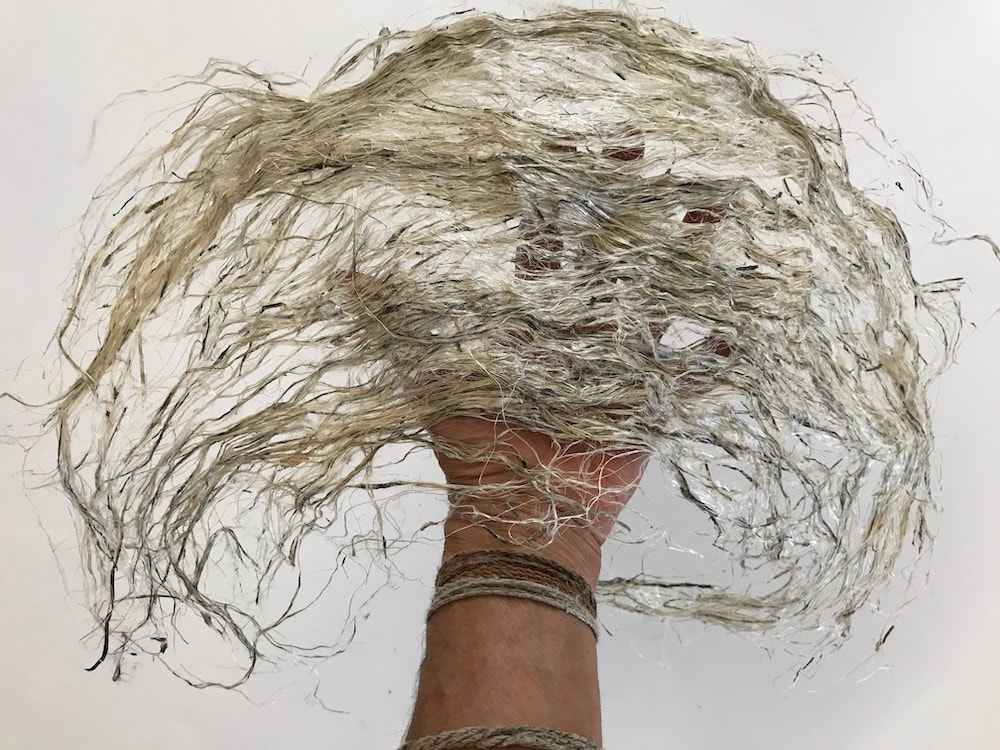
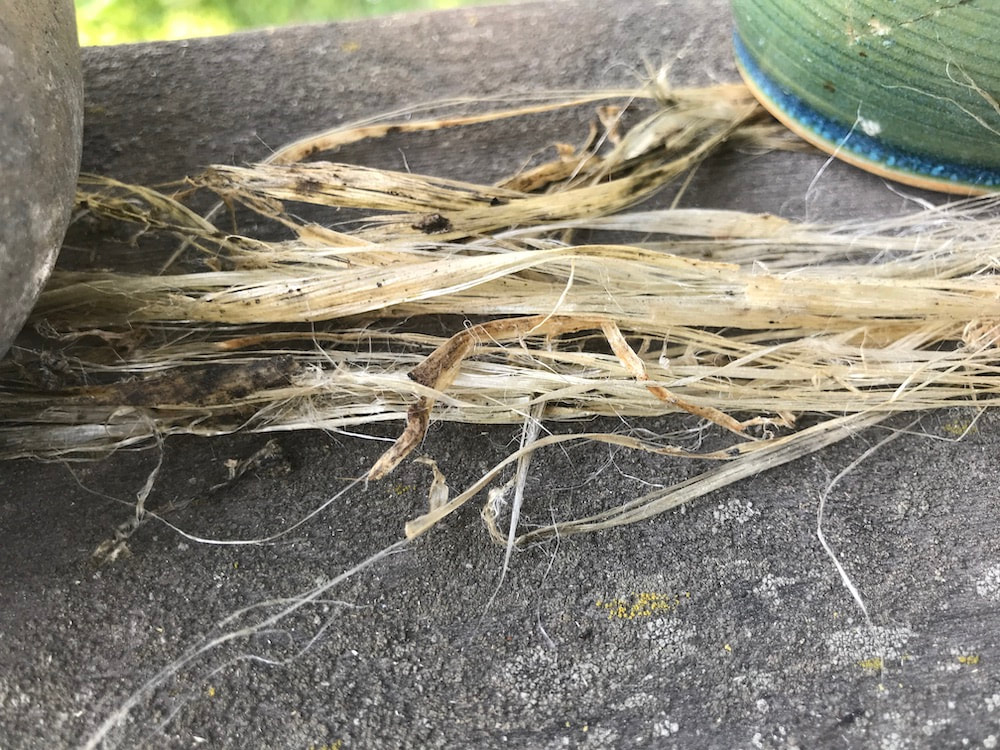
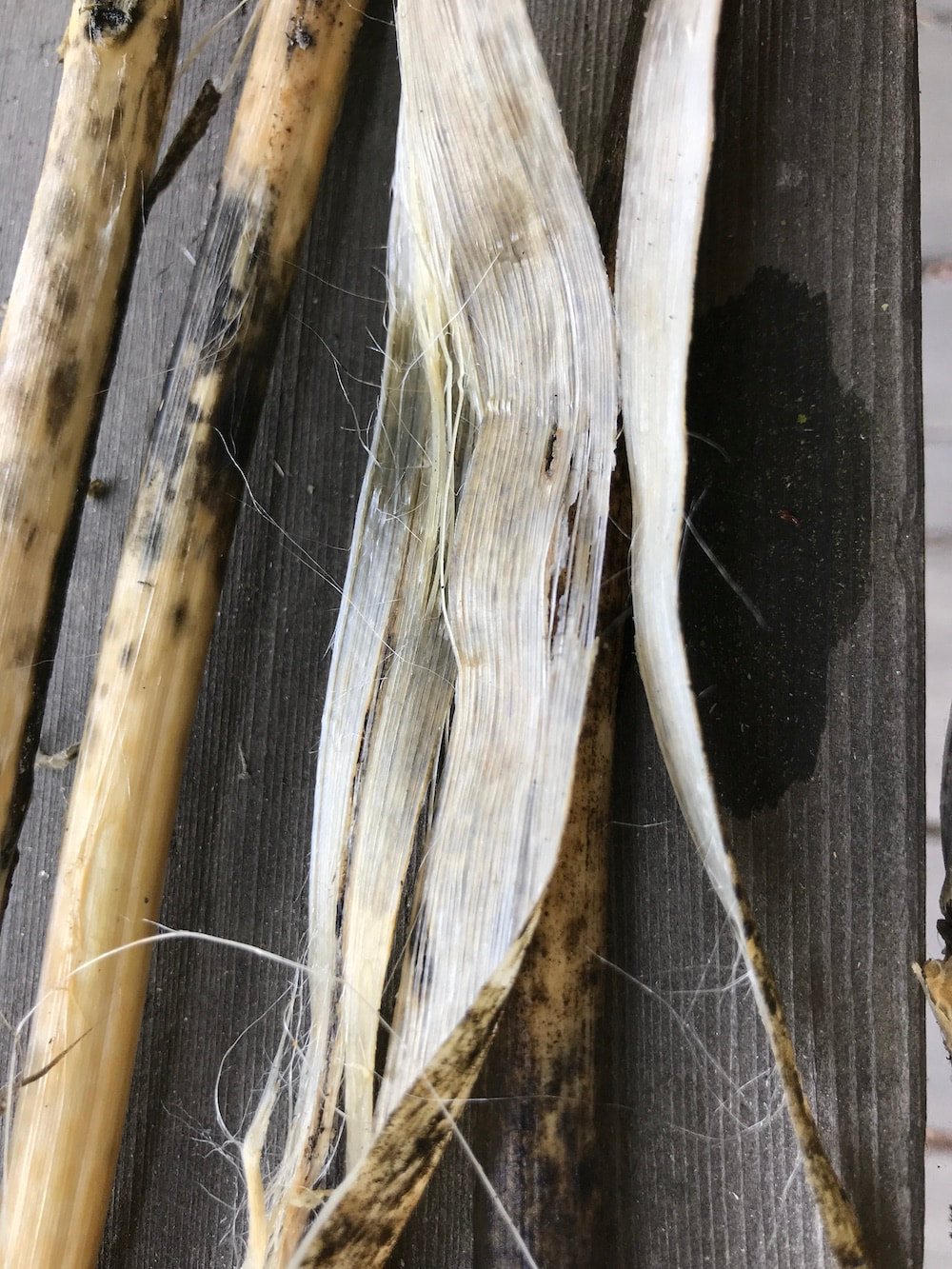
field retted milkweed from last fall, soaked, stripped from the core and ready for a gentle scraping of the outer bark
At least I am.
Though I still know so little

Indeed, though I can, apparently
describe a few actions:
"here we did this
​and there we tried that"--
Picture
milkweed fibers with outer bark scraped off
( I've captioned a few photos
with a bit of what​ has happened so far--
 though ​NONE of it,
I hasten to say,
​ is definitive),
Picture
right to left: Milkweed fibers from photo above, dry (approx. 7 stalks); similar amount gently combed; washed and re-combed
​ ​--my attempts
to sum things up 
are coming to naught.
Picture
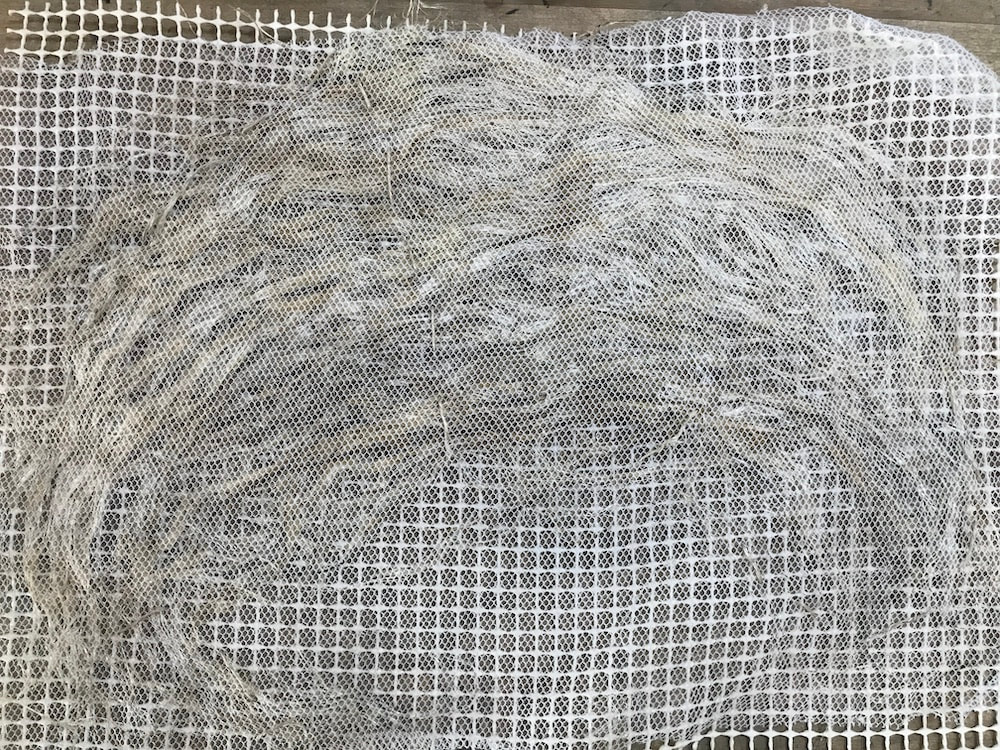
long fibers layered between pieces of mesh, stitched in place to keep from shifting, gently washed with soap then rinsed.
And really, how could I know
if the approach we took on such and such a day
​with a batch of last year's stalks
(very little of which I had time to process
back then when it was fresh)--
Picture
the fibers are stiff and elegantly shiny when dry
--will hold tomorrow
​when I have slowed down still more
and had my prejudices exposed
yet again
by this toughly gentle plant?
Picture
Washed fibers after combing, organized by length
In these photos, for instance,
having combed and re-combed
for consistency,
I documented the careful separation 
of the fibers by length.
It seemed a good idea at the time,
for is't that how a person is supposed to learn--
documenting the evidence
for later perusal,
​critique and summation?

And isn't it essential to 
show my work?
Picture
longest fibers, twisted by hand
Also, this is the process I used
with the batch of fresh stalks
​I wrote about here and here
and though I didn't outline each step
my categorizing brain
had already decided 
this was THE WAY TO DO IT.
​You can see the resulting skeins
neatly laid out below
​(and captioned!)
Picture
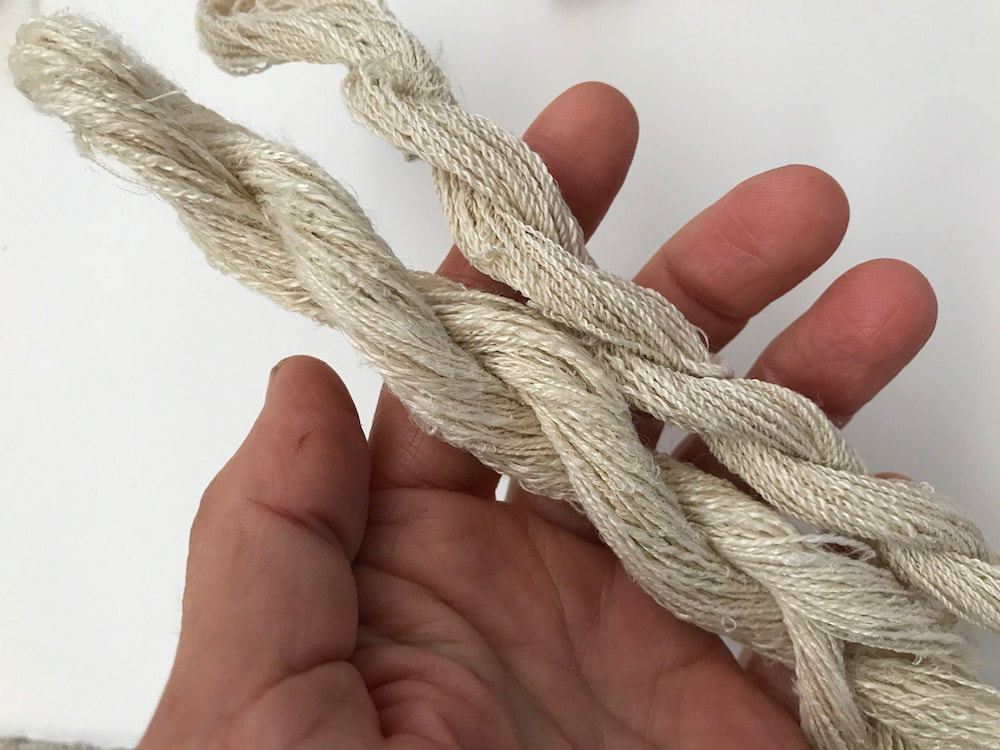
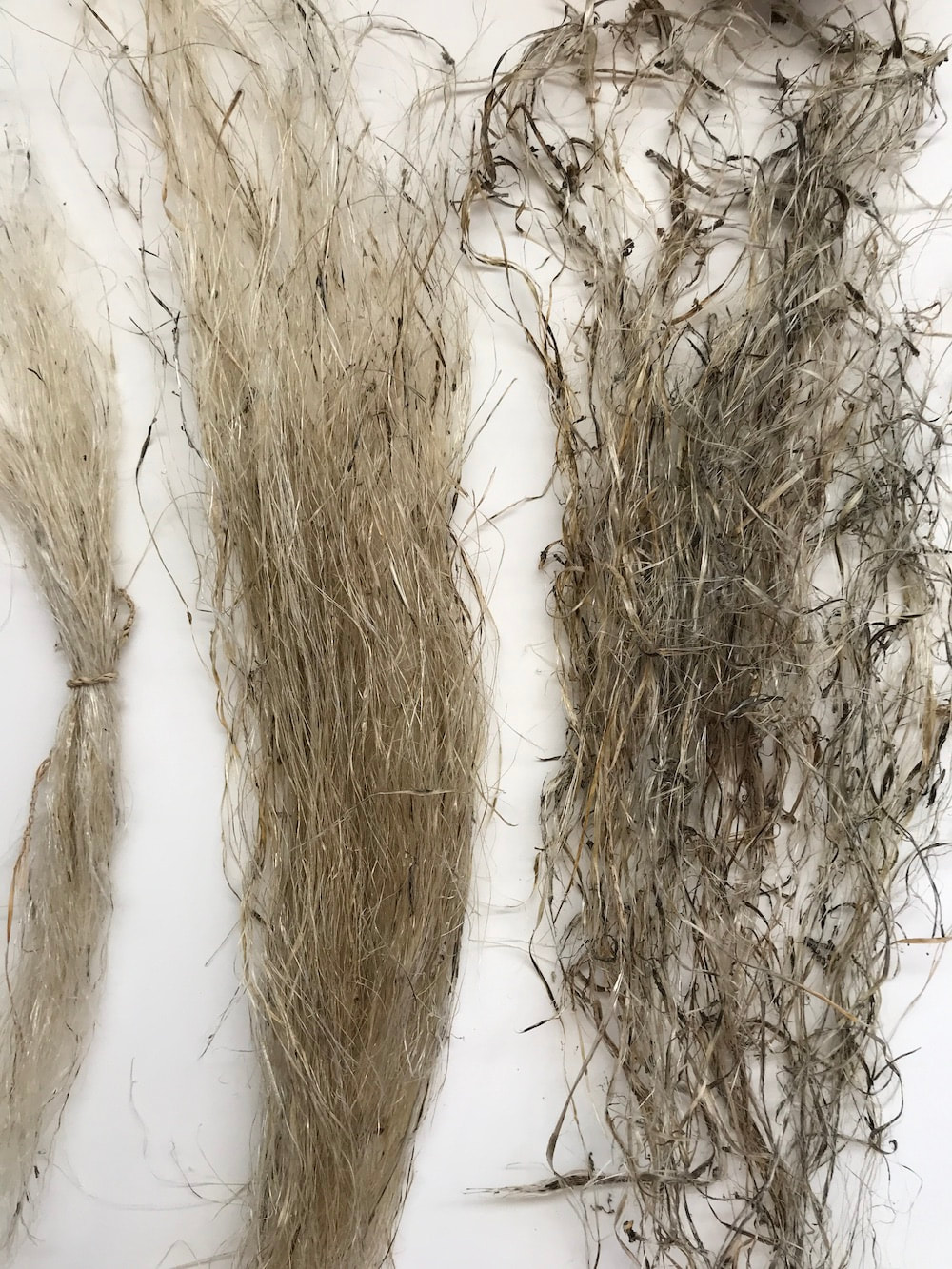
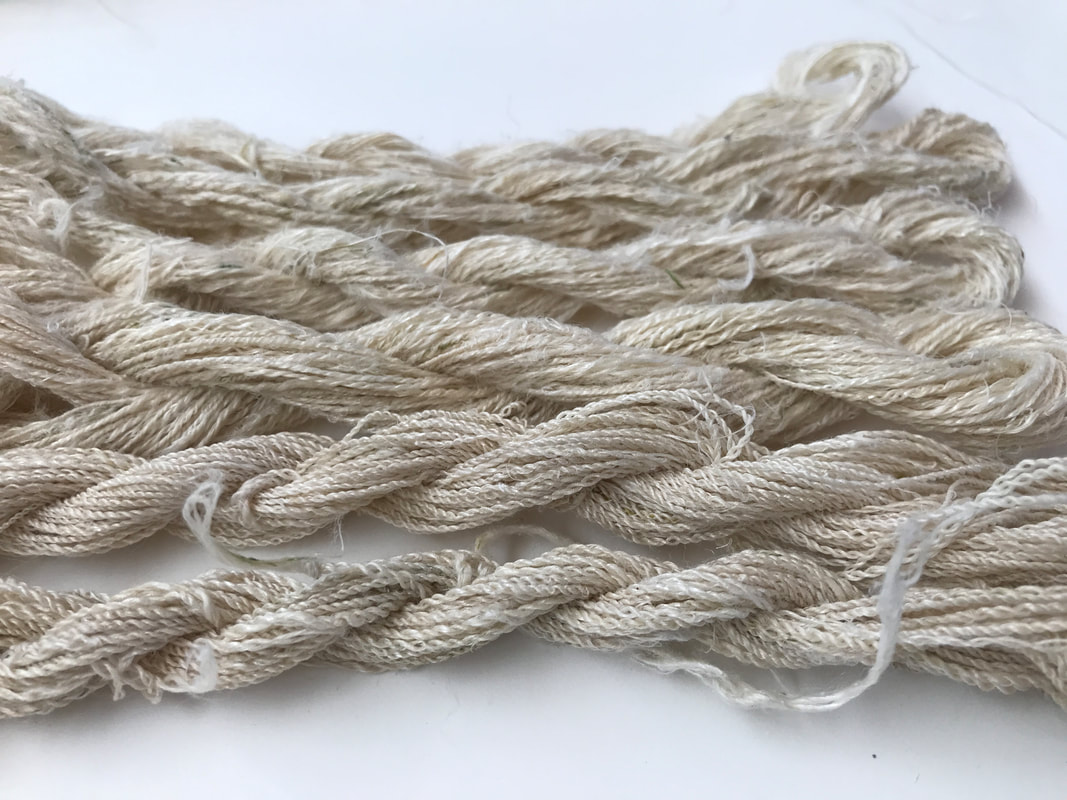
Milkweed yarn from fresh stalks; front to back: 1 & 2= hand twisted cordage with long and medium fibers mixed; 3 & 4 = combed and spun with distaff and cross arm spindle--longest then medium fibers; 5 & 6 - carded and spun from rolags with cross arm spindle, plied and singles; all skeins boiled for approx 1 hr in water with a couple of T of washing soda
Except --
this life is not
 an algebra exam.
There is no paper to write,
no quiz.
 I'm not applying for a grant,
or, indeed, waiting for any power
to give their nod of approval
and tell me I am
(or am not)
doing viable work
in accordance with
some list of measurable criteria. 

(I don't even have to worry
about my permanent record
that loathsome childhood school threat--
"time to tow the line
as everything, from now on,
goes on your permanent record."
Does anyone else remember that?)

Now that I think about it though,
the milkweed itself
may well be taking note.
How else could some processes 
seem so utterly natural
​and others -- just a little off?
The strands, however,
speak directly to my hands,
and neither uses words,
so they generally  do their thing
without connecting 
to the recording device in my brain--
Picture
fresh milkweed; spindle spun on the left, finger twisted on the right
which may well be why
it took me 
ages to notice
that ​"grading" the fiber by length
made me feel kind of icky--
to understand that I was using the ruler
as a kind of 'goodness measure,"

 creating a hierarchy
where none needed to exist--
 imposing my internalized beliefs
and  accompanying judgements
about efficiency, control, and organization
onto a plant that will contentedly grow
by the side of a gravel road,
spaced as it wants to be spaced,

feeding butterflies
and producing amazing fiber---
 all of which is useful.
Picture
It's that idea
​that agriculture isn't a thing
unless the plants
are in rows. 
At any rate,
and for whatever reason,
when I had the good fortune
to get another 7 or so
fresh stalks of  Milkweed
from a friend's "garden waste pile,"
I decided to forgo the combing altogether.

Picture
And the medium sized lengths of fiber,
are twisting into cordage just beautifully,
complimenting the longer pieces
to make the whole
even smoother than it was before.
Picture
What  I'll do with the yarn --
when I'm done--
whenever that will be--
I've absolutely no idea.
 I know for sure today
is that the more time I spend with this fiber
and the slower we go,
the longer I want this part
to last. 
Picture
ps -- because there always seem to be
one or two (or four) more things to say:

1.
A lovely handmade book
about another milkweed relationship:
Poor (Wo)man's Asparagus
by Velma Bolyard


2.
The Nature of Things:
Essays of a Tapestry Weaver

by Tommye McClure Scanlin
will also be out this fall and though
I didn't realize it when listing books last week, 
it is also available for pre-order from your favorite bookseller.
Wonderfully inviting essays on Tommye's design process and tapestry life.

3.
Nettle Fiber Resources
For those of you who have access to Nettles rather than milkweed
Allan Brown shares many resources here and here
and
Sally Pointer has several Nettle Videos. Here's one. 
Of course nettles are not milkweed (as I keep finding out!),
any more than milkweed is flax, 
though apparently, nettle can handle some flax-like techniques!

4.
​And just because:
A marvelous blog by Tracy Hudson --
Thoughtful in all the ways I find satisfying

books with fibers caught in their pages

8/25/2020

 
Picture
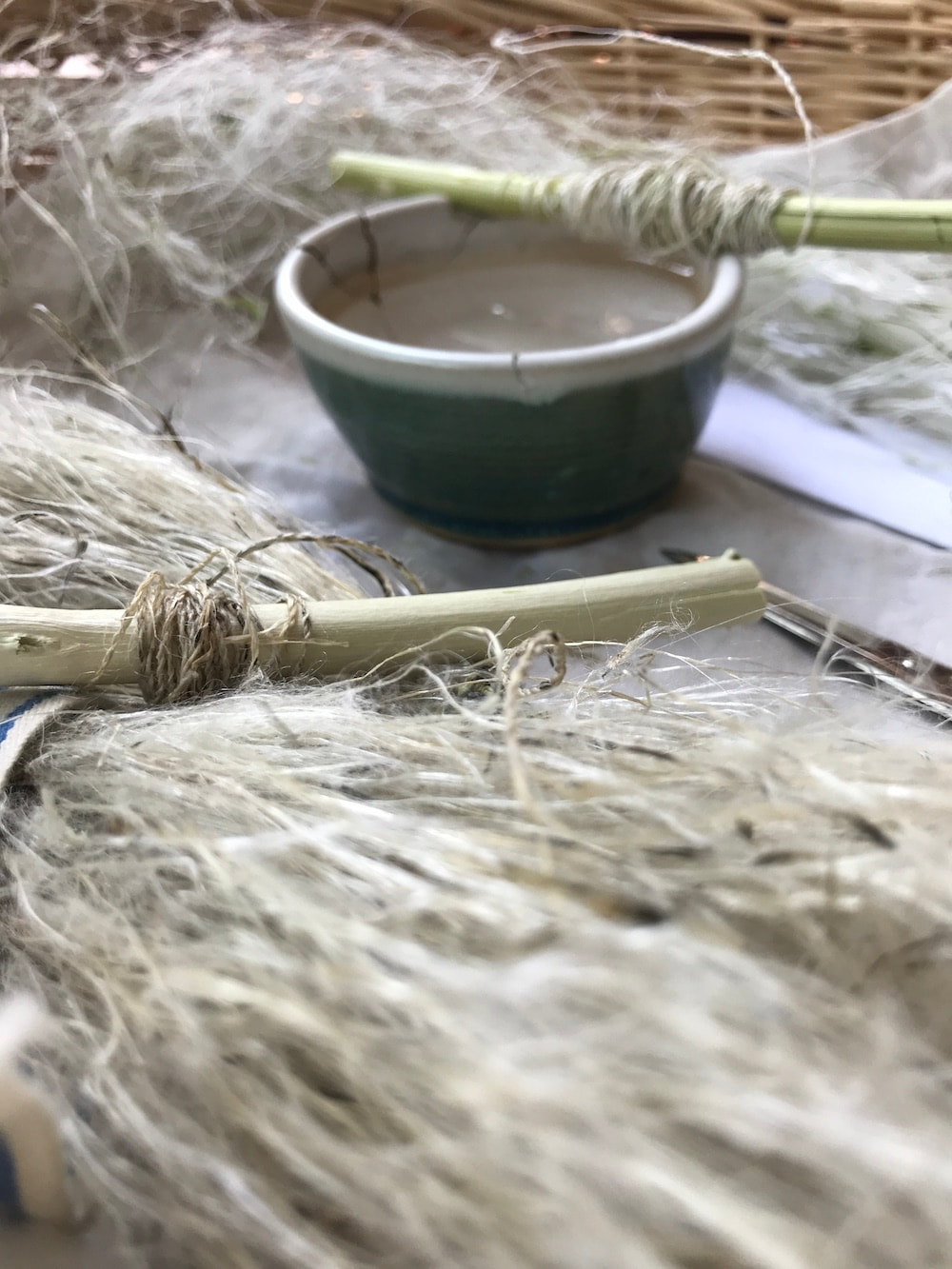
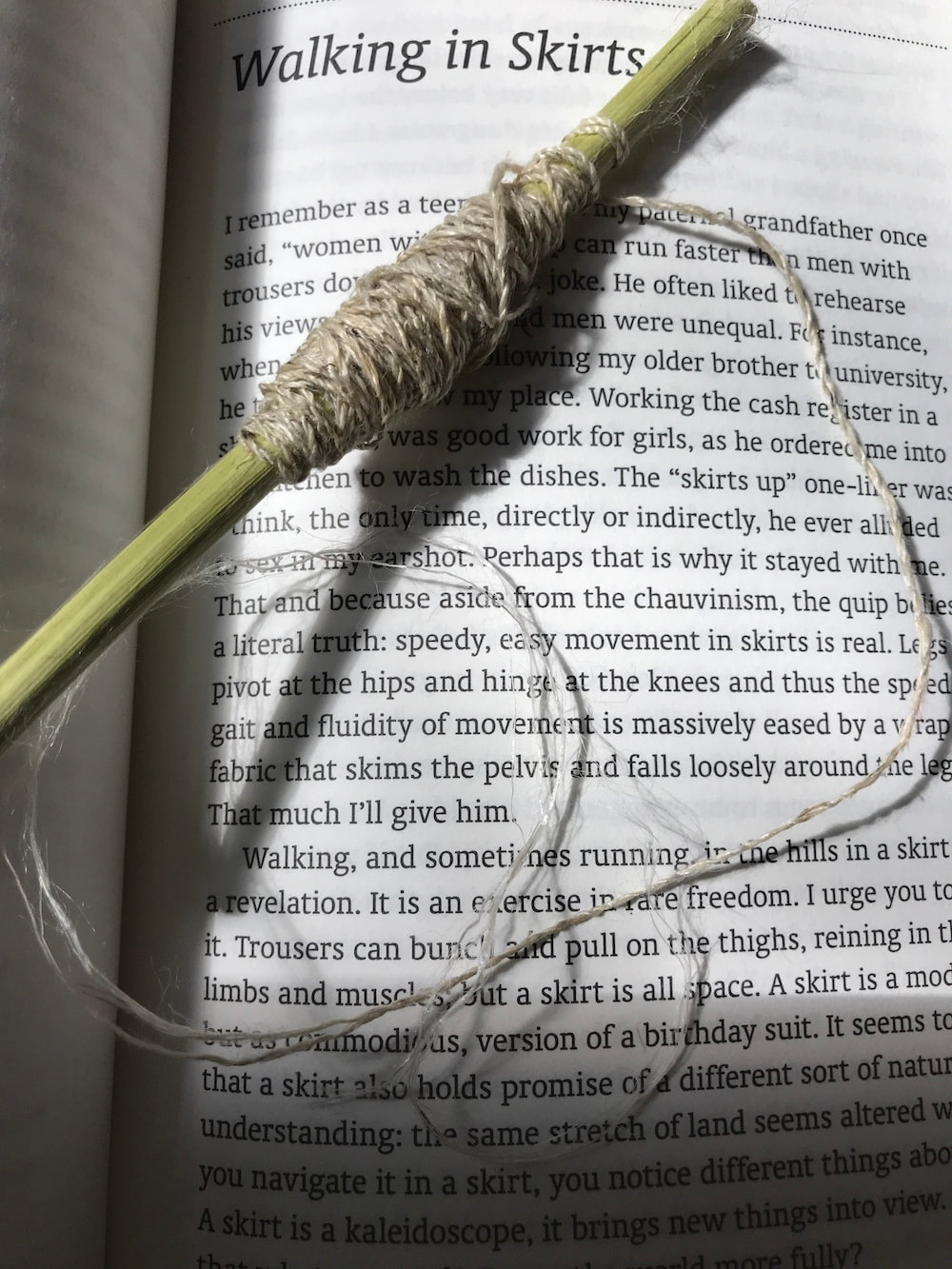
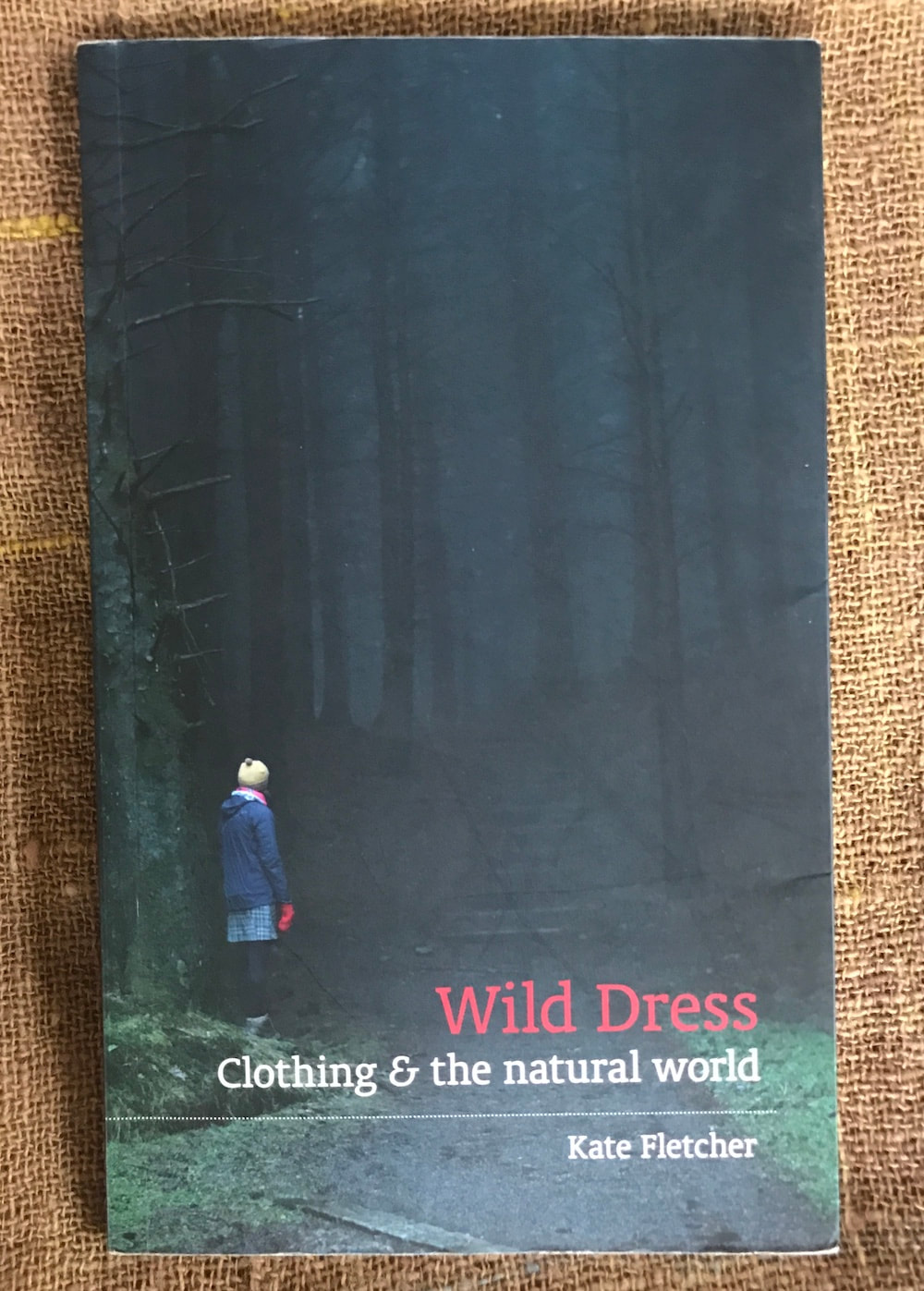
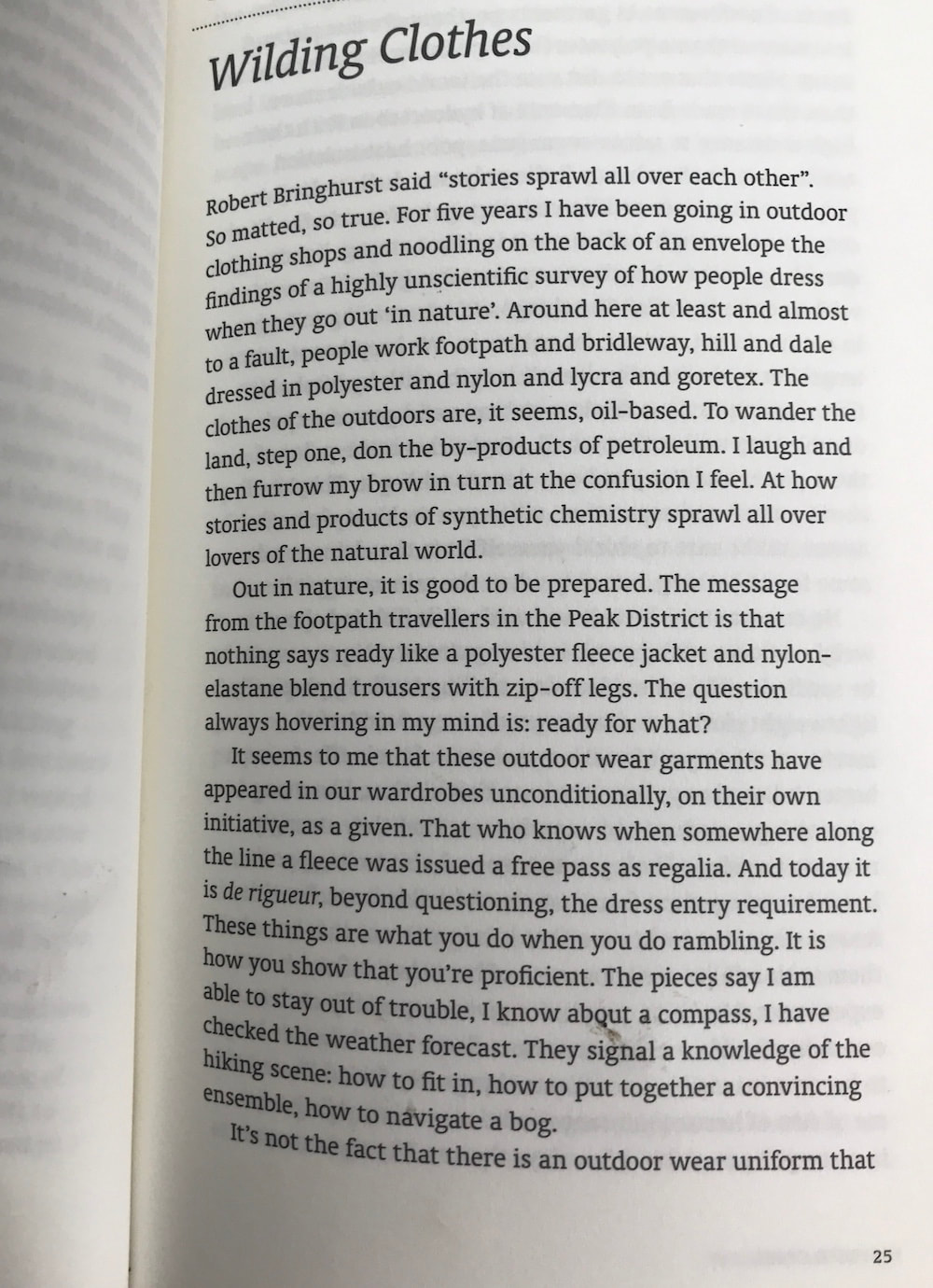
Milkweed Cordage (last year's, field retted); Wild Dress by Kate Fletcher
Since it'll probably be a whole week
till I next have a chance
​ to go on and on about Milkweed
(a whole week!!),
​what better way to begin
talking about  a few of
​the books I've been reading

than with ​a photo of cordage in progress
shading the pages---
Picture
especially since
one of the many great things
about making cordage
​(vs other methods of bast fiber yarn construction),
is that I can twist and read
at the same time.
Picture
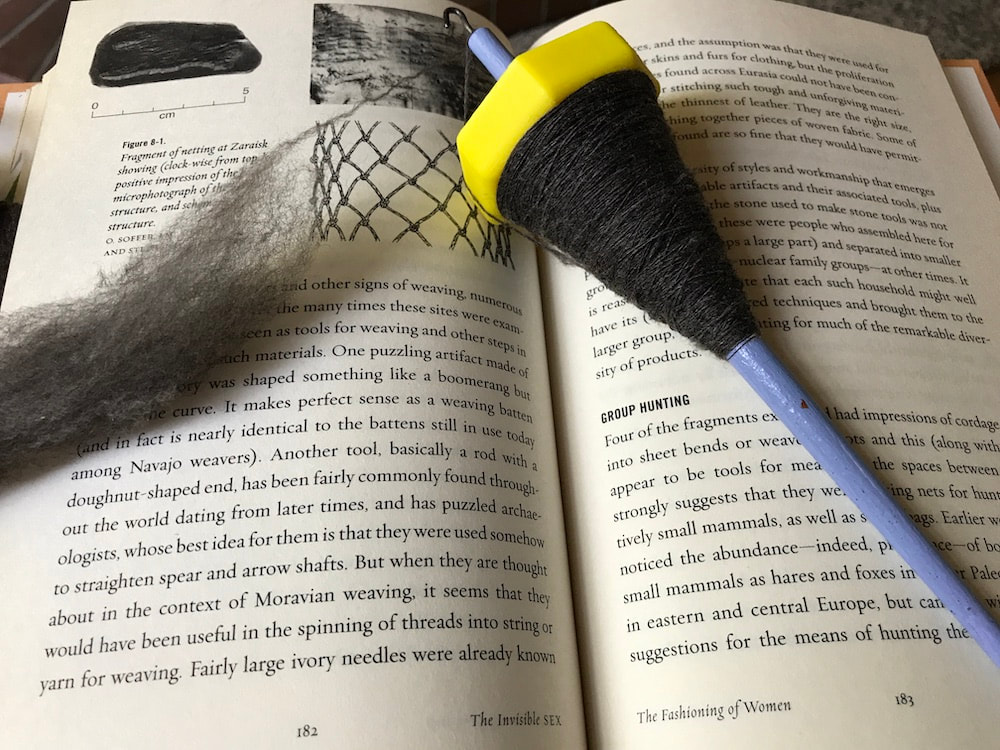
Cormo wool (drum carded); Hepty Spindle; The Invisible Sex by J.M. Adovasio, Olga Soffer & Jake Page
Same goes for
spinning well prepared wool
with a familiar, lightweight spindle.
Picture
Picture
Indeed, 
reading and yarn making

are inextricably linked
in my odd little world.
Reading/knitting too,
though I don't seem to have  any photos
of that blissful activity--
even if I  have (and wear),
a great number
of  the not-very-complicated
but perfect-to-knit-while-not-looking
 garments, that result. 
Picture
Picture
How lovely, then,
to dive into Milkweed
with someone who has spent
far more time than I 
(at least so far),
exploring its mysteries. 
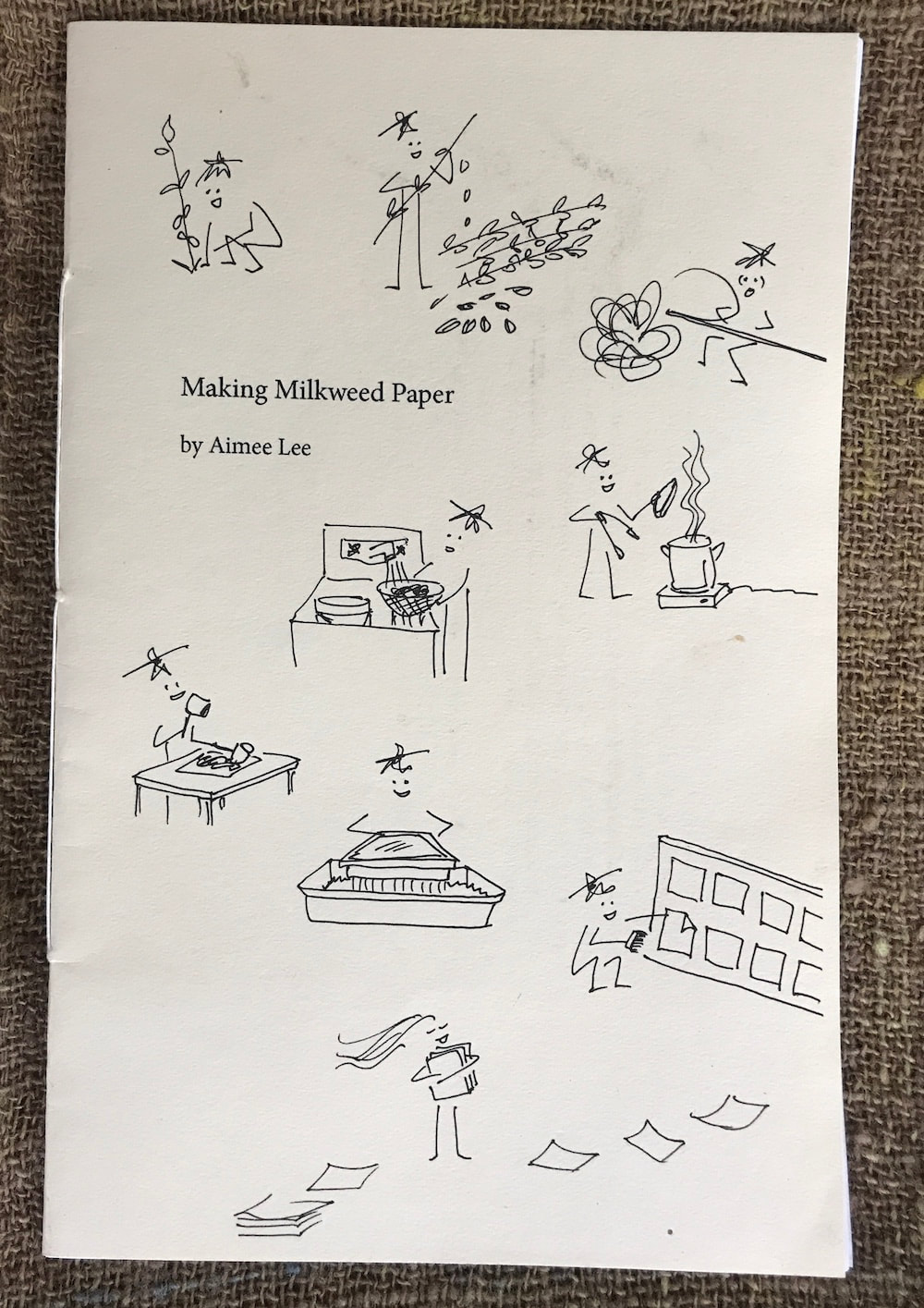
Aimee Lee's
Making Milkweed Paper
is actually a reference I've had for ages,
her work an unending inspiration.
Click the link with her name
and check out all her work.
The knitted books! The icons!
The Hanji dresses.
OH, be still my heart. 

And to slip from those
ethereal garments,
to Kate Fletcher's thoughtful 
and curious essays
 in Wild Dress--
is a mighty thing indeed.
Even better to be making a garment
while turning the pages.
Picture
Last year's unevenly field retted Milkweed being stripped from mildewed stalks
Then again, 
if we're going to bring everything
back to the integral role
of woman the maker,
who can resist the engaging prose
of The Invisible Sex,
or ignore the pleasure
of wrapping my mind
around the elemental--
nay the central role--
of first cordage makers in pre-history--
probably female and mostly ignored by (male) archaeologists--
while ​physically twisting fibers myself.
Cuz some ways of being a human female
never change at all.
​I could hardly put it down.
Picture
How satisfying, then,
to remember that
I don't just make cordage--
I weave with it too,
and so turn to 
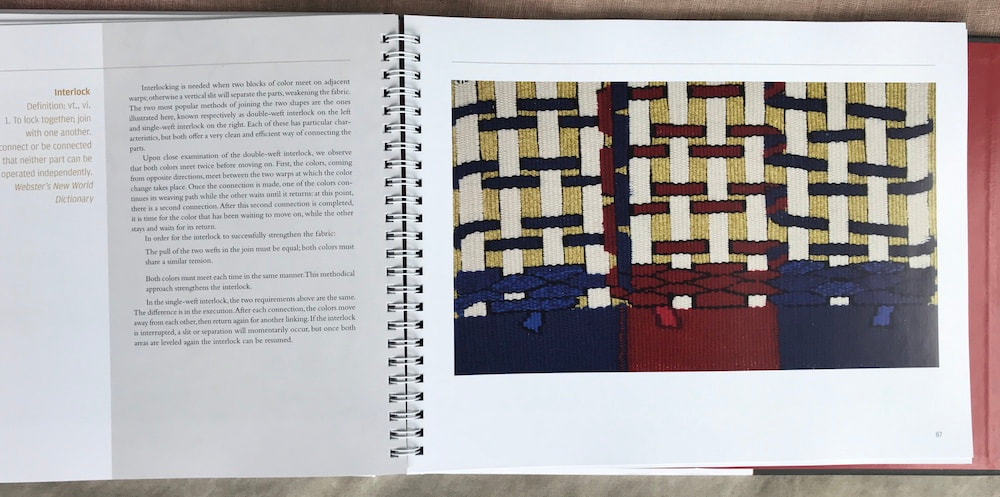
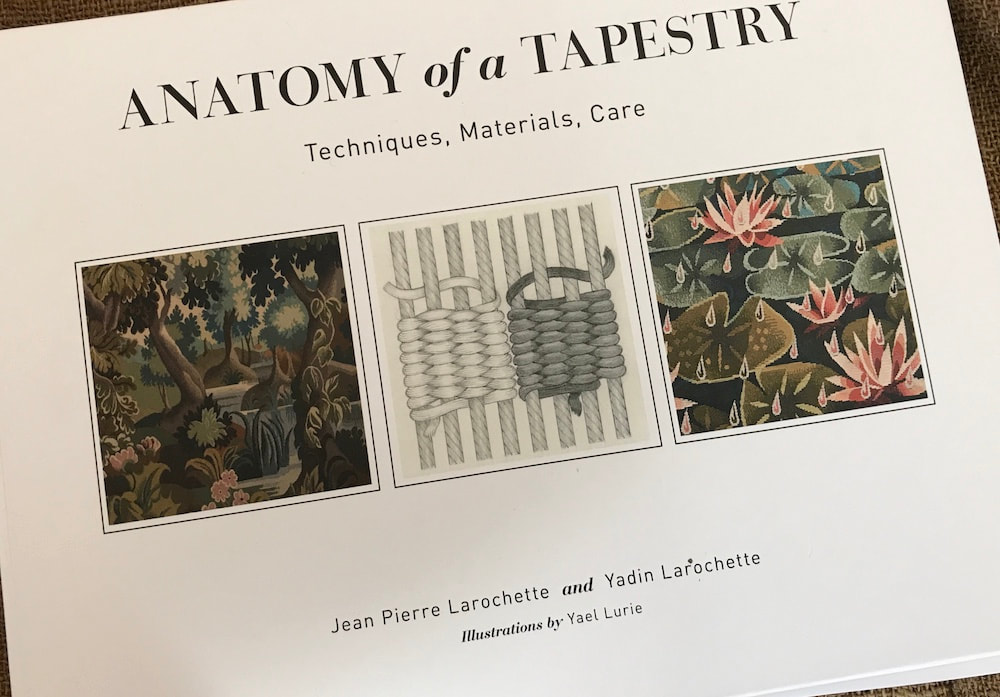
Anatomy of a Tapestry.
(no book weight necessary
as it has a spiral binding so opens flat!)
by Jean Pierre Larochette
and his daughter, Yadin Larochette.

Picture
I mean -- actual woven illustrations,
 exquisite drawings,
 wide ranging understanding,
rock solid information,
irresistible charm, and deep knowledge--
I am beyond proud
to know them
and really really glad
​to have this book.
The sections on preservation, conservation
and restoration are a gold mine indeed,
and I anticipate a few--
--erm--adjustments--
to the way I've been storing my work.
I love them so much.

Real Reviews!
Rebecca Mezoff
Elizabeth Buckley
Picture
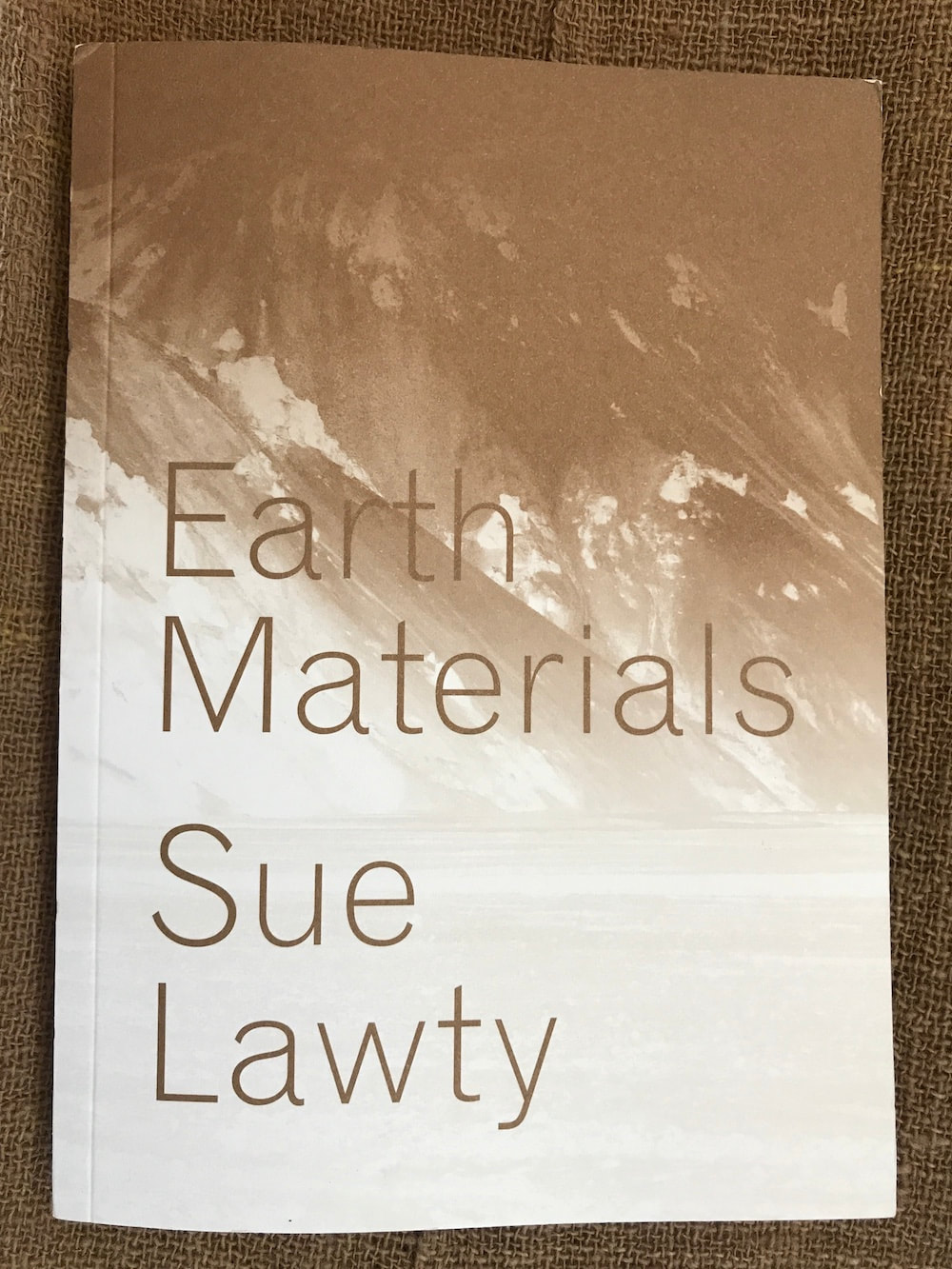
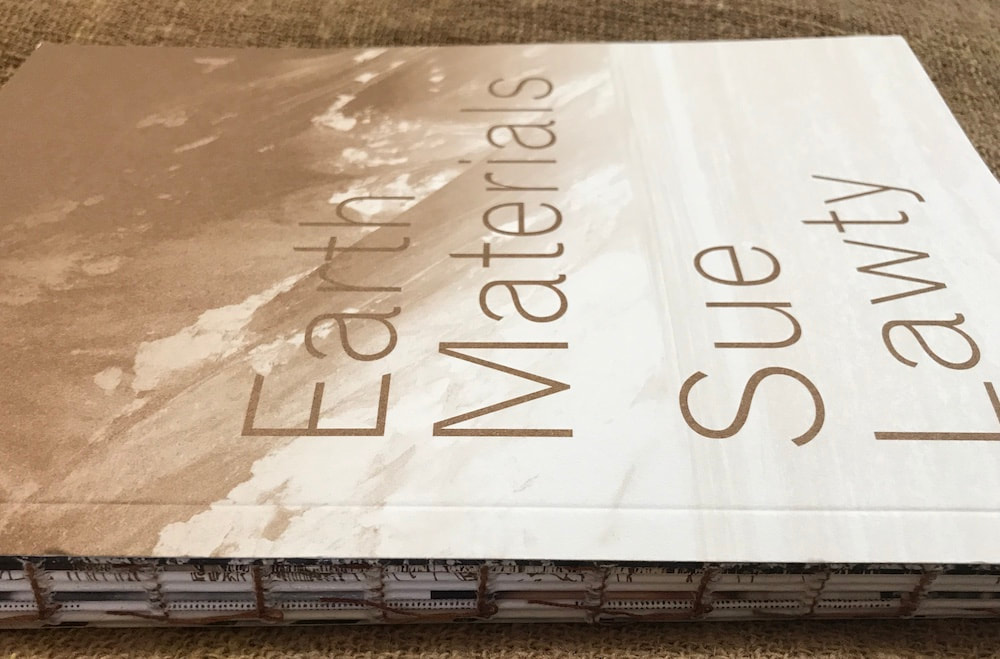
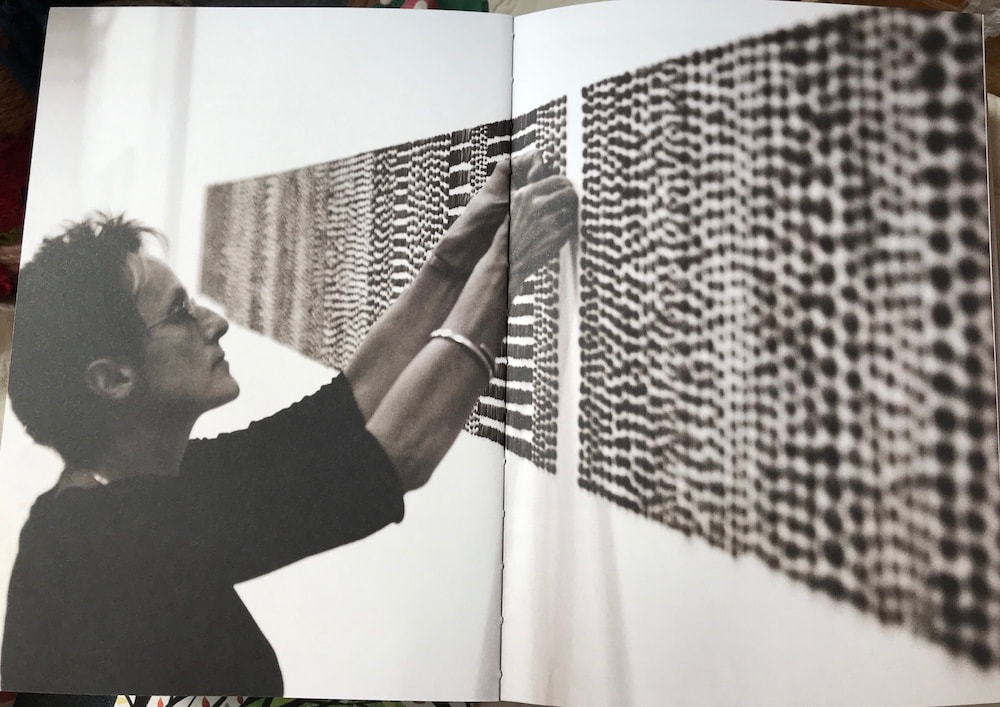
Sue Lawty's exquisite book,
Earth Materials
also has a 
satisfying binding --
indeed, the whole book
is  lovely to look at,
the pages yummy to the touch.
Her work, be it with
fiber, pebbles, lead--
​or anything else for that matter--
broadens my work
and the way I think about it
in a most satisfying way.
Picture
Picture
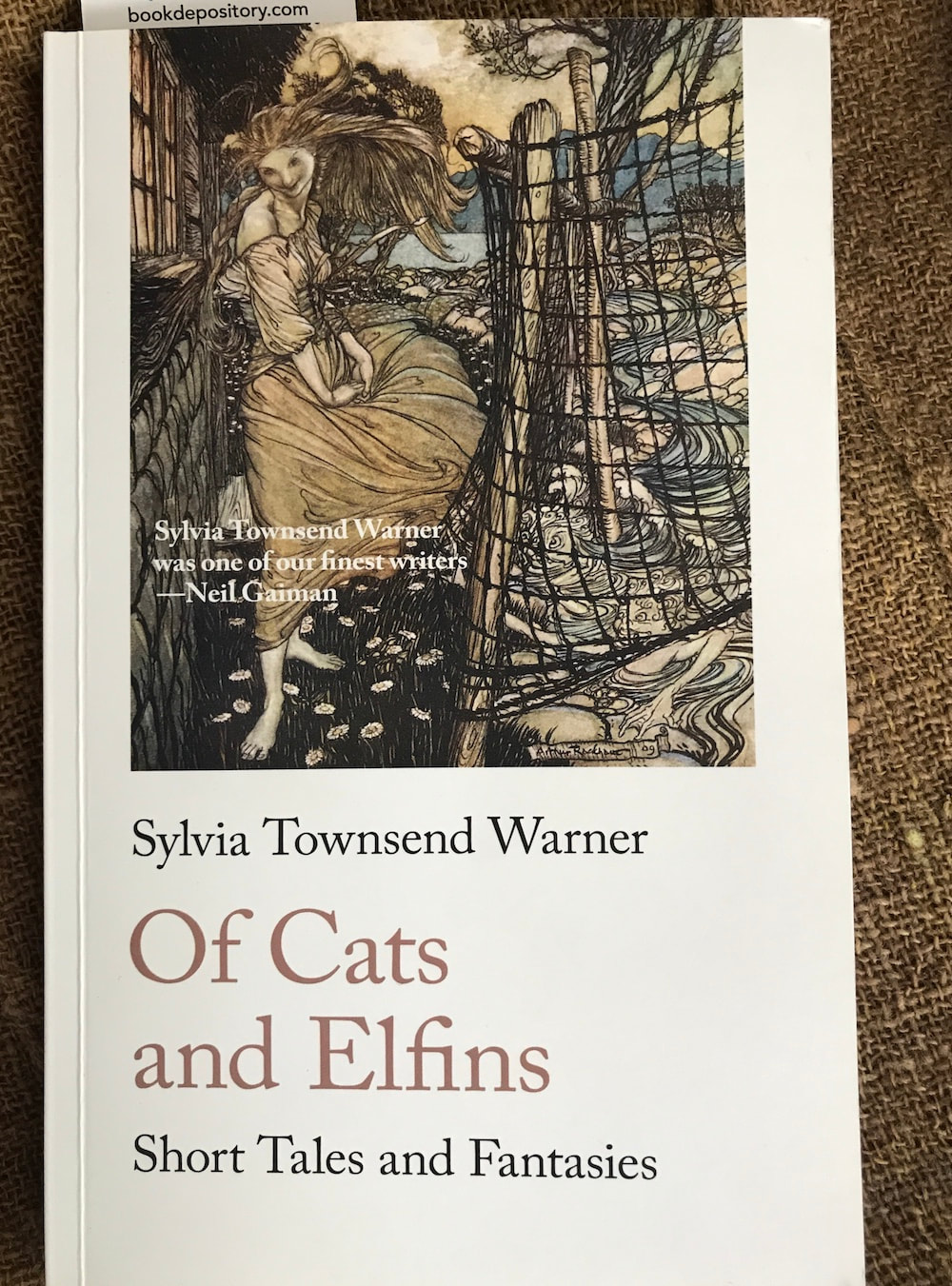
Picture
When I've needed
to take a brief step back
from textiles
(hard to believe, but sometimes true),
I've been re-delighted
with the imaginary,
decidedly un-sentimental--
even pointy-- elven worlds
created by Sylvia Townsend Warner--
one of my all time favorite authors.
I'm so very happy
that some of her
hard-to-find work
has been recently republished
​by Hand Held Press.
​

Given half a chance,
I'd probably order
half a dozen other books
from this small publisher.
Indeed, I bet I eventually will.
Picture
But back to tapestry --
because seemingly
somehow
everything  eventually
returns to tapestry 
in some form other--
if only as  metaphor--
though not in this instance--
there is one more book
I want to mention --
at least one more that I now have
in my physical possession:
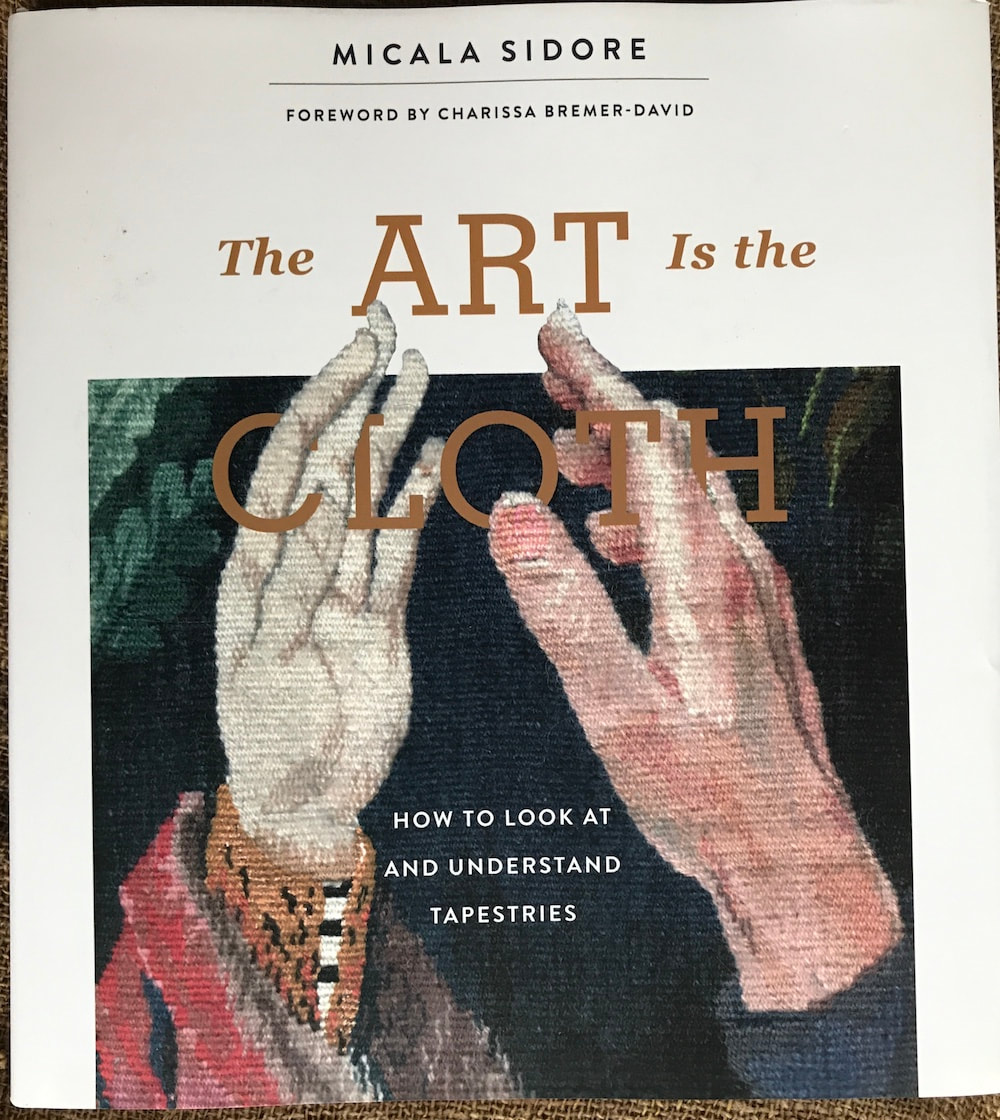
the magnificent
The Art Is The Cloth 
by Micala Sidore
Picture
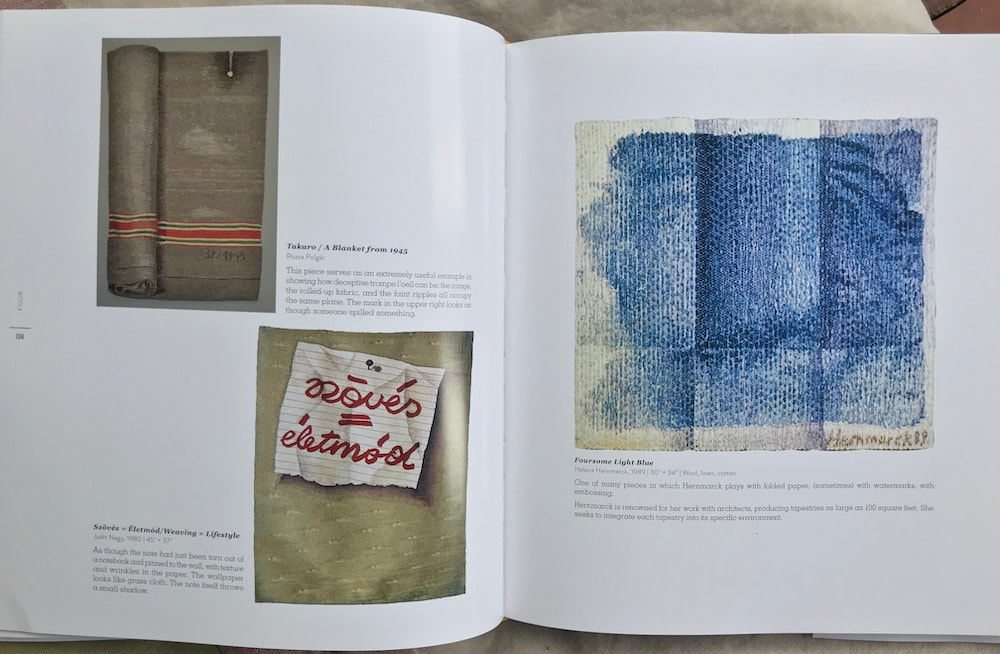
This book is a treasure trove of tapestry--
as full of interesting and compelling work
as this page is with hyphens.
Fuller, actually.
(Is fuller the word I actually want? Not sure).
At any rate,
there are many thigns I could say
for there are  many tapestries 
and kinds of tapestries in the book
and I do not have the room to cover them all
so will stick with this elemental truth:
it is  fun.
To turn the pages, 
see what magical tapestry world
Micala will share with us next,
to watch myself caught
by delight and admiration--
to notice what I notice--
to surprise myself
with the works
​that hook my eye and heart--
Now that is a treat indeed. 

Proper Reviews:
Rebecca Mezoff
Elizabeth Buckley
Ramona Sakiestewa
Picture
Picture
Well, now I've almost worn out my mouse batteries
putting links into this post
so it must be time to quit.
Except that while I'm in the mode
 I want to add a short list
of wondrous  and soon-to-be-released
Tapestry/Textile books you can pre-order.
Once they are physically in my world
getting milkweed, coffee filters
​ and wool fibers caught between their pages
I'll talk about each one again,
but in case you like to do
​a big old book order all at once,
and then have them trickle in
like little unexpected treats
​for your future self,
here are a few you'll want to have on your list.


Books to Pre-Order:

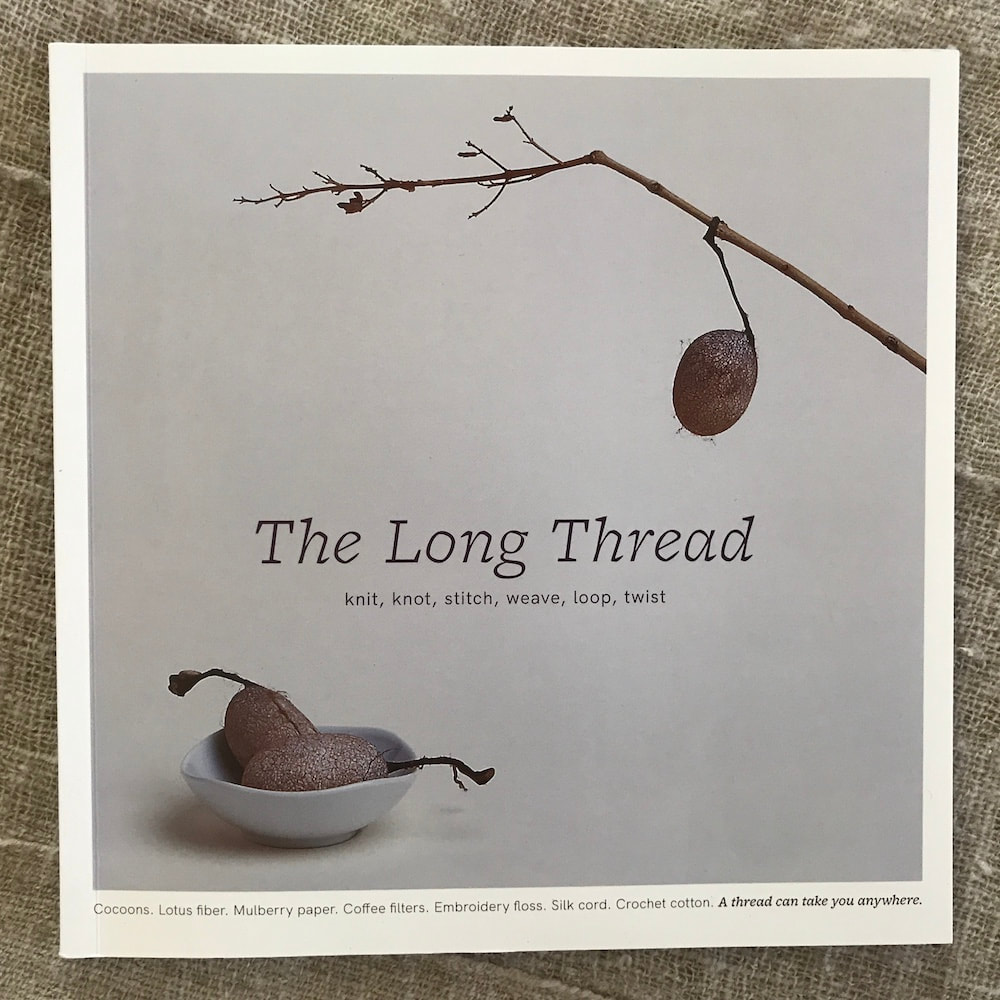
​The Long Thread Special Issue  by Linda Ligon
(lucky me to be in this one too--and I can hardly WAIT to see the rest of it)

The Art of Tapestry Weaving by Rebecca Mezoff 
(This book -- I've had the privilege of reading early drafts -- a thorough and glorious resource--
just wait till I have more room to talk about this book!!!!!)

How To Weave A Navajo Rug and Other Lessons from Spider Woman 
by Lynda Teller Pete and Barbara Teller Ornelas.
(Two fifth generation Navajo weavers writing about their work and generously sharing techniques and family stories with us all--THE people from whom to learn stories, techniques and understanding.)


Books Mentioned in the Blog Post:
​

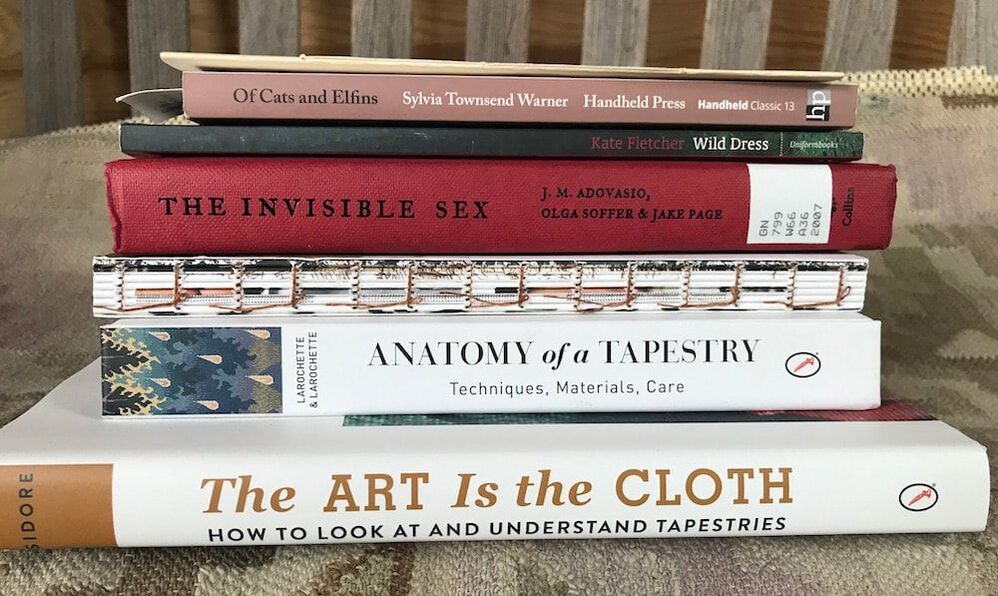
Wild Dress by Kate Fletcher
Making Milkweed Paper by Aimee Lee
The Invisible Sex by J.M. Adovasio, Olga Soffer & Jake Page
Anatomy Of A Tapestry by Jean Pierre Larochette and Yadin Larochette
Earth Materials by Sue Lawty​ 
Of Cats and Elfins and Kingdoms of Elfin by Sylvia Townsend Warner
The Art Is The Cloth  by Micala Sidore

milkweed blows my mind -- again

8/18/2020

 
Picture
So a funny thing happened.

Well not funny exactly --
more--
mind expanding?
I dunno. 
It was cool though--
at least-- 
eventually.
At first --
 not so much.
Picture
As you may recall,
last week on the blog post
I was blissing out about
my recent Milkweed immersion--
 feeling, I can now say,
 just a teensy bit smug.

"Yay! Look at me 
with my newly fashioned
minimalist distaff 
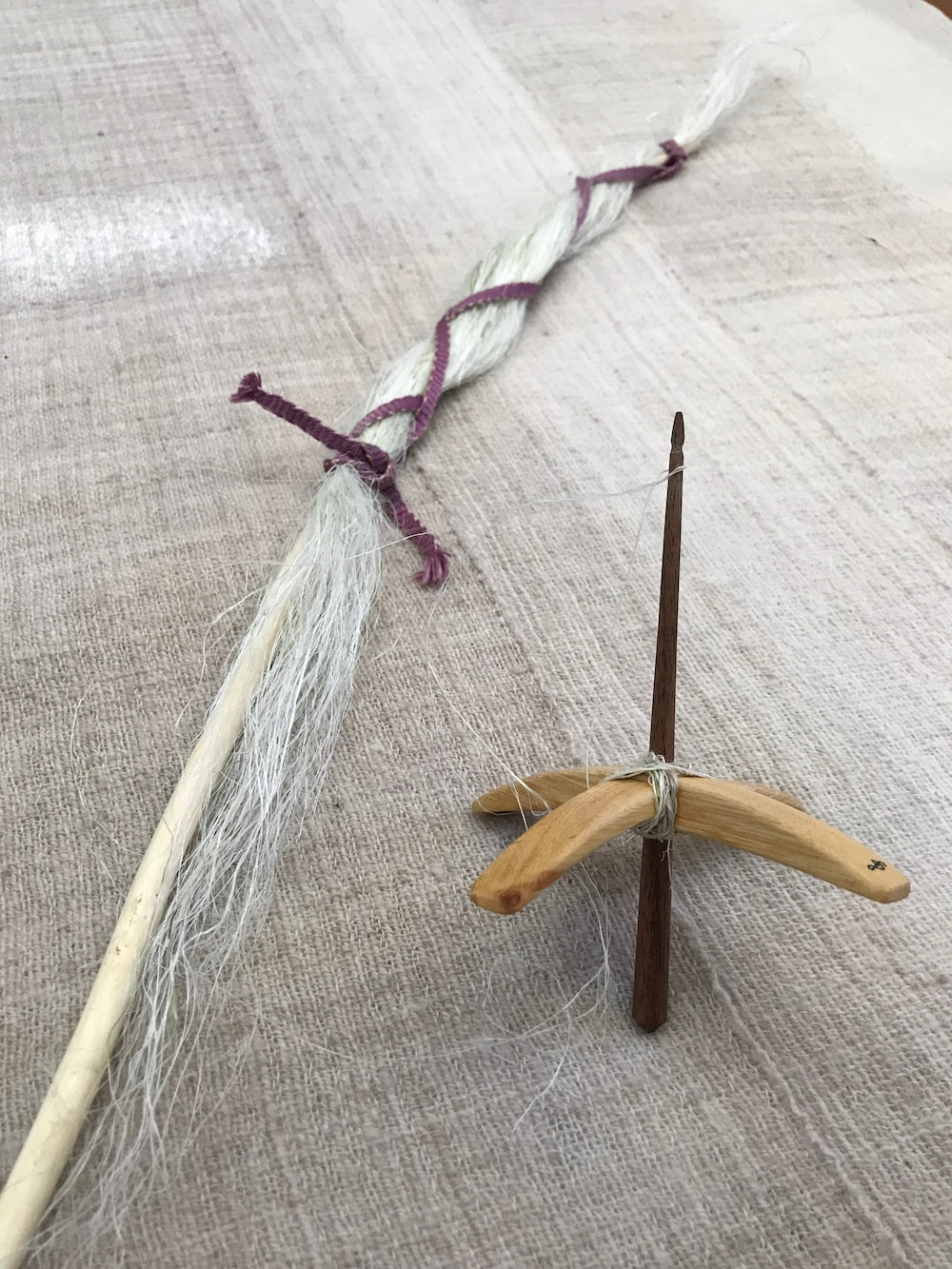
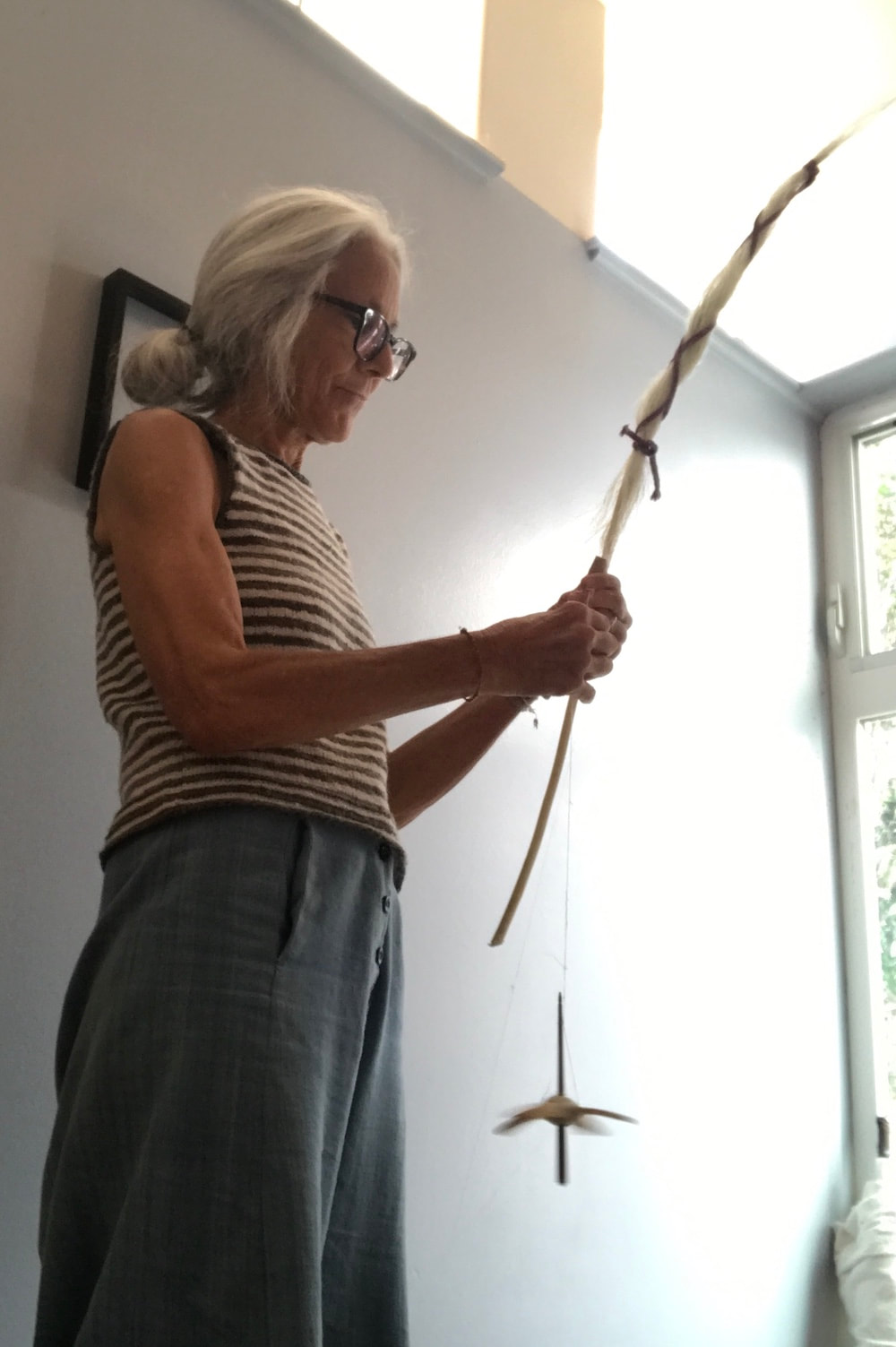
and cross arm spindle
making all kinds
of super nice yarn
out of Milkweed garden waste!
I love it soooo much.
It's almost like
Flax!"

Well, smug and thrilled.

At any rate,
practically the moment 
I pushed 'send' on the newsletter 
to let you know that the post was ready
(assuming you're on my mailing list),
I grabbed my beloved tools
and raced outside--

--only for the Milkweed
to... ah...
well, I'll let it
​speak for itself.
Picture
Just so you know,
it said
as my spindle fell to the ground
for the third time in a row, 
I'm not Flax.

"Huh?" said I--
picking up the spindle
​and checking for cracks.
Picture
Oh, I have nothing against the stuff --
it continued without pause.
It's great! 
Super strong -- soft-- agreeable--
a distant cousin of mine. 
Slightly more uniform
since you all have been
manipulating
for centuries
(or maybe it, you),
to suit your belief
in efficiency and production.
I mean --
all those precise tools
with their satisfying names:
rippling combs, flax breaks, 
 scutching  knives, hackles and such,
that keep everyone in line.

It's just -- I'm not it. 

Now, I can see why 
you might think it reasonable
to think of me as such--
and maybe even believe
it is a compliment. 

​I mean --
I am a bast fiber 

and you have been 
doing your best
I'm sure,
what with your strick
and your combing
​and your carding of 'waste'--
Picture
your plying and measuring,
your calculation of yards per pound,
your dreaming of ends per inch,
and interior assignment
​of relative 'goodness'
influencing plans
for sizing the strands
to 'tame' the stray 
ends that stick out of the skeins. 
​
And you've got to admit
I've been pretty agreeable.
As I said, 
I am bast 
and a certain kind of order
works with my nature.
​
So don't think I don't 
​appreciate the attention
​and effort.
Picture
It's just --
well --
doesn't smooth, creamy cordage,
twisted an inch at a time,
without tension,
​(yours or mine),
suit us both
​much better?
Picture
Well, doesn't it?

​It's not just the pace--
(though really, what IS the hurry-
after all the fun we've had
playing hide and seek
amidst my stalks and outer bark,
getting to know each other
​a strand at a time,
do you really want 
to be done so soon?
)
Picture
Nor is it entirely 
my ego--
though I have to admit
I like my every fiber
to be admired
and used--
no matter its length--
Picture
--even when you are
'zooming'
or 
'telephoning'
with your friends.
Picture
It's -- well--
I was kind of hoping
you might see
that "productive plant" thinking,
is not always the last word.

​
I mean we all know
you homo sapiens
with your big old brains,
are champion tool makers --
efficient and clever and all that--
and I'm sure your spindles
and what have you
have enhanced your life
no end--
Picture

​--but is it necessary
to PROVE it all the time?
To worship control? 
To make sure every plant 
is named and categorized,
and succumbs to your will
by giving up its whole, diverse community
and all its marvelous friends
only to exist henceforward
​in rows
with other genetically identical plants
as if only then
will it have validity---
and, dare I say it,
​use?

Or, conversely,
to relegate wild plants
to fairy tales
as though 
a relationship with one
is not an everyday sort of pleasure
to be enjoyed,
but rather a thing associated
with excessive female power
and curses
and thus,
once more
a thing to be subdued
​or eliminated
(not that one doesn't relish 
the plant power of  cousin Nettle
I mean -- who wouldn't)?
Picture
Must you,

continued the strands
 draped across my lap,
perhaps forgetting
​that I was even there,

 tame all the wild places
and cut back every prickly being
so you don't get scratched by the thorns 
that are there to create little privacy--
and maybe keep you out of  ki's  business
for five seconds?
Picture
Or are you capable
only

of listening to (and believing)
 the chatter
in your own big brain
(equally good, it seems
at making you feel like a total loser
and the cleverest of all),
 while hardly noticing
the odd bit of wisdom
a little plant
that is not flax,

might have?

​
Just saying. 

Something to consider. 

"Thanks," said I.
"I will--
​consider, that is."
Picture
And while we're at it,

added the loquacious fiber,
not quite as an afterthought,

how about taking
a big old breath
of hot summer air--
and having a sip of tea--
for life is short,
and here we are,
​together,

listening to the wind
and relishing the miracle
of your opposable thumb.
Picture
"Ok," said I
dipping my fingers
in a dish of coolish water
and adding a long white  strand
to the ever-growing puddle 
​of cordage in my lap. 
​

"All right."

milkweed 'n me

8/11/2020

 
Picture
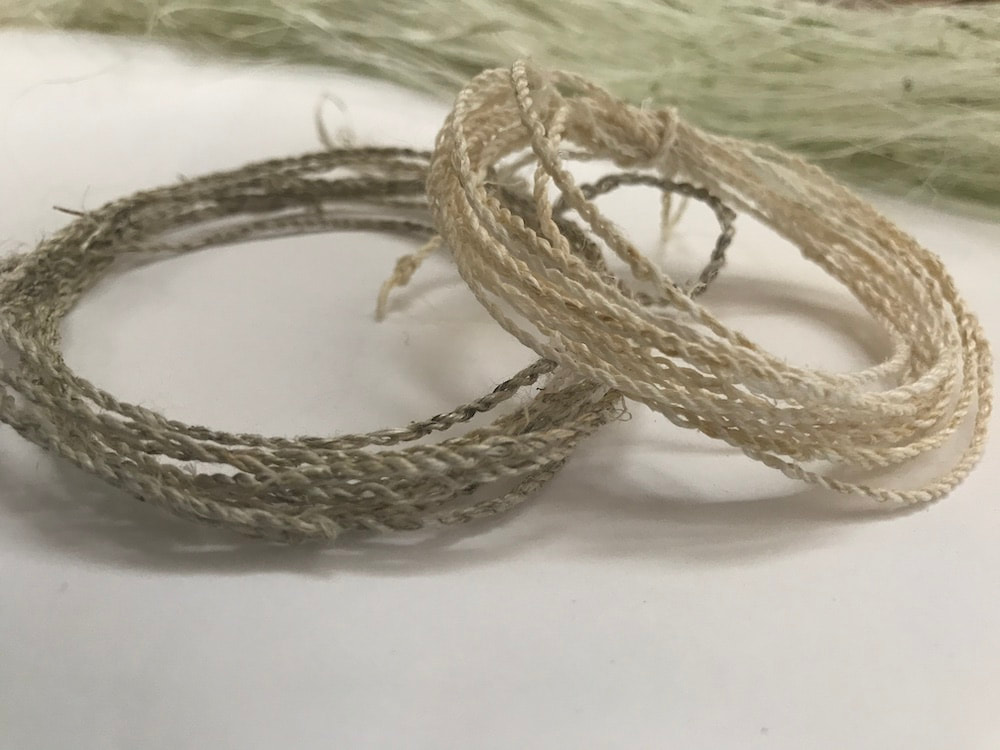
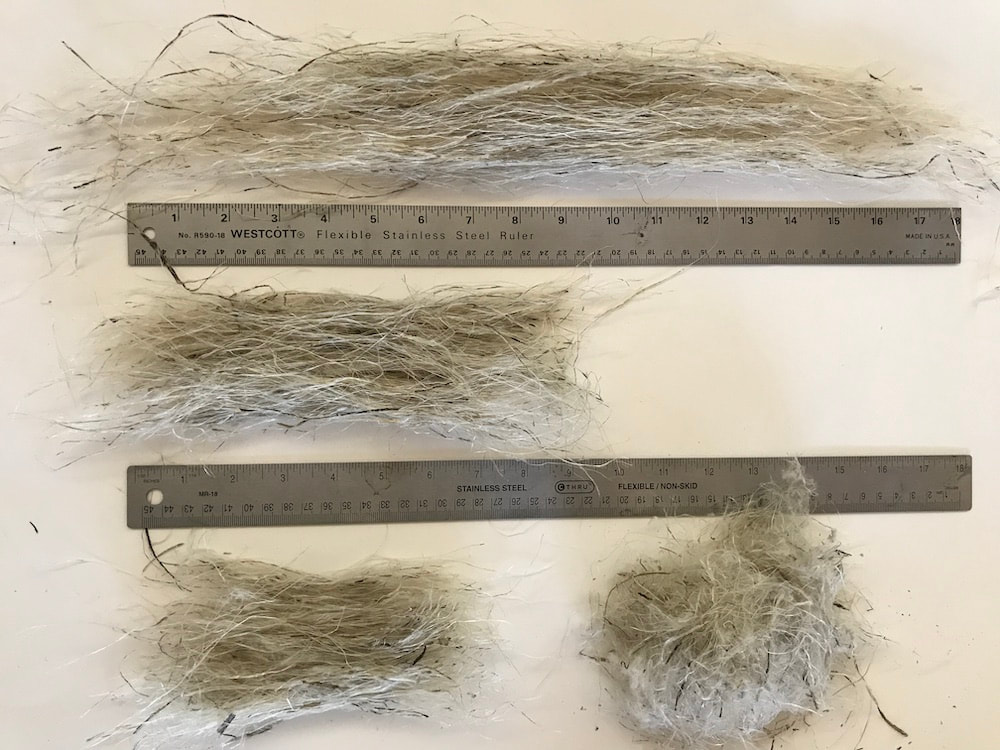
11.8 grams--
Picture
a week's work.
Picture
Or, more truly,
a week's pleasure--
Picture
day after day
of long white fibers
making themselves known
a strand at a time--
Picture
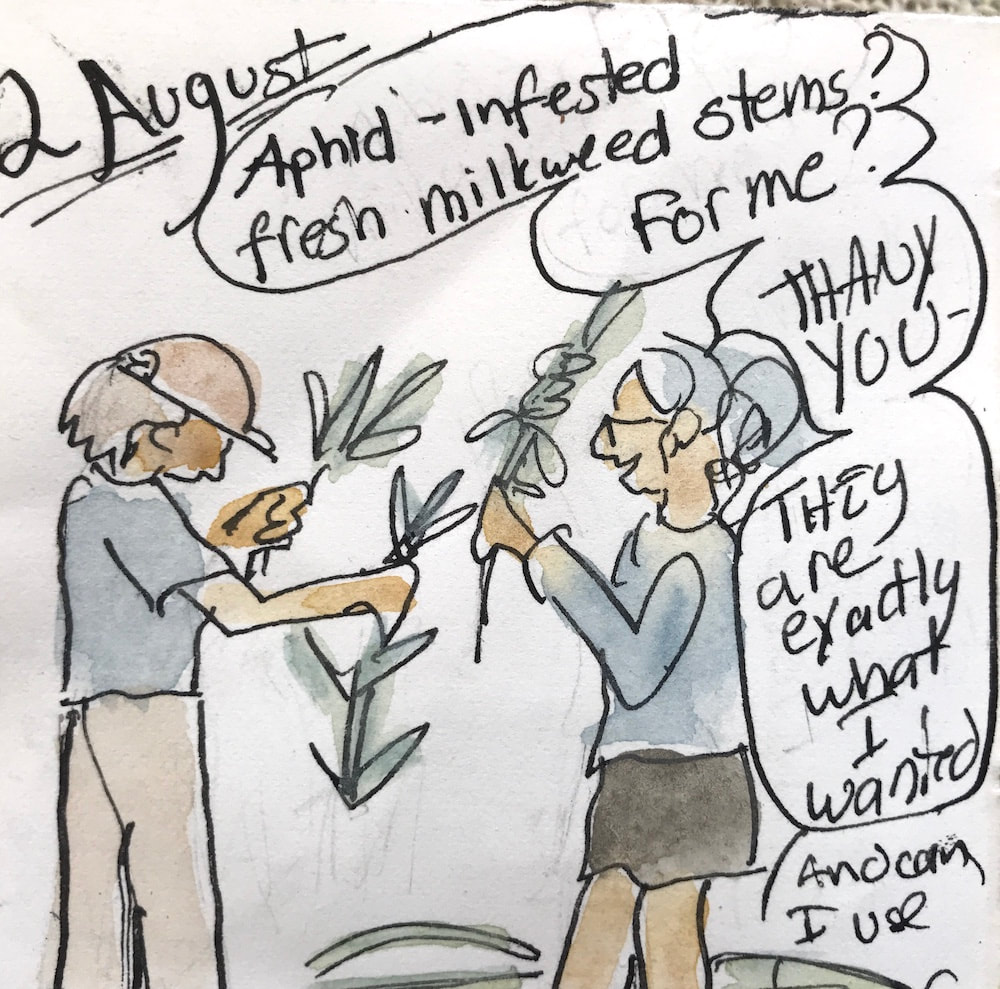
beautiful  bast
in a small clump
of Aphid-infested plants
my neighbor wanted gone.
Picture
For months --
nay,  years--
​I've been trying
to learn about local bast fibers--
Picture
Nettle, Dogbane, and Milkweed too--
reading the sparse literature--
 mostly about working with Nettles
(thank you Allan Brown for your work)--
watching the odd video
(thank you Sally Pointer),
and trying,
​with limited/mixed success,
Picture
to make friends 
with these glorious materials--
one of which,
this week,
for whatever reason,
​and rather against the odds,
Picture
agreed to work with me. 
Picture
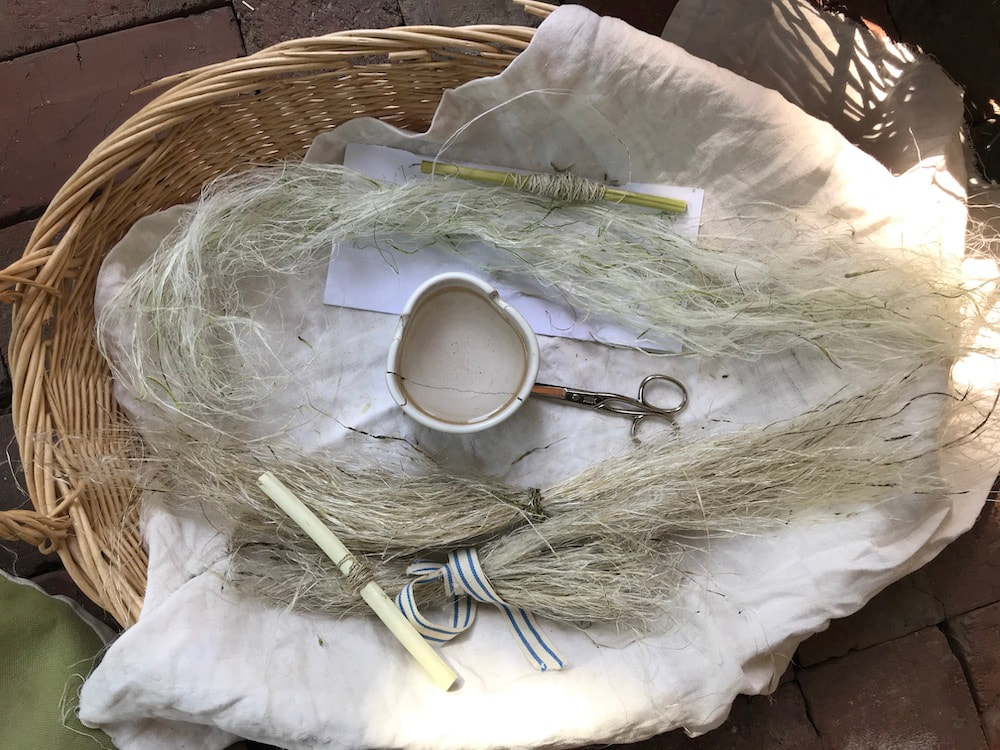
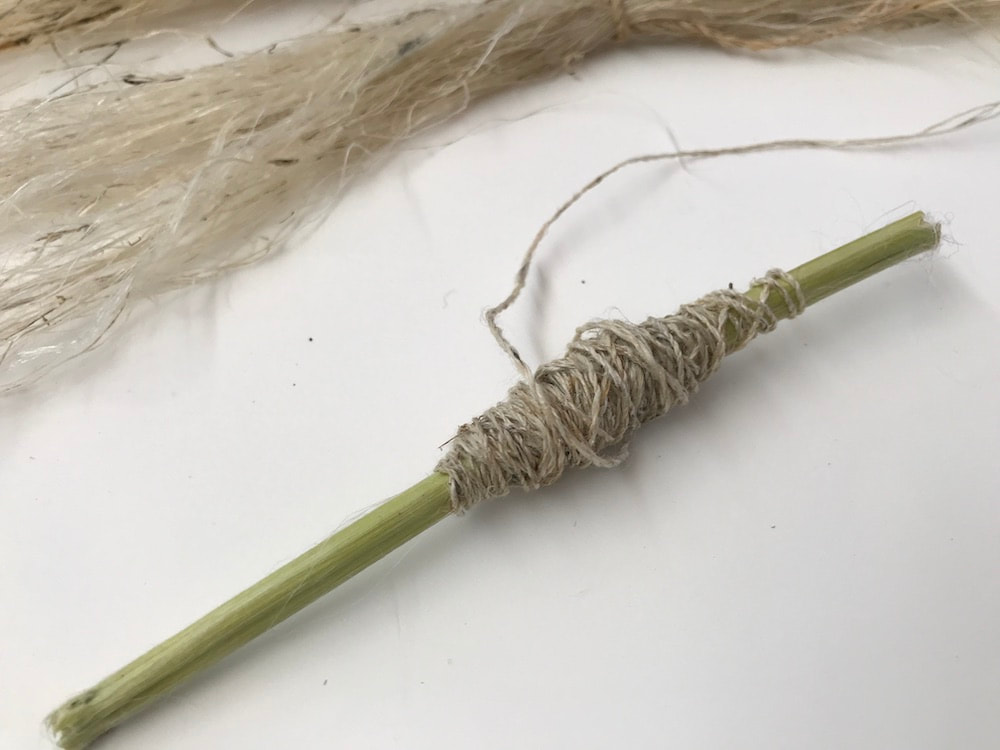
experimental distaff stick (vs baskety thing)--willow whip without bark from last week's post. For more on previous distaff experiments, type 'distaff' into the search bar above.
This is not even supposed 
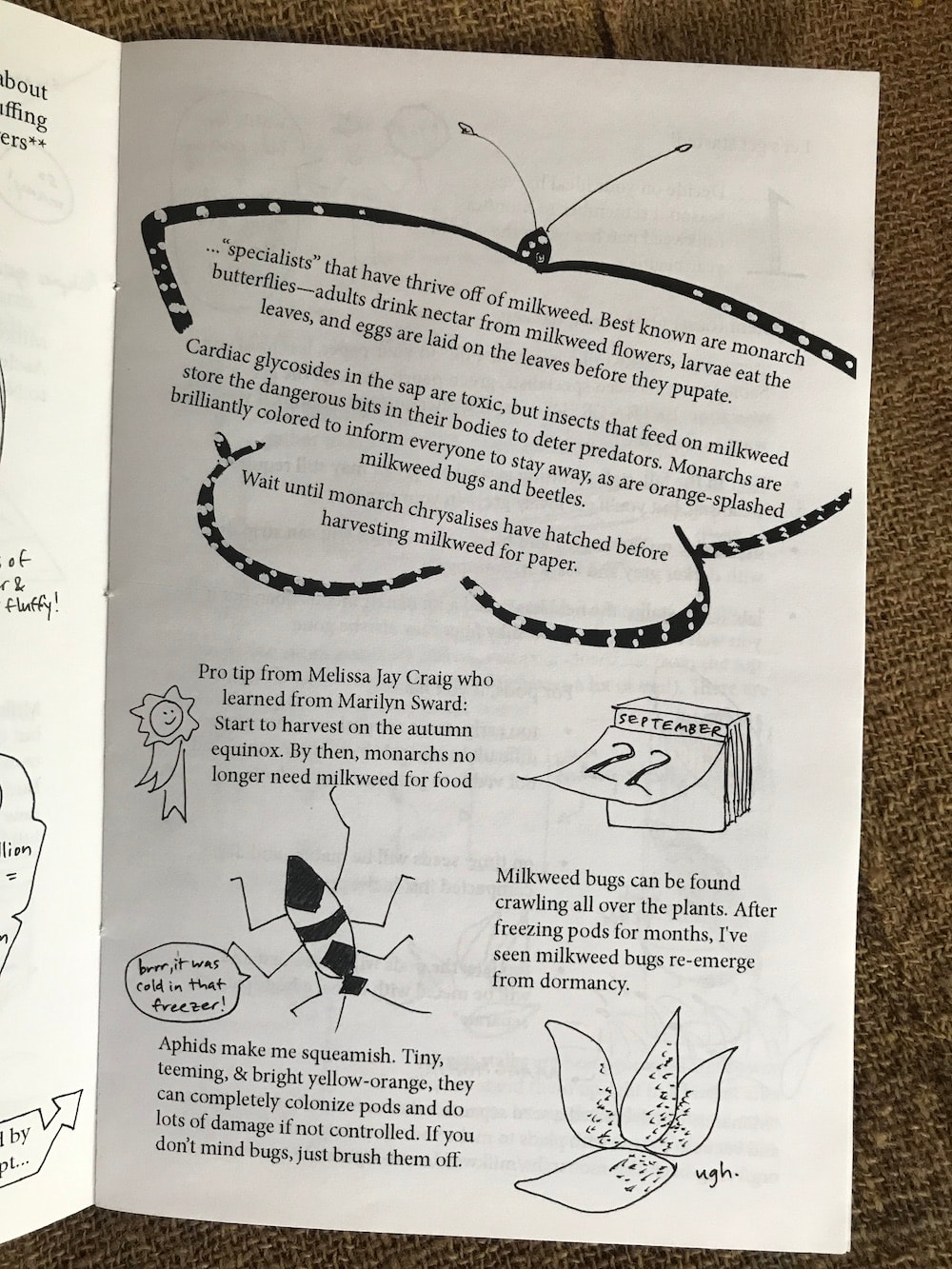
to be the right season--
not least because Milkweed plants
are essential to the entire life cycle
of Monarch Butterflies

(should Monarch be capitalized? Anyone know?)
and to cut down the stalks

before the butterflies have flown
is deeply irresponsible--
which makes me
​insanely grateful
to my neighbor
​and Aphids.
Picture
Well, truth be told,
I'm grateful, too,
to all the people
who have worked with
​these plants for millennia,

as well as to all the plants
that have helped me,
in turn, to practice
and learn.
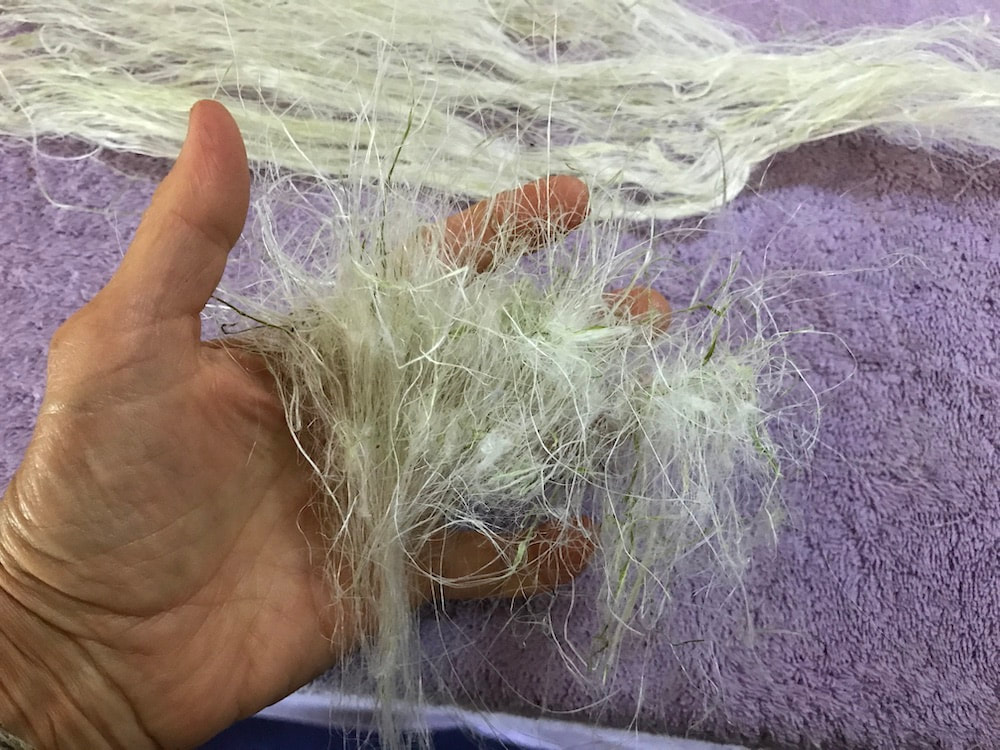
Picturewhat was left in the combs after the long fibers were drawn through

And really,
how not to also be pleased--
in the moment
and in retrospect--
by my former self
for her persistence
​and (sometimes painfully)
​ slow acquisition
of knowledge
skills,
​familiarity,
dexterity,
and
dare I say,
patience--
Picture
all of which have helped
​to make me available
for these beauties:
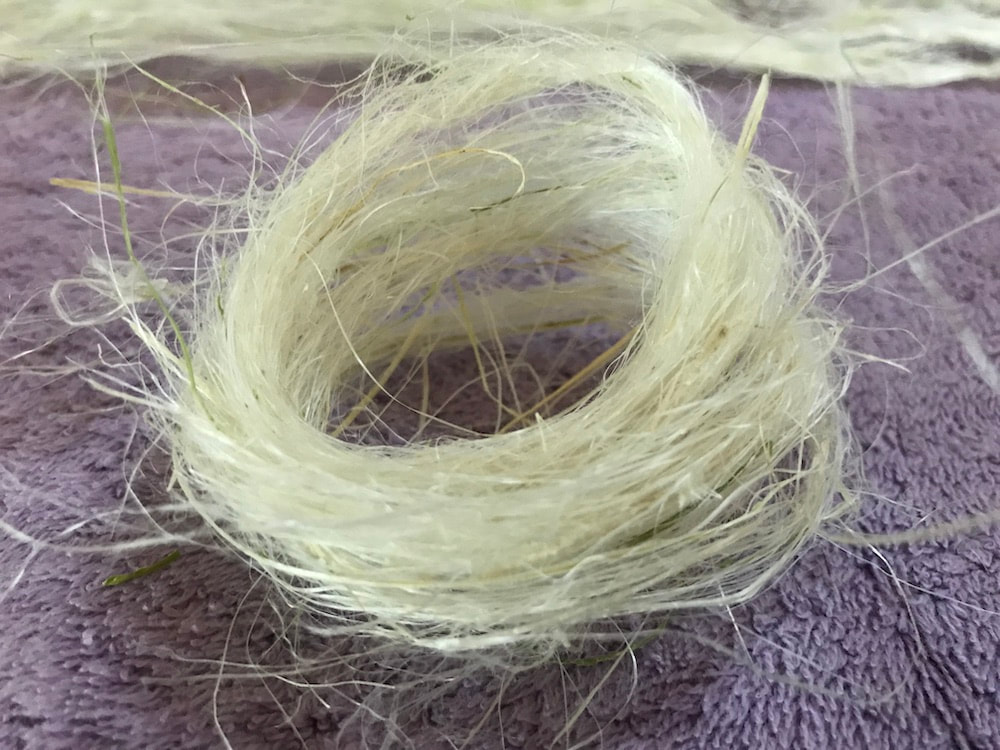
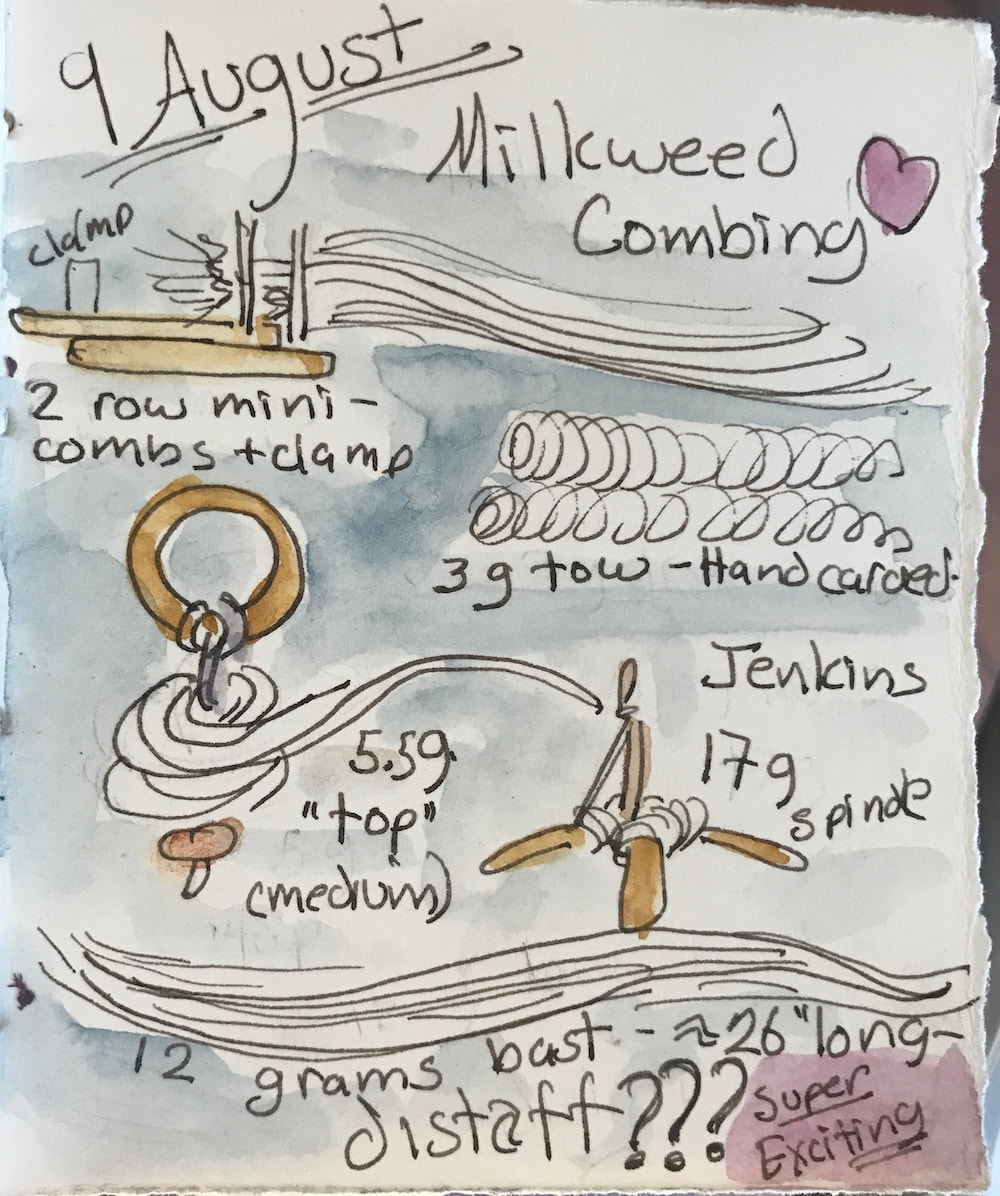
to the obvious long fibers,
Picture
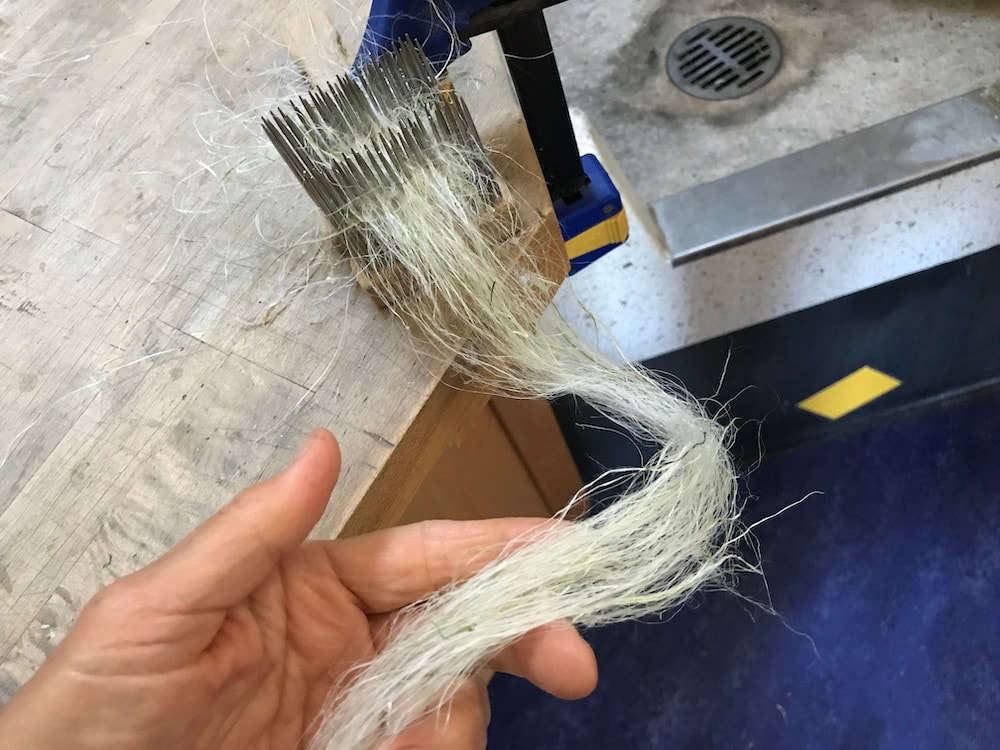
to the 'leftover' medium length ones
that were ready to be re-combed,
drawn out 
into a form of top
wound on a  wrist (vs stick) distaff
​and made into lovely yarn themselves,
Picture
and to the shortest ones
which were just the right length
for a couple of easy-to-spin
​hand carded rolags
and allowed for
absolutely no waste at all --
barring the now composting
​scraped off outer green bits 
and the drying-for-kindling inner stalks.
Picture

How lucky ​can a gal get?
(says she to her future self,
lest she forget, sometime, 
how wondrous and generous
​ the world can be).


--and a sartorial post script--
You might well think my just-off-the-needles
Targhee/Debouillet/Cormo etc tank top is all I've worn this week.
And you might be right!
Also the blue pants. I have to say. Oh my word.
They come from MAIWA --first new pants in years and years.
A gift to my legs and butt, from me.
No promotion thing -- they have no idea-- I am just utterly in love.
Be warned -- there will be patched pants and long term mending
(as needed though none yet despite continual wear), in future blogs...
Cordage and the inner capitalist--an exchange of views

8/4/2020

 
Picture
Like so many things,
​it began simply enough.
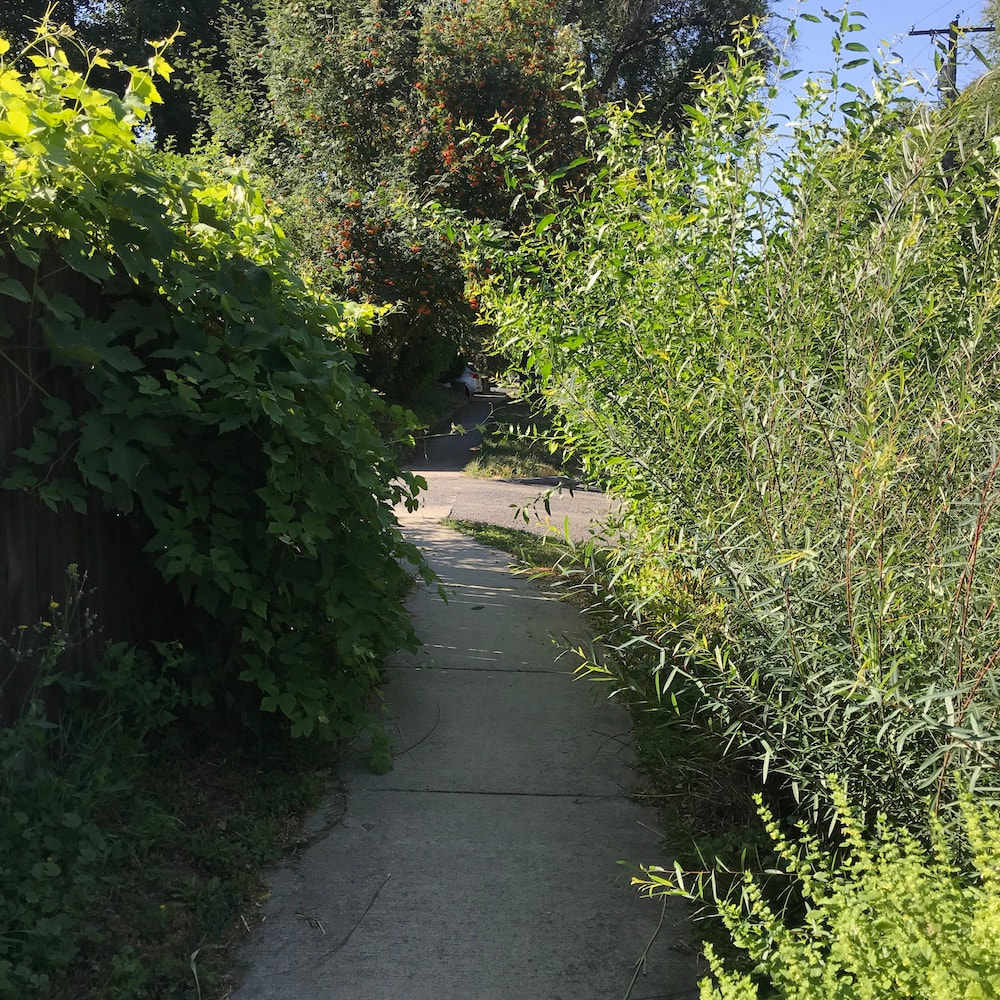
Our sidewalk was blocked--
the narrow passageway
between an exuberant grape 
and clump of coppiced willow 
had become a tunnel--
nay, an obstacle course--
and needed clearing.
Picture
Not that I'm not a fan
of mysterious, woodsy passages
along city sidewalks,
but to render ours impassible
to anyone in a wheelchair
pushing a stroller,
or getting from here to there
without the dreaded internal combustion engine,
is unconscionable.
​
So after a brief thanks for the enthusiasm
of this magical and self-sufficient shrub,
out came the secateurs,
and soon enough the bed
​of our ancient pickup
was full of leafy stalks.
Picture
It's a great truck --a patient and irreplaceable 1985 Nissan that starts every time, despite its rare outings
Ordinarily, most of the willow shoots
get cut in mid-winter and live their second lives
as figurative willow sculptures 
or oversized shapes.
(they seem willing enough though there is no way to be sure).
The fruits of summer sidewalk brushing, however,
generally go straight to the community 
yard waste recycling  drop off--
at least once there is a full load
which can take all summer
​cuz who wants to drive?
Picture
Anyway, this time, as I dragged over
an armload of branches
​ 
I suddenly remembered
that
 basket weavers often gather
willow bark in the spring and summer.
Was it too late?
Nothing to lose by trying.
And OH!
Instant bliss!
The bark peeled off 
in elegant and satisfying sheets.
Picture
What to do with them?
First and easiest thing 
was to coil them up to set them aside,
then get back to the project at hand
in the studio. 
But-- what if I peeled off the outer bark?
Would that be hard?
Well no!
Indeed,  it was as delicious
as the initial peeling.
And when I scraped each willow wand
with the edge of a palette knife 
or handy oyster shell before peeling
(as per a  Sally Pointer bramble cordage video),
it got even better.


Then new options arose --
-leave in the wide sheets?
-split into narrow strips for cordage?
-twist now, or let dry and re-wet?  
​Why not try them all!
The air was so dry
the thin strips were almost crisp 
​in no time it all.
And the willow seemed willing enough --
indeed, the dance between
my hands,
the willow bark,
and the part of my brain
that loves more than anything
to have thrilling material adventures,
grew as sexy as a tango.
Picture
And this is where the inner capitalists showed up.
First:
"​This is NOT what you were planning to do today, Sarah."
Picture
Then:
"If this IS what you're doing,
because, duh, you've been out here all morning
without noticing how bloody hot it is getting,
how exactly are you going to make use of this
and is it related in any way to your goals
whatever they might be
because I sure can't tell
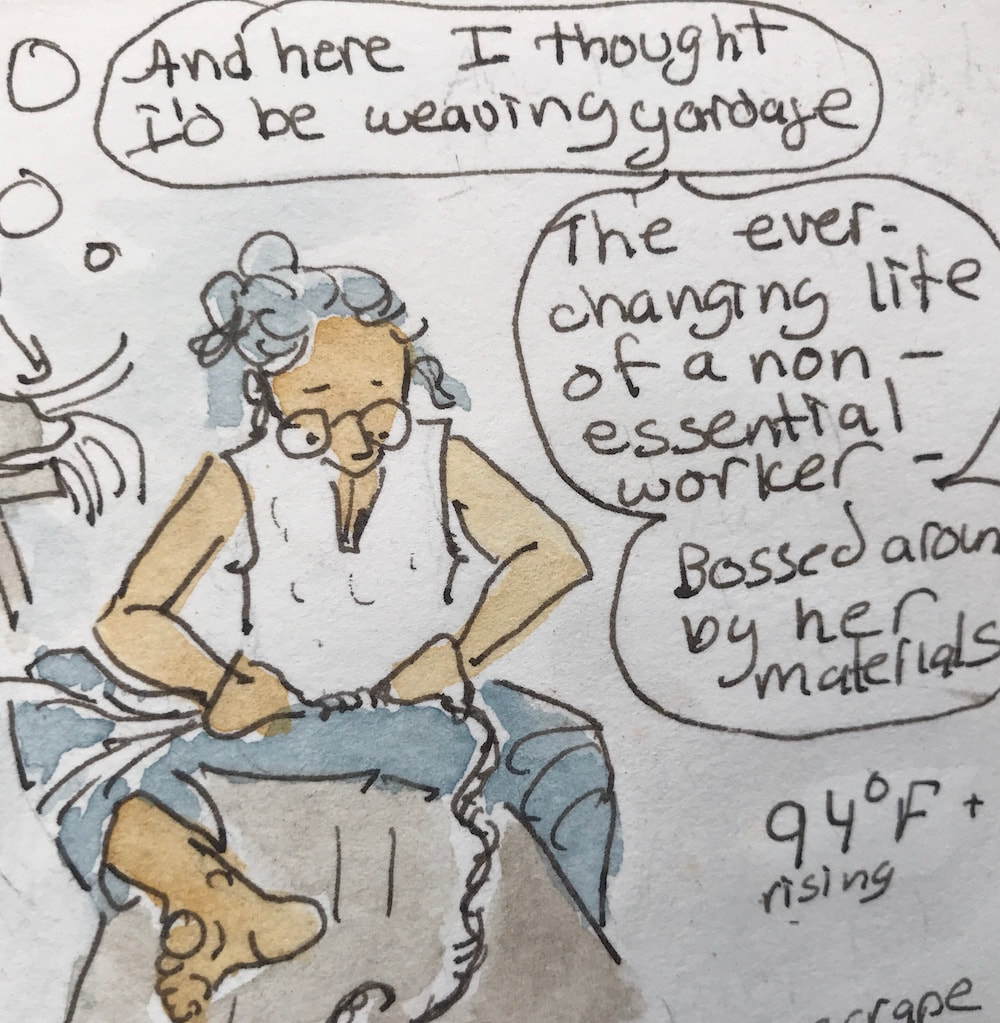
though as a distinctly non-essential worker
in times like these
it would behoove you 
​to justify your existence somehow."
Picture
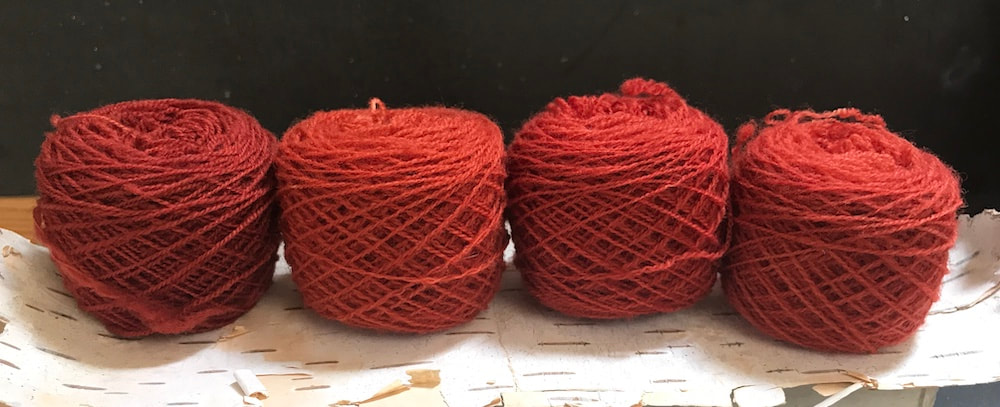
yummy madder red cloth from last week's warp
"And in case you forgot, 
you have some excellent
and significantly faster projects
already underway
that are going to turn into
useful and important things
that might actually lead somewhere.
And dont' try to tell me 
you're going to write about this
on your blog because..
..."
Picture
Picture
And so on.
You probably get the picture.
No need to quote it all
because the point is that this time,
instead of rebelling against this voice,
or trusting that it has
 my best interests at heart
and is only trying to keep me safe
(as it insists),
I actively encouraged it. 
"Ooooh -- tell me more!"
I cooed, as green willowy curls
fell to the deck beside me.  
"Tell me ALL about 
 how I should conduct myself?"
Picture
And here's what it wanted me to do:
-make things that were faster (ie produce more stuff)
-make thing that would make money,
(whatever those might be),
-at the very least go watch more videos,
so if I had to do weird shit
I'd at least do them the right way
and at the same time
contribute myself as fodder
 for the attention economy
and maybe develop a craving
for an unnecessary plastic object
I never knew existed while I was about it
(perhaps a purpose built willow bark peeler...).
Picture
It's then that it became clear
that this voice was not really mine.
The tone was wrong
And so was the language.
Though my voice,
does want me to stick with projects,
it is generally because
it is immersion that I crave and adore,
passion that has proved to improve everything,
slowing down, opening up
and falling in love with the materials and work

that leads to the making of magical objects
that I'm thrilled and proud
to sell/share with other people.

Also, I knew perfectly well
that I would never, EVER use
​ spindle spinning and backstrap weaving
as weapons against myself,

How very very interesting, then.
And what a relief!
Picture
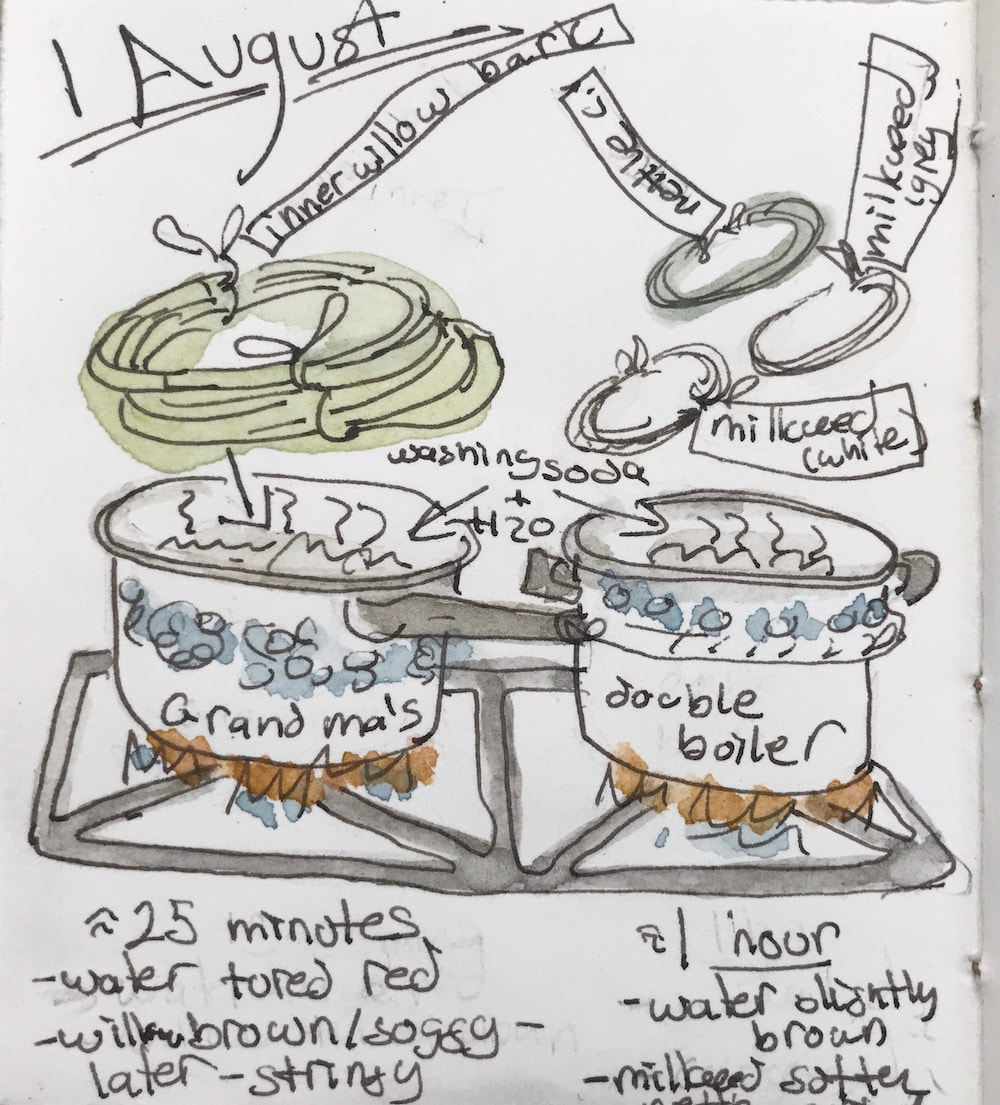
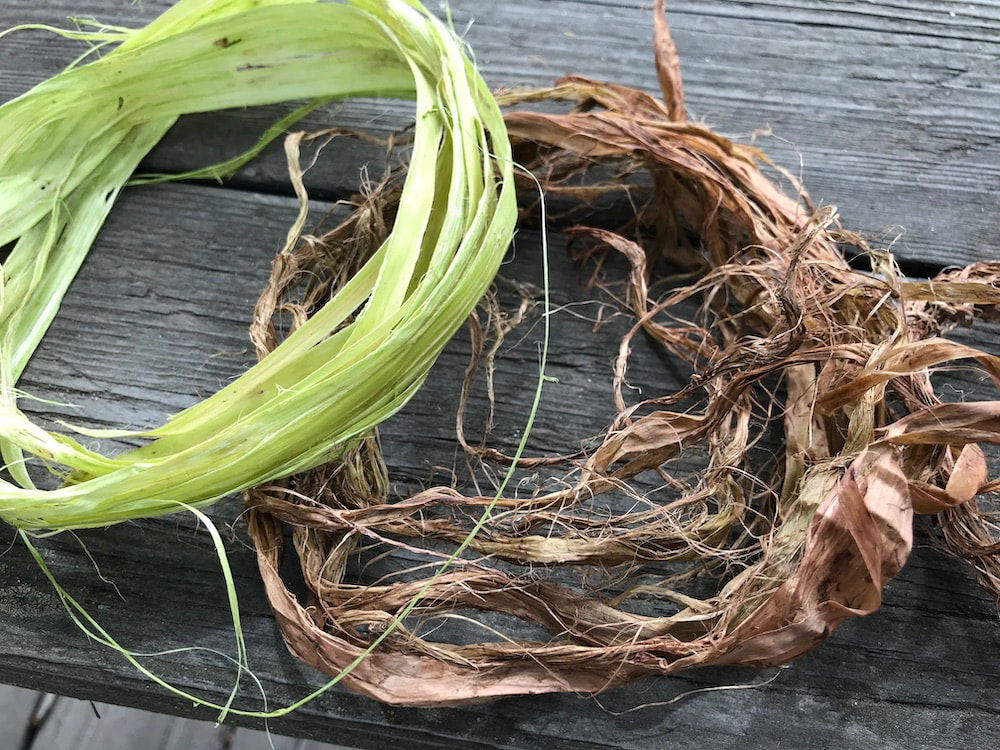
willow bark: freshly peeled on the left, boiled as per the comic above on the right.
If it is not me
trying to 'sabotage myself'
I can carry on with glee
and curiosity--
learning more
 about materials, 
and about those pesky
​and very rude voices.
How else have they been
having their way with me?
I want to know!
And what fun to poke at my brain,
watch it go all scared and protective
and close up like a sea anemone,
then coax it open again
to let in a tide of fresh perspectives
​I never knew existed--
Picture
--thrilling ideas
with which our tricksy
and wildly unpredictable world
is now awash.
Ideas about 
kindness,
​equality
​(in pay as well as health care),

conviviality,
curiosity
community,
​connection
and maybe even
​cordage?
Picture
Darn it -- once again I went off on a tangent.
Thanks as ever for sticking with me --
and for all the marvelous marvelous encouragement
in the comments last week.
​You are the BEST!

seeing red

7/28/2020

 
Picture
It was hard to get started
 writing today.
Picture
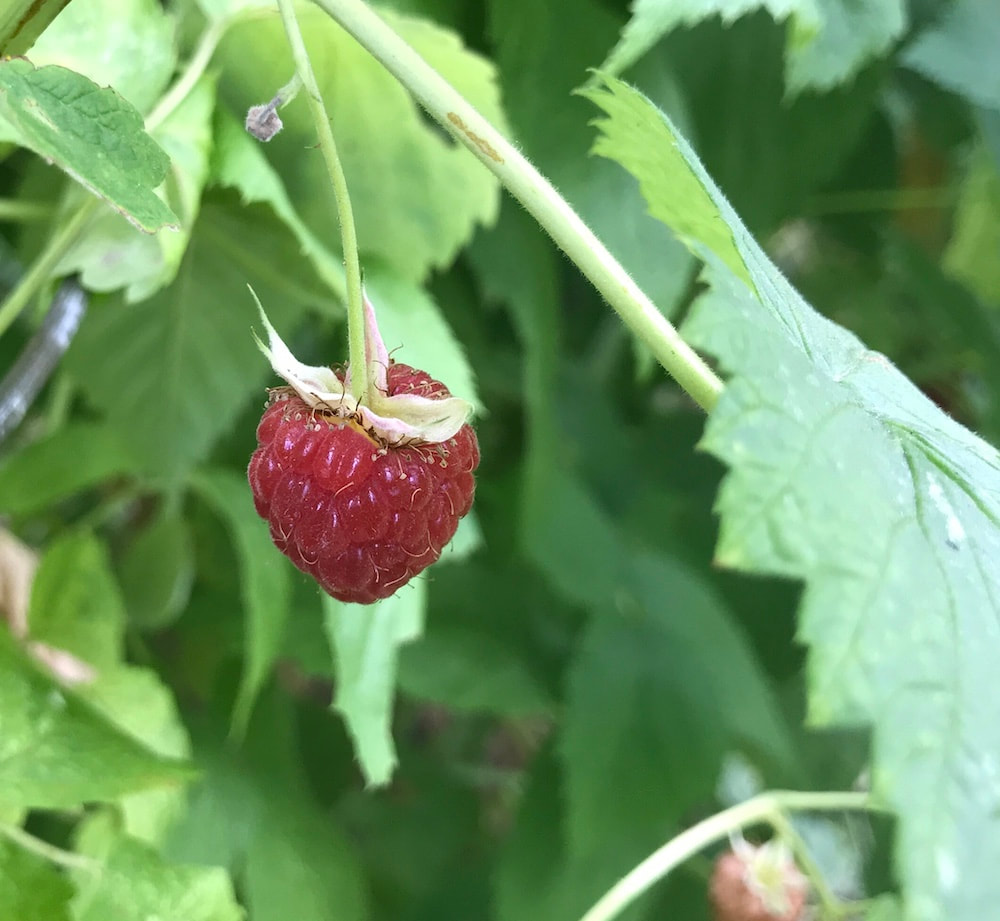
First I had to
 pick raspberries
(because ripening fruit
waits for no blog...).
Picture
Then just as I began
it suddenly seemed essential
to re-arrange the books by my side--
Picture
-- a distracting and compelling activity,
especially once I started noticing
 the color red.
Picture
Then it seemed a good idea
to wind a warp,
though it wasn't until
I opened my palette box--
Picture
--and pulled out a handful
of madder-dyed yarn
(rather than the soft grey
​I thought I was after),
Picture
that I realized
​I was in search of a little courage.

Something about
about my ppps of last week

seems to have struck a chord
(at least t
o judge by
most of your marvelous
and much appreciated comments),
and this morning I found myself
wondering/worrying
if expressing my overwhelming
(and often inarticulate) fury,
at the endless and malicious incitement
to violence of a certain person in power
(however brief my actual words),
meant something new was afoot
with how I present 
myself and my work
here on the blog.

A little think
​was definitely in order.
Picture
So even as the red yarn
was as surprising as the worry,

I made a cup of tea,
and​ settled into familiar routines:
-wound balls,
- moved a clamp from one end of the work bench to the other,
 -calculated
(2 yards, 2 strands at a time,
13 crosses = 52 ends = 104 yards).
- then wound the warp.
Picture
And while I was winding,
(because, now and again,
everyone needs the advice
 of a magical helper),

I consulted the frog,
who was kindly on hand to help.


(Note: frog front feet are called hands
 by the humans who write the posts at the top of a google search;
 what the frogs call them, I do not know).
Picture
Anyway, the frog
(who has been observing me
for many many years),
said:
"Sarah - as far as I,
a two-halved cast iron frog
who stores toothpicks in her belly
can tell,
you have devoted your life
to environmental and social justice
(even if you haven't known to call it that),
and I would bet that your readers
have probably noticed by now
how you feel,
and what you are trying to do,
which means regular overt reminders,
are probably neither useful nor effective--
nor even very interesting
as such discourse is not, actually,
a thing at which you excel--
except, of course,
when they simply burst out,
because, after all, mostly,
​you cannot help being you."
Picture
What the frog means by that last statement,
I think, is that sometimes
I am a bit too much
​ of a muchness,
even for myself
(if that makes sense)--
Picture
-- subject to
(and often hugely motivated by)
wild idea storms,

and a ferocious desire
to do no more harm than necessary--
and maybe sometimes some good,
to the small part of the world

within walking distance of my home
(and connecting distance of this blog)--

if only one strand ​of yarn,
and one marvelous new friend
​ at a time--
and that though most of this energy
is happily channeled into my work,
sometimes it cannot be contained,
and my decades old mule packer self --
or maybe the furious feminist teenager--
​bursts  fiercely or exuberantly to the fore. 
Picture
Happily for me,
most of this exuberance
gets absorbed into and by
the results of said idea storms,
increasingly caught into the marvelous
and unexpected materials I continue to find,
 that are endlessly pleasurable
to work with and gaze upon.

And that
is the part
​ I like most
​to share here. 
Picture
So my task going forward, then
is to keep practicing
letting my eyes unfocus
from the things
they have been trained to see
by the generations of  white colonizers
from whom I am descended
("this is not a plant, this is a weed--
the man who said so went to Harvard,
or maybe his father did,
or was it Princeton--
and though I can't remember what
 he actually is known for
I'm sure it was terribly important
and anyway you're related to him
so it would behoove you to listen"),
other humans and beings
who have been here all along
and whose true names 
I will probably never know
(what they call themselves, I mean)
sometimes allow me to catch a glimpse.
Picture
And the prickly things
I was told I needed to get rid of
and replace with something "attractive"
turn out to be useful and powerful
in ways I am only beginning to learn--
even as they have been fiercely themselves all along
with no need for, or interest in, my approval. 
Picture
So thank you frog.
And you, dear reader --
for supporting this work
however it manifests itself.
And for coming along --
--nay, for participating--
in this time we have together
to learn about and make things 
with all that is provided by
​this glorious and abundant
(if we are care-full and kind
and occasionally ferocious in its defense,
and remember to ask permission
before attempting to transform
anything or anyone
because we think we can 'improve' kin),
earth.
Picture
And now that I've spilled my guts
all over these pages,

I think I'll return to threading
and reclaimed the color red
​in all its lefty glory,

 as I can.​
Picture

thoughts on a two apron morning

7/21/2020

 
Picture
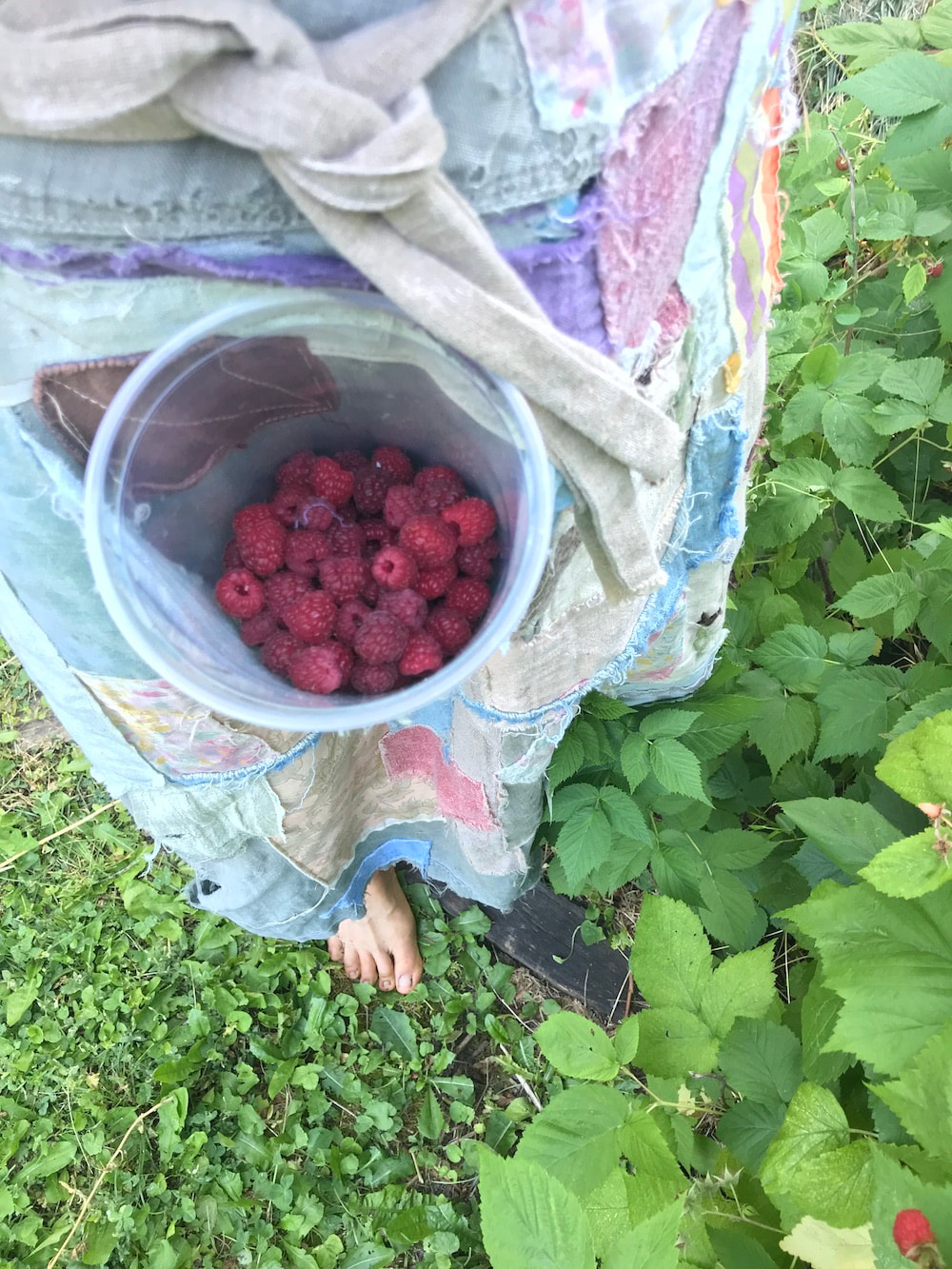
How else but with two aprons,
 to pick ​rapidly ripening raspberries
Picture
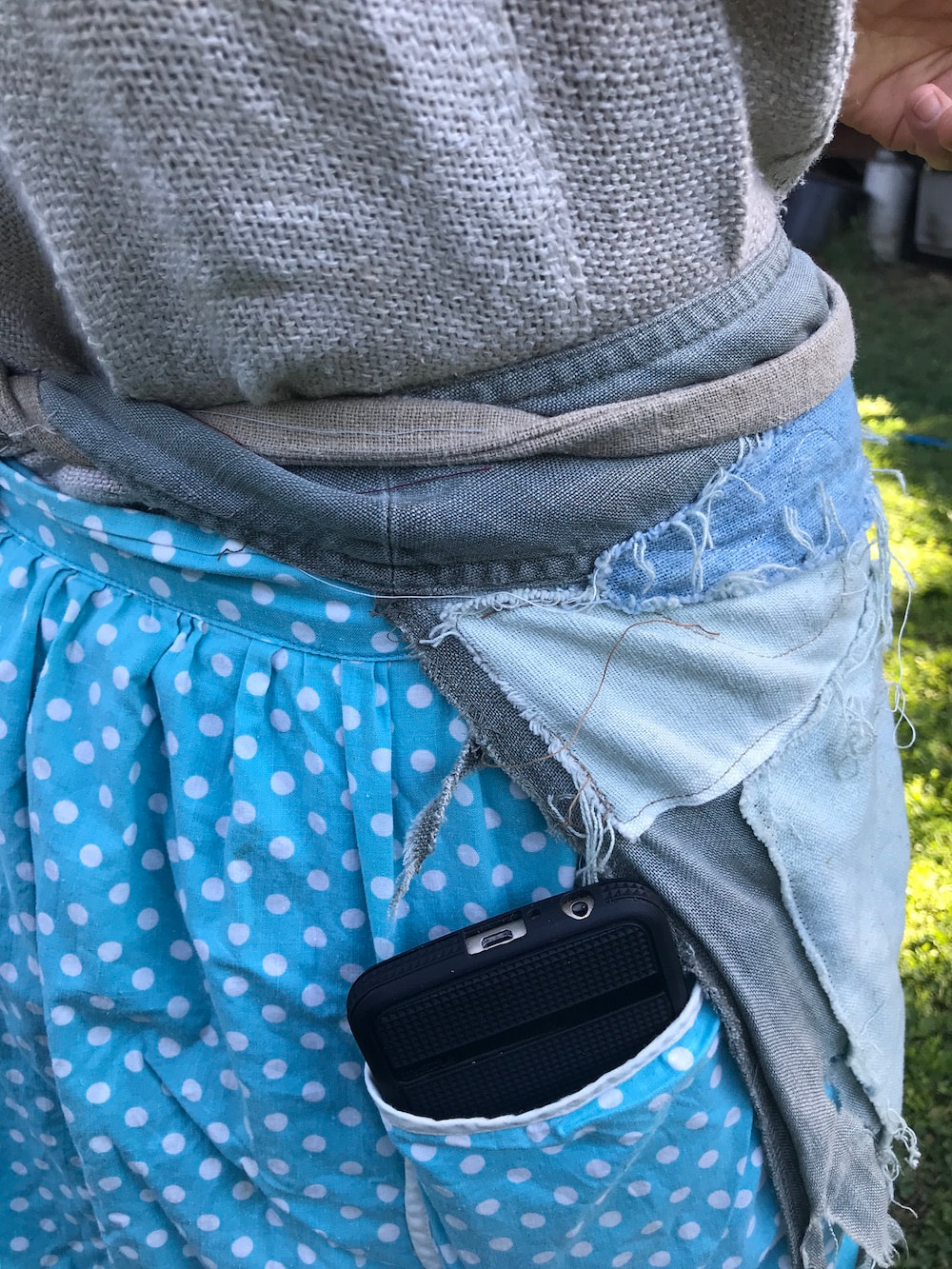
and carry a garden watering timer
​(aka phone)
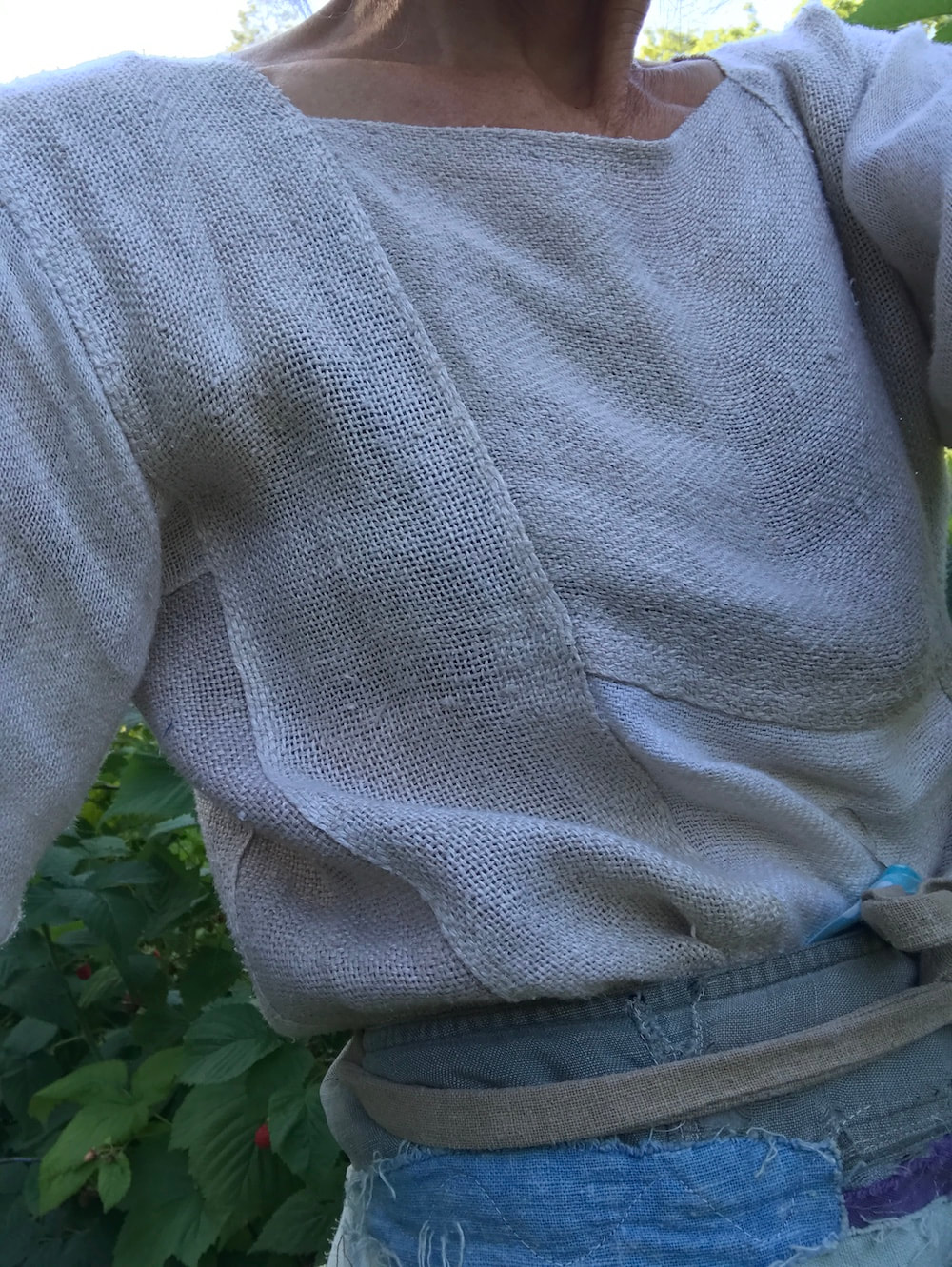
Picture
when neither your linen shirt
nor the  hand-me-over-unfinished-skirt
you're wearing underneath
​has a pocket?
Picture
Picture
Not that I couldn't remedy that.
A nice patch pocket on the skirt
would be the work of a moment.
​
And the shirt
is a continual work in progress--
the fact that it already has
a teensy tapestry pocket on one side
no reason to neglect the other.

It's just that I wear the shirt so often--
 like every day I'm not wearing
  the linsey-woolsey one--
that I just haven't gotten around to it.

Picture
Yes -- it's hard to tell from the drawing
that I'm wearing the linsey-woolsey shirt.
But it is  only short-sleeved shirt I have,
so not a tricky deduction.
Besides, it was just a few days ago.

Also, though I occasionally
bend the absolute truth in my comics
(for narrative clarity only),
I generally aim for sartorial veracity--
if only because I love my clothes
and am oddly attached
to the idea that  future me
might like to enjoy seeing them too
(while remembering what. weenie I am about shopping).

It also helps with the laundry.
("I seem to have worn Sarah-Dippity Skirts
in almost every drawing for this entire diary--
definitely time for a bath!")
Picture
But I digress.
Paper pockets
were the topic of the moment.
And they might actually be
a compelling experiment. 
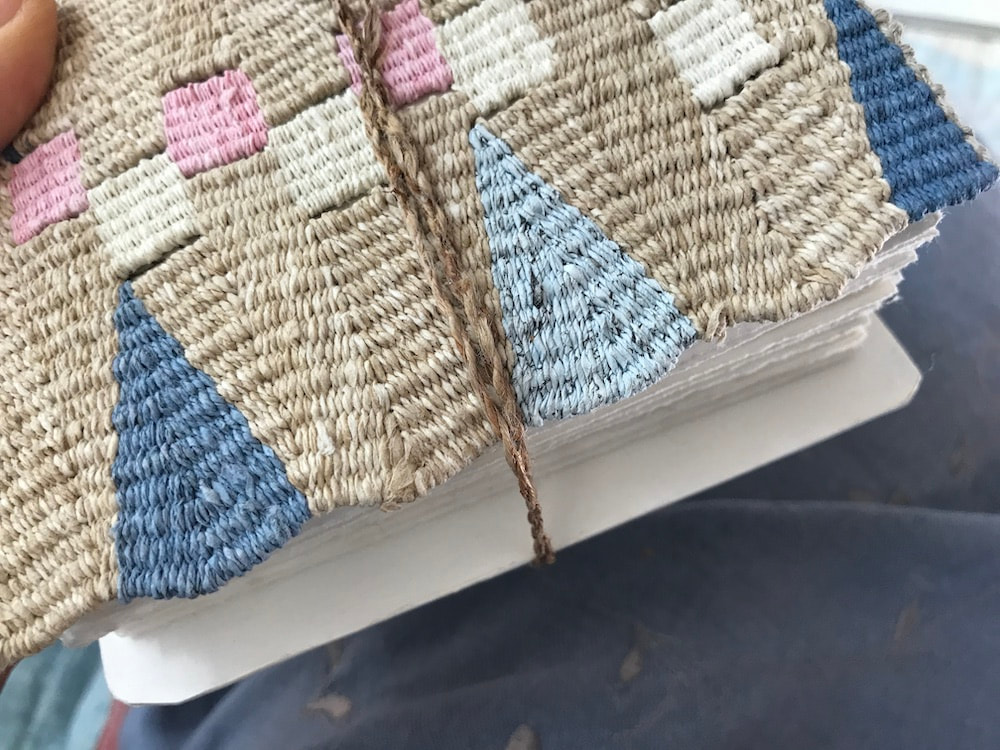
Though the coffee filter yarn
is itself pretty fragile,
especially as singles
(I can't imagine using it for warp for instance),
it seems to stand up remarkably well
 tightly packed in a weft faced plain weave--
at least to the wear and tear 
of life as a diary cover--
growing soft, pliable,
and almost leather-like
​(if a little grubby),
with daily use.
Picture
And true shifu,
(woven from hand spun washi)
has been used for clothing for centuries,
so the idea is not totally outrageous --
except of course, that washi
(and the resulting kami-ito)
is often specifically made
for strength and longevity
while coffee filters are (usually)
single use items.
Though expected to withstand
 boiling water and soggy grounds, 
they are definitely not​
as intrinsically strong as washi.
But who knows?
In case you haven't noticed,
my life is a constant work in progress --
my chief delights arising from
​experiments with the materials at hand,
no matter the source.

And as we all learn daily,
you never know 
what is going to happen.
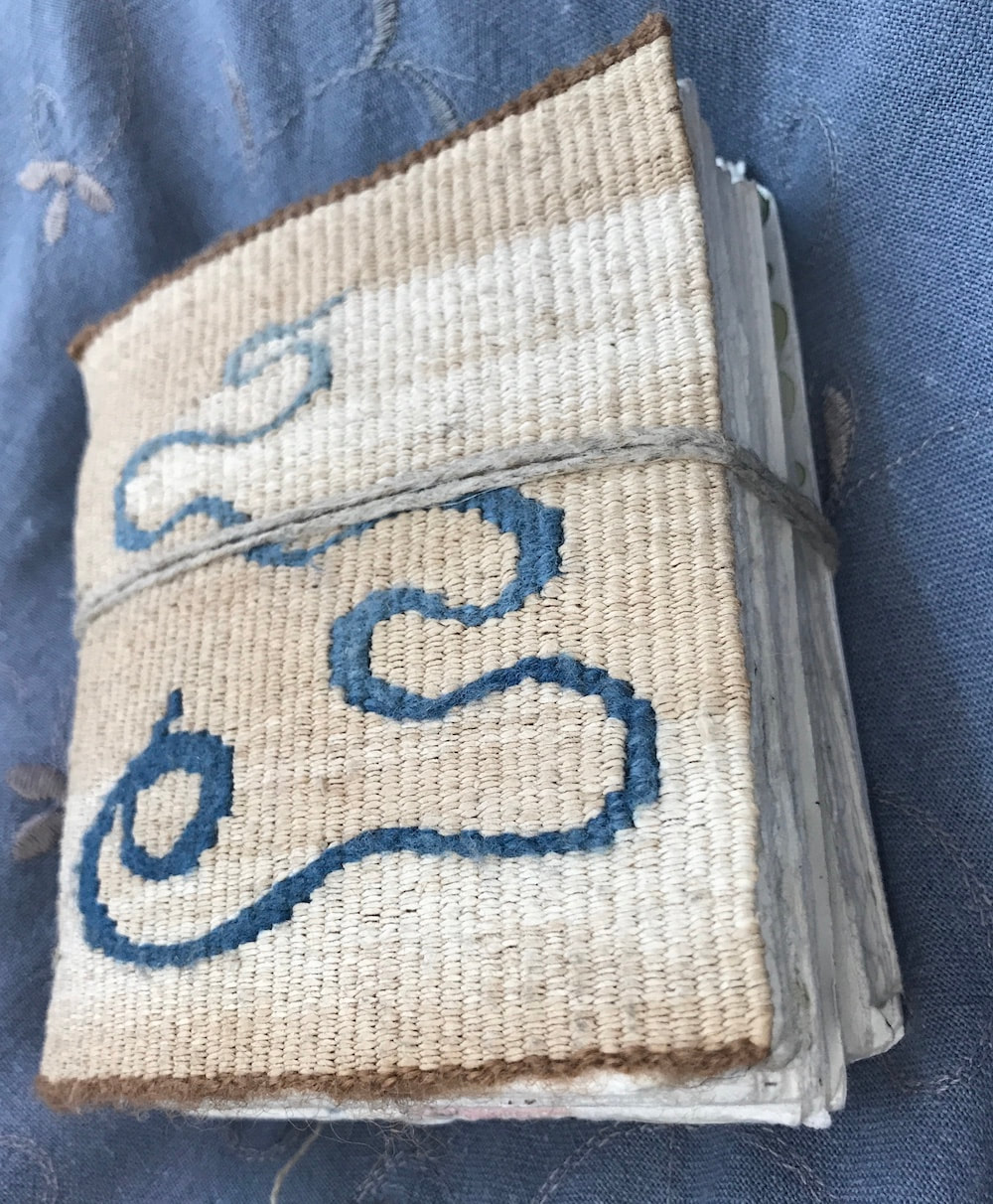
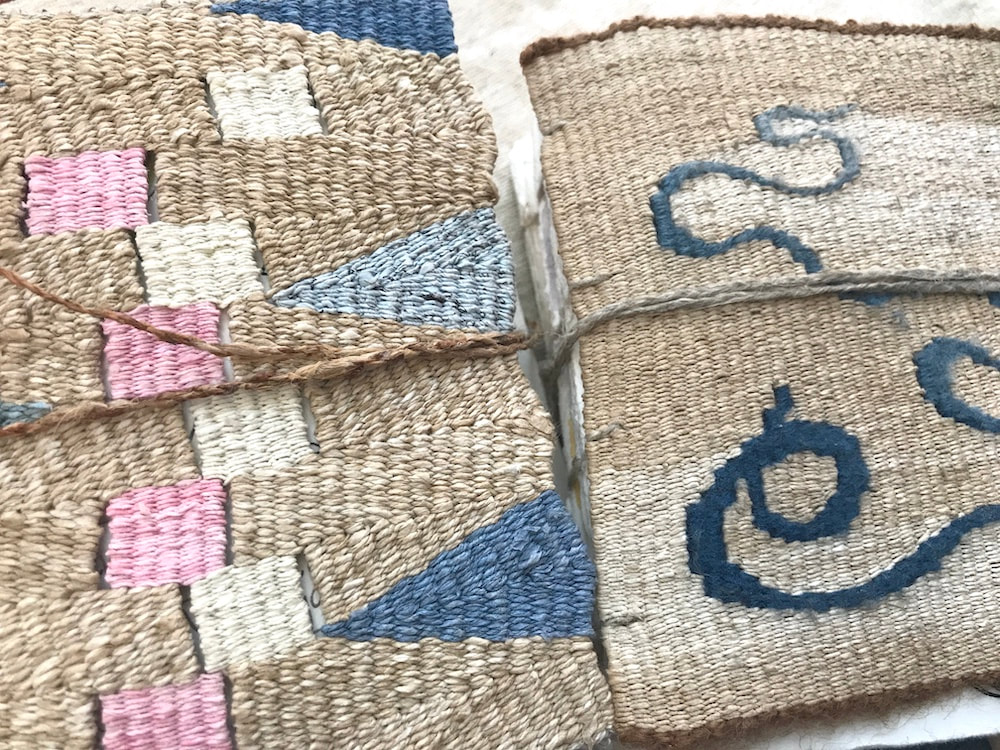
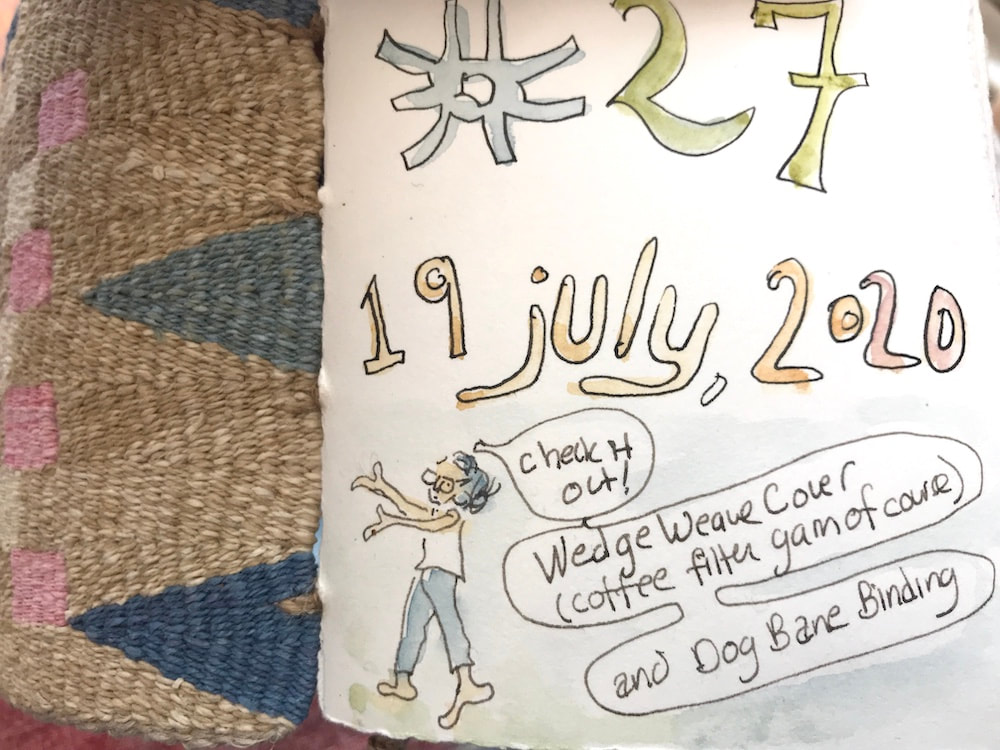
Picture
Indeed, I'm super excited
about watching the evolution 
of this diary I just made.
Not only do I get to play
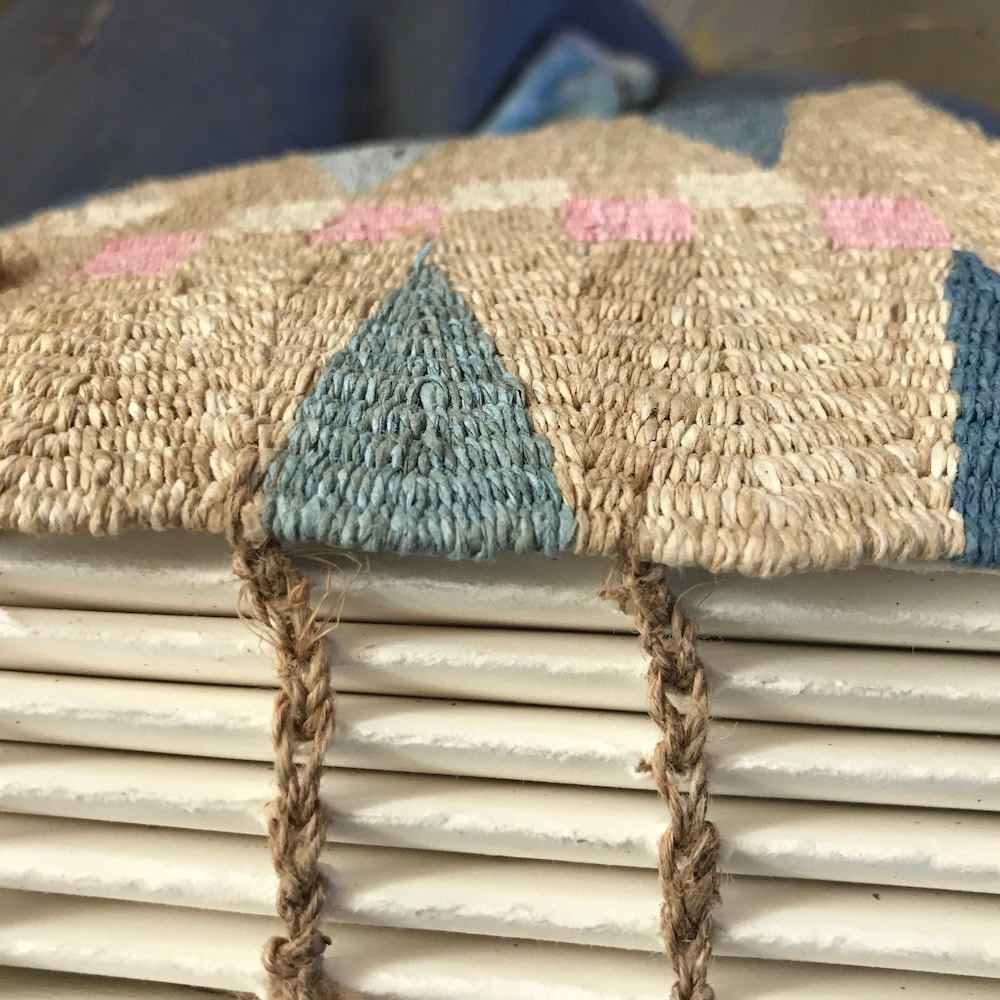
with the wedge weave tapestry
I wove last May.
(2-ply vs the singles of the last one)--
Picture
​but I also got (and get) 
to see how the dog bane binding cordage
(made in the fall of 2018),
behaves with constant handling.
It's pretty rough right now,
but super strong
even if I did have to punch
​extra large holes in my signatures. 

Picture
Now what was this post supposed to be about?
No idea. 
Undoubtedly something
satisfying and insightful
that would rock all our worlds--
though nothing could equal
the roller coaster ride
of real life just now--
my mind growing, I hope,
as strong and flexible
and welcoming of change and possibility
 as dog bane cordage.
So a bit of paper-induced absurdity
never hurts alongside, say, things like
the recent groundbreaking
 Supreme Court Decision
that almost half of Oklahoma
falls within a Native American reservation
!

So I'll just end with this photo--
because it makes me happy,
and is a good reminder
to enjoy the hidden richness
in even the simplest
of moments.
Picture
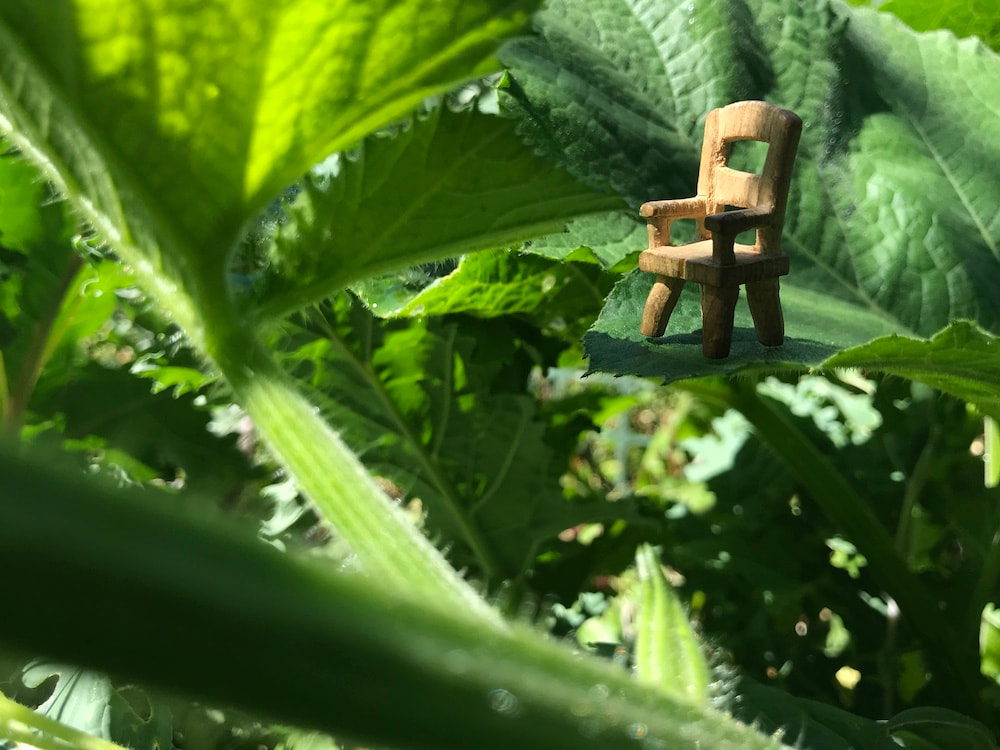
​ps. Tiny chair carved by Linda Ligon's grandfather in about 1915 --
and though this chair didn't start
Thrums Books , Long Thread Media,
and the once-upon-a-lifechanging  Interweave Press,
Linda did, and all three make (and have made)
the world a better place for textiles
and their makers.


pps. Squash plant--a volunteer,
​grown by itself from a bit of compost,

whose contributions to my world
are blossoming even as I type.

ppps.  Because it has to be said:
​Fuck Trump
<<Previous
Forward>>
    Picture

    ​Sarah C Swett 
    tells stories
    with
    ​ and about

     hand spun yarn. 


    Picture
    Click for info on
    my four selvedge
    warping class
    with
    ​ Rebecca Mezoff  
    fringeless


    Categories

    All
    Backstrap
    Books
    Cellulosic Experiments
    Clothes
    Coffee Filter Yarn
    Comics
    Distractions
    Dyeing
    Embroidery
    Hand Spinning
    Knitting
    Linsey Woolsey
    Looping
    Mending
    Milkweed
    Out In The World
    Plain Weave
    PVC Pipe Loom
    Shoes
    Sketchbook
    Slow Literature
    Tapestry
    Textile Tools
    Things To Wear
    Vague Instructions
    Willow

    Archives

    September 2021
    June 2021
    April 2021
    March 2021
    November 2020
    October 2020
    September 2020
    August 2020
    July 2020
    May 2020
    April 2020
    March 2020
    February 2020
    January 2020
    December 2019
    November 2019
    October 2019
    September 2019
    July 2019
    June 2019
    May 2019
    April 2019
    March 2019
    February 2019
    January 2019
    December 2018
    November 2018
    October 2018
    September 2018
    July 2018
    June 2018
    May 2018
    April 2018
    March 2018
    February 2018
    January 2018
    December 2017
    November 2017
    October 2017
    September 2017
    August 2017
    July 2017
    June 2017
    May 2017
    April 2017
    March 2017
    February 2017
    January 2017
    December 2016
    November 2016
    October 2016
    September 2016
    August 2016
    July 2016
    June 2016
    May 2016
    April 2016
    March 2016
    February 2016
    January 2016
    December 2015
    November 2015
    October 2015
    September 2015
    August 2015
    July 2015
    June 2015
    May 2015
    April 2015
    March 2015
    February 2015
    January 2015
    December 2014
    November 2014
    October 2014
    September 2014
    August 2014
    July 2014
    June 2014
    May 2014
    April 2014

things to make:
yarn . music . friends
whatever it is you cannot 

not
begin
Proudly powered by Weebly